

The Cold-Pan Method Gordon Ramsay Swears By For Cooking Duck Breast

Duck breast is one of the jewels in the crown of classical Western cuisine. Sitting somewhere between steak, venison, and chicken, it's got a delicate yet powerful flavor that's essential for any passionate cook to master. When duck is done well, it's delicious — but it can be intimidating for greener chefs. That combination of juicy, tender meat and crispy, crunchy skin can be tricky to perfect without overcooking the breast or improperly rendering the fat.
Celebrity chef Gordon Ramsay swears by a traditional technique for cooking duck breast. Start the breast skin side down in a dry, cold pan (by dry, we mean without any oil) and bring the heat up gradually. Though this goes against the usual advice about pre-heating your pan when searing meat, starting cold is actually the best way to avoid overdoing your duck. Heating the meat slowly allows the thick layer of fat under the skin to render, crisping it up nicely without burning it and without cooking the meat too fast.
Once the skin is crisped, quickly flip the breast over and warm it through on the other side. This will cook your meat the rest of the way, and ensure you end up with shatteringly crisp, golden skin, and a blushing pink interior — the perfect contrast. Ramsay also scores the skin before he cooks his duck, which helps it keep its shape and more efficiently releases the fat.
Why slow-rendering duck breast works
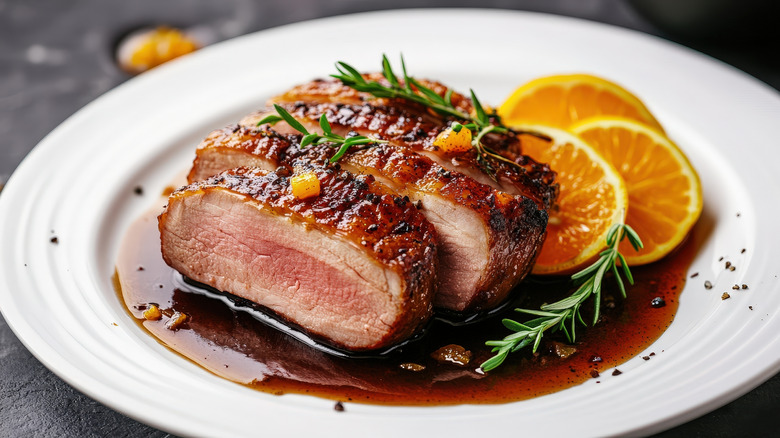
Though you can use a similar technique on other meats like chicken, it works particularly well on duck due to the breast's unique structure. Where on other poultry and gamebirds the skin is stretched thin right over the meat, duck has a thick layer of fat between the flesh and the skin. This means that it needs careful rendering. Starting it off in a cold pan means the fat has time to melt and escape before the skin seizes up and burns.
If the pan is ripping hot right from the start, the skin will tighten immediately when it hits the heat, trapping the fat underneath and resulting in a chewy, rubbery texture — the opposite of what Gordon Ramsay (or anyone else) wants. Duck is essentially a self-basting meat. The rendered fat collects in the pan and helps to cook the skin (and the meat), imparting it with delicious savory flavor. Once rendering is complete, the sugars in the skin will start to caramelize (thanks to the famous Maillard reaction) and brown evenly. You can also pour off excess fat during the cooking process, letting you save all that flavorful duck fat. It's perfect for cooking delicious roast potatoes, making confit-style vegetables, or even whipping up a luxurious hollandaise or bearnaise sauce.
Ramsay's tried and tested cold pan method is a great option for home cooks who want to approach a traditionally challenging protein with less stress. Just remember to rest your duck before you serve it — like a great steak, it needs time to allow those juices to redistribute throughout the meat for the most delicious bite.