

Too Many Shoppers Ignore This Red Flag When Buying Frozen Shrimp. (Hint, It's Hiding In The Ingredients List)
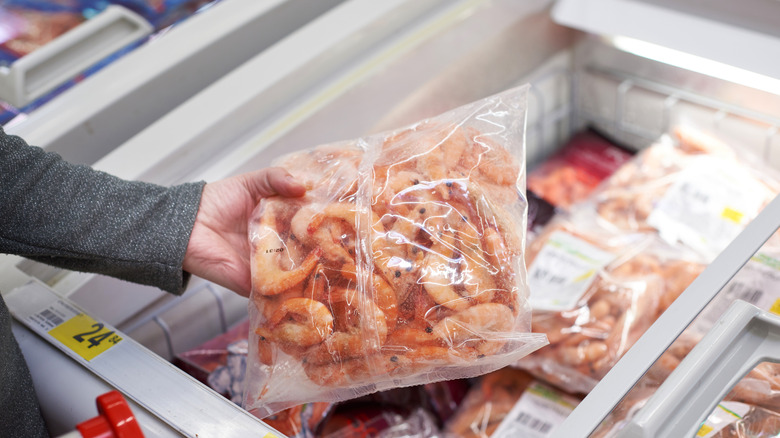
From shrimp scampi to gumbo, frozen shrimp has a place in every seafood lover's fridge. It's tough to beat the convenience of frozen shrimp, but some are warning of a potentially harmful chemical lurking in the ingredients list — sodium tripolyphosphate — that seafood processors may use to improve the appearance of seafood. STPP falls into the U.S. Food and Drug Administration's "generally recognized as safe" category, so you don't have to worry about negative health effects from consuming the quantity typically included in frozen seafood. One thing you do have to worry about, however — the chemical's effect on your wallet (stick with us here).
When added to shrimp and other types of seafood, STPP can help create the illusion of fresher fish, especially after its been frozen. Normally, the proteins in fish break down as ice crystals develop during the freezing process. STPP increases the amount of water a food can absorb and retain, giving it a plumped-up appearance (think of it like lip filler for seafood). In addition to changing the look of shrimp, STPP also drives up the price by making you pay for added water weight.
How to tell if your seafood has been treated with STPP — even if it's not listed as an ingredient
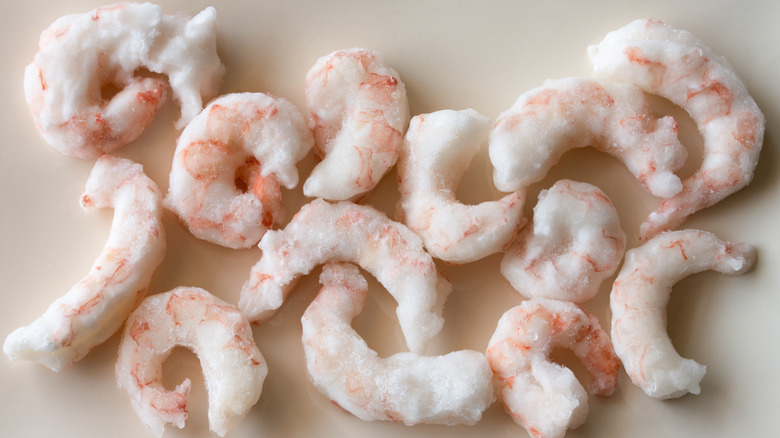
If you're buying shrimp from the seafood counter or a restaurant, however, things can get a little trickier. Most shrimp sold at restaurants has been frozen at some point. This can also be the case at seafood counters. To learn whether the shrimp there has been treated with STPP, tell the person waiting on you that you're looking for dry-packed shrimp (or other seafood). "Dry" is seafood industry lingo for untreated with STPP, and any fishmonger worth their salt will know what you're talking about.
Another way to tell if your shrimp has been treated with STPP: Take a look at it as it cooks. As the water begins to steam away, you might notice that your shrimp is becoming smaller than usual as well as dull and rubbery — a clear sign that the puffing effect of the STPP is wearing off. While there's nothing that's actually dangerous about eating seafood that's been treated with STPP, it's smart to avoid it if you can. Whether you're making copycat Red Lobster shrimp scampi or you're cooking up a shrimp and eggplant stir-fry, seafood is pricey, and staying away from STPP can help you make sure you're getting your money's worth.