

The Best And Worst Teas To Drink If You're Looking For An Energy Boost
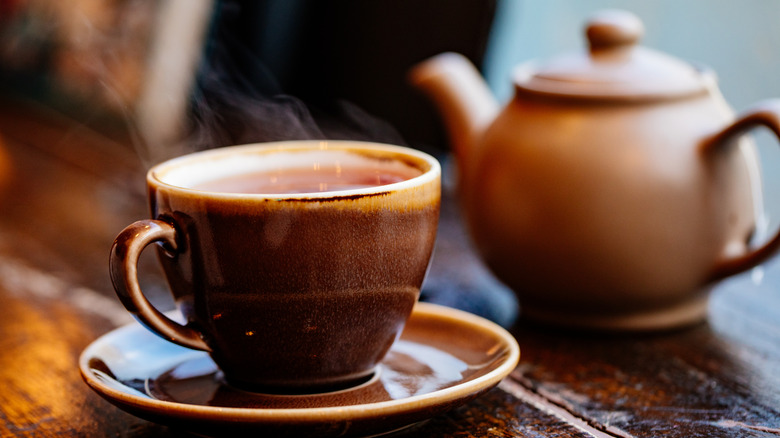
Tea is one of the most popular drinks in the world, but not all teas are the same. Some are high in caffeine, while others have absolutely none at all. If you're drinking tea specifically for an energy boost, the type you choose matters. The tea that's the worst for energy is rooibos. Unlike traditional teas, which come from the naturally caffeinated plant Cameillia sinesis, rooibos is an herbal tea made from the leaves of the non-caffeinated Aspalathus linearis plant.
The best tea for energy is matcha. If you're drinking matcha for the first time, know that it's a powdered form of green tea, made from shade-grown leaves. Growing tea in reduced sunlight results in higher nutrient levels and richer flavor. The leaves are ground whole instead of being steeped. Because you're consuming the whole leaf instead of drinking an infusion, like with steeped tea, you're getting more of everything — including caffeine.
A 2-teaspoon serving of matcha can deliver up to 140 milligrams of caffeine. That's more than many black teas, and just below a brewed cup of coffee. Plus, matcha is high in an amino acid called L-theanine, which can give you alertness without anxiousness. If you're looking for something to boost both your mood and cognitive performance, matcha delivers with its combination of caffeine and L-theanine. You'll feel an increase in energy without the jitters due to the amino acid's calming effects.
Other teas worth sipping when you need a lift

Matcha is certainly a standout, but there are many other caffeinated teas to consider. Black teas, particularly Assam and Darjeeling, are amongst the most caffeinated traditional teas available. Assam is malty and robust, offering around 50 to 90 milligrams per 8-ounce cup. Darjeeling is a little lighter in flavor and caffeine content, but still reliably energizing. Both contain L-theanine for that smooth energy boost, but less than matcha.
Yerba mate, although technically not a traditional tea, can contain up to 80 milligrams of caffeine per 8-ounce serving. Made from the leaves of a South American shrub, it has centuries-old ceremonial roots in Argentina, Uruguay, and Paraguay. It also contains B vitamins and theobromine, the same mild stimulant found in chocolate. This tea will give you sustained energy rather than a quick spike like you might experience with a cup of coffee. It tastes a little bitter and has an earthy undertone.
Standard green tea comes in last on this list because it only has about 20 to 45 milligrams of caffeine per cup. But it's a good starting point for an energy boost, especially if you want to enjoy more than one cup of tea in the morning or afternoon. Like matcha drinks from popular coffee chains, it has a solid dose of L-theanine and caffeine, giving you an added boost of calm energy and focus. It's a perfect tea for late afternoons when you need a little pick-up but don't want to disrupt your sleep.