

Here's What Can Happen To Your Body When You Drink Plastic Bottled Water
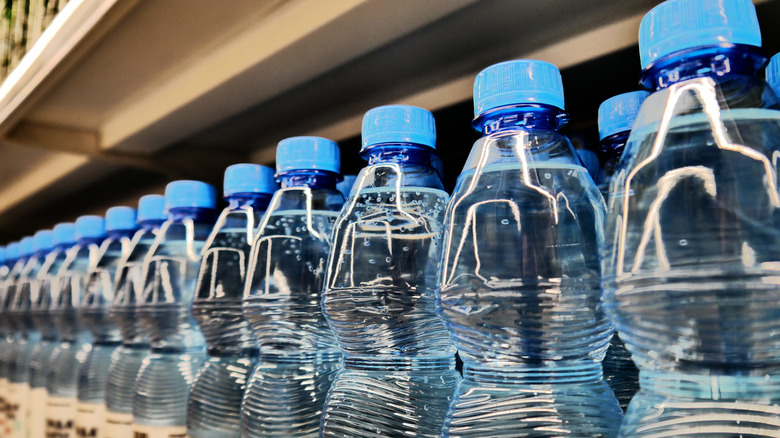
Water sold in plastic bottles is such a commonly available item that many people might not even think about it. Most of these bottles are made with single-use plastics, which have faced growing public concerns about safety. To sort them out, we reached out to Andrea De Vizcaya-Ruiz, DVM, PhD, a professor in the department of environmental and occupational health and the Center of Occupational and Environmental Health at the University of California, Irvine. De Vizcaya-Ruiz spoke exclusively with Chowhound about the potential effects of drinking water from plastic bottles.
According to Stanford Medicine, there has been growing concern about the byproduct of plastic bottles called microplastics, a term coined in 2004. Microplastics are plastic particles measuring 5 millimeters or less in diameter, while nanoplastics are even smaller, measuring under 1 micrometer. Researchers have detected both types of plastic particles in the human body. According to De Vizcaya-Ruiz, "Emerging evidence suggests that larger particles pass through the digestive system, while smaller particles, including nanoplastics, may interact more directly with tissues." Currently, there is debate about whether these particles are dangerous. "Right now," De Vizcaya-Ruiz said, "there is not enough evidence to link exposure to bottled water to specific diseases." However, she also said micro- and nanoplastics have been shown to cross barriers into the intestines, enter the bloodstream, and cause toxic reactions such as inflammation and oxidative stress, which can lead to tissue damage.
So, while "current evidence does not demonstrate clear human health risk from microplastics in drinking water," De Vizcaya-Ruiz noted that, according to the 2019 WHO report Microplastics in drinking water, important data is missing. Until there's more research, it might be best to consider the differences between bottled and tap water and choose the safest one.
How plastics get in the body and ways to prevent it
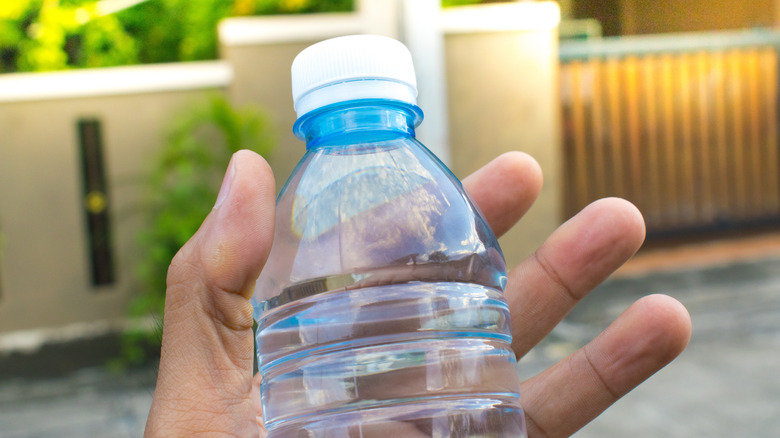
Single-use plastic bottles are made out of polyethylene terephthalate (PET), which is considered food-grade. However, Andrea De Vizcaya-Ruiz said that PET still reacts to certain chemicals and can break down. This can happen from heat, which, according to De Vizcaya-Ruiz, "accelerates plastic breakdown." This can significantly increase contamination and cause the bottle to shed plastic particles into your drink. Sunlight exposure can also weaken the plastic's structure, causing it to crack and become brittle, so the best way to store plastic bottles is away from direct sunlight.
According to EWG, plastic fragments can even come from screwing and unscrewing the bottle cap. Repeated use, including "squeezing, washing, scrubbing, and twisting of caps have shown to increase microplastic release," De Vizcaya-Ruiz said. To help reduce microplastic exposure, De Vizcaya-Ruiz suggests avoiding single-use plastic reuse, including not washing them in hot water or dishwashers, or switching to reusable glass and metal containers. If you're looking for a way to use your single-use plastic bottles instead of throwing them away, use this plastic bottle hack for your garden. To maintain perspective, it should be noted that, according to The Guardian, because this research is still in its early stage, scientists are calling for more standardized methodology and better contamination controls.