

Why Restaurant Fries Stay Crispy For So Long (And Yours Don't)
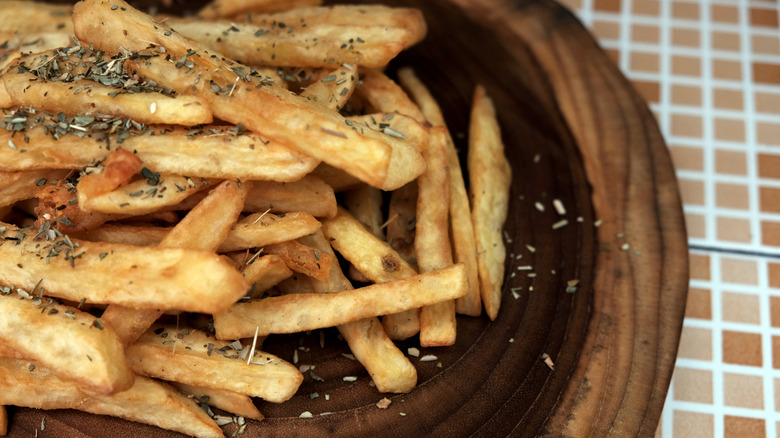
There's a trick to making and keeping homemade fries crisp. To discover the secrets chefs use to create fries that stay crunchy, Chowhound spoke to Lynne Just, consumer test kitchen manager at Hamilton Beach Brands, Inc. and Mike Buononato, chef and senior vice president of culinary at Creative Food Solutions. Both shared their knowledge about techniques restaurants use to make their french fries crackle.
According to Just, establishments use a number of techniques to make crunchy fries, including the double frying process. "After soaking the potatoes in cold water to remove the excess starch, the fries are dried, cooked in hot oil at a lower temperature, then cooked again at a hotter temperature," Just explained. The first fry produces soggy-looking fries, while the second fry makes them brown and crispy. Some chefs also blanch their potatoes first, which involves boiling the potatoes for a few minutes before cooling them in cold or ice water, then patting dry before double frying to make crispy triple-cooked fries. Part of the magic is also built into how restaurants serve fries. "Heat used in holding areas also helps keep the fries hot and crispy," Just said.
It's helpful to note that the difference between how long fries retain their fresh crunch in a restaurant versus at home is not large. "Even professionally engineered fries aren't built for 30 minutes of crunch. They're designed to survive the trip to the table and the first several bites," Mike Buononato explained, adding that peak crispness lasts about two to three minutes, and after about 12 minutes, the texture starts to decline.
Choose the right potato and coat your fries
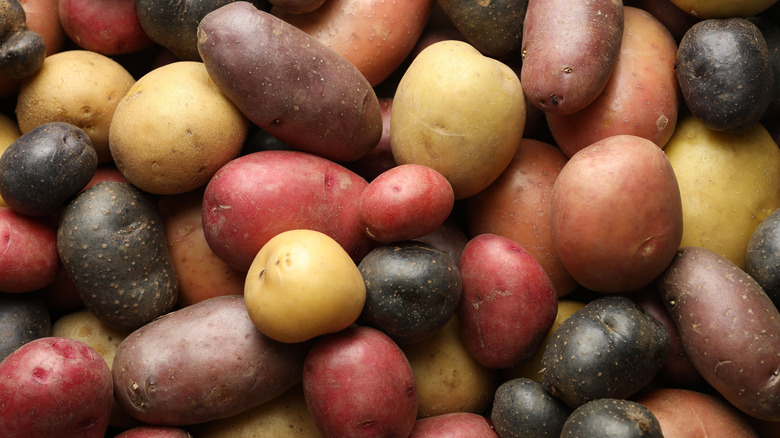
Moisture in a potato affects how the oil behaves when frying, and using low-moisture potatoes can lead to a snappy texture in fries. "It starts with high dry-matter potatoes, often russet, Burbank, or Kennebec," Mike Buononato said. Another way to source low-moisture potatoes is to use old potatoes for crispier fries, as these have lost some water and contain more dry matter. But Lynne Just explained, "Kennebecs are a specific variety of potato chosen by some restaurants because of their lower water content over a russet, so they absorb less oil than a russet in the frying process, thus producing a crisper fry." Combined with blanching your fries, which Buononato said removes sugars and stabilizes the inside of the potato, these methods work together to maintain the fries' crunch.
Chefs often use a coating on fries that helps create a delightful crispness. "Fry coatings create a barrier that lock moisture inside the potato while creating a starchy network on the outside that helps to create the crunch," Just explained, adding that many cooks coat the potatoes in cornstarch, dextrin, or modified food starch. Buononato noted that dextrins work as a moisture barrier, starches reinforce the crust's structure, and dextrose can also be used to enhance browning, strengthening the surface of the fry. "They create a stronger, more brittle surface and slow down steam from softening the crust," Buononato said. Additionally, cornstarch is a versatile and staple pantry item that will crisp up soggy fries, even if you're reheating leftovers.
Ways to make crispier fries at home
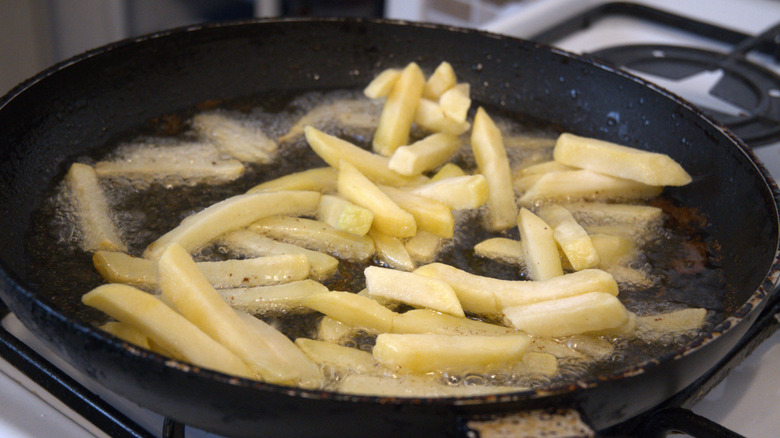
Making food at home can be a little different than cooking in a restaurant kitchen, though similar techniques can still be used to make crispy fries. "I use the double frying method at home. I find this works well and it is accessible to most home cooks," Lynne Just suggested. To make legitimately crispy french fries at home, start by slicing the potato into strips, then adding the strips to water and rinsing them until the water becomes clear. Rinsing off the starch will give you more control over the browning process and firm up the cells to make the fries crunchy. Then, remove the potatoes from the water and pat them dry. Fry the first batch in a deep fryer or Dutch oven with a neutral, high smoke point oil at a lower temp of about 325 degrees Fahrenheit for a few minutes. Remove and drain the potatoes again to remove excess oil, and then fry again in hotter oil, at about 375 degrees until browned.
If you're not planning on using a deep fryer for scratch-made fries and are instead using an oven to make a frozen variety, you can still make a french fry that crackles. Just suggested using a single layer of fries on a baking tray to cook them more effectively. Mike Buononato recommended cooks use a convection oven or air fryer, and cooking fries a little longer than indicated in the directions. "With any method, when the fries are cooked, eat them as soon as possible when their crispiness is at its best," Just advised.