

Stop Microwaving Leftover Pasta: Keep It Moist And Soft With This Reheating Method
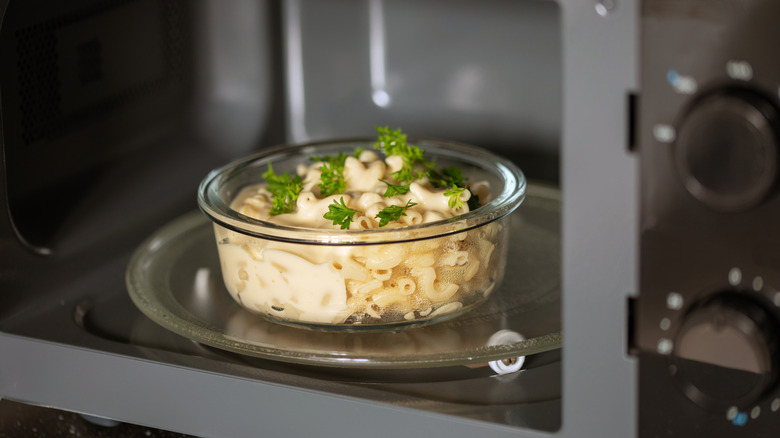
From reheating leftovers when you need a quick dinner, to whipping up a tasty Oreo mug cake when you need a treat, microwaves have been simplifying food prep for decades. But while they're easy to use, they're more complex than just tossing something in and pushing a button. Common microwave mistakes include letting food spatter and letting food heat unevenly. But while a little logic can solve many of these issues, some pitfalls are harder to figure out. In fact, the answer to some problems may be to ditch the microwave altogether. Chowhound asked Matt Harding, chief innovation officer at Piada Italian Street Food, why leftover pasta in particular can be finicky in the microwave, and what to do about it.
When reheated in a microwave, pasta tends to turn rubbery. "The microwave didn't cause it. The pasta did," Harding says. Pasta, he explains, will keep absorbing moisture as it remains in contact with liquid. This is why overcooked pasta can become a gooey, unappetizing mess. The flip side is that pasta can dry out easily. "Air circulation will pull the moisture out of pasta, so remember to keep it wrapped tight," he says. Pasta that has been sitting in sauce has potentially absorbed too much moisture; when it's then microwaved, too much moisture may be pulled out, giving it the texture of a rubber eraser. A better method, Harding says, is to reheat it quickly in a saute pan.
Reheating pasta on the stove
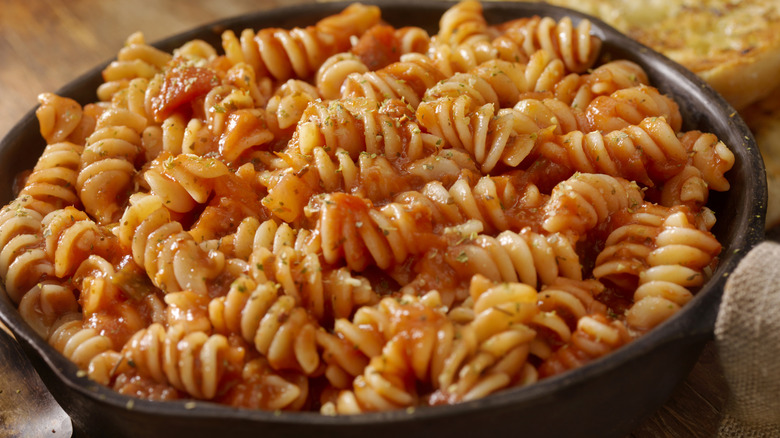
A key thing to keep in mind, Matt Harding says, is that your leftover pasta has already been cooked. Therefore, you should aim to heat it quickly so it doesn't get soggy. Heat your pasta to at least 165 degrees Fahrenheit and then immediately remove it from the pan.
When it comes to reheating pasta, best practices may vary depending on what kind of sauce is accompanying it. Cream and butter sauces, for example, have a tendency to separate, resulting in a grainy texture. "If you refrigerated a cup of butter sauce and then cut it in half, all the fat solids would be up at the top and the free-flowing liquids would be at the bottom," Harding says. When reheating the sauce, you need to re-incorporate the fat and the liquid: Add 2 ounces of heavy cream plus 1 ounce of water to a medium saucepan. As this warms up (over medium-high heat), throw in the cold pasta, breaking it up gently with a spoon. "You don't want to break the pasta, but you do want to get it hot fast." Next, cover your pan, turn the heat to low, and let it sit for about two minutes. If the textures aren't perfect, add either more cream or water.
For tomato-based sauces, separation isn't the issue. But the reheating method is essentially the same as the butter and cream sauces, only replace the cream with tomato sauce. "Finally, the cooked pasta will be delicate and soft. Treat the reheating of it with reverence," says Harding.