

Why You Want To Hear Your Food Sizzle In A Stainless Steel Pan
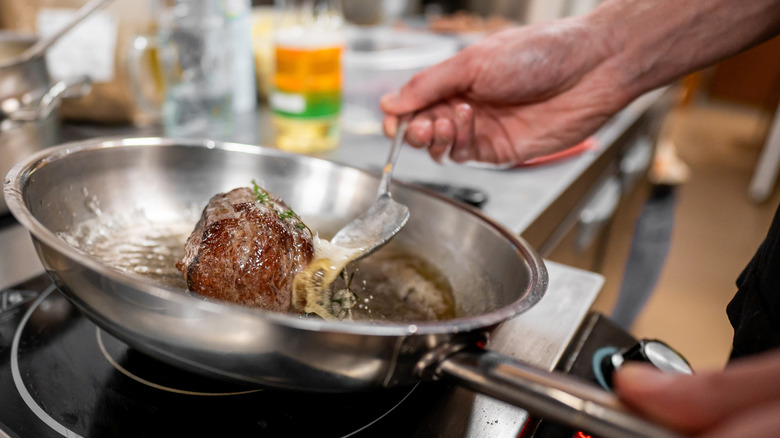
Hearing the sound of sizzling food can bring on a sense of anticipation for what's to come. However, when the sizzle takes place in a stainless steel pan, it also alerts you a necessary transformation is happening that can make your cooking easier while also enhancing the food's flavor.
When your pan is hot enough and has the right amount of oil, you can turn your stainless steel pan into a nonstick pan, which involves complex chemical reactions that, ultimately, can help you cook. When your pan isn't hot enough, the proteins in food bond with the atoms in metal pans, causing your food to stick. This happens because the metal has small invisible cracks on the pan's surface. When you heat a stainless steel pan with oil, the hot oil fills these cracks.
The sizzle you want to hear is caused by water (released from food) vaporizing on the oil's surface. Known as the Leidenfrost effect, this water vapor creates a cushion on the surface of the pan, allowing your food to glide right over it. In addition, when you brown food at above 285 degrees Fahrenheit, it causes the Maillard reaction, which releases even more water, maintaining that sought-after sizzle. But when the sizzling stops, it means the reaction has also stopped, and continued cooking may cause your food to burn.
Best ways to cook with stainless steel pans using high heat
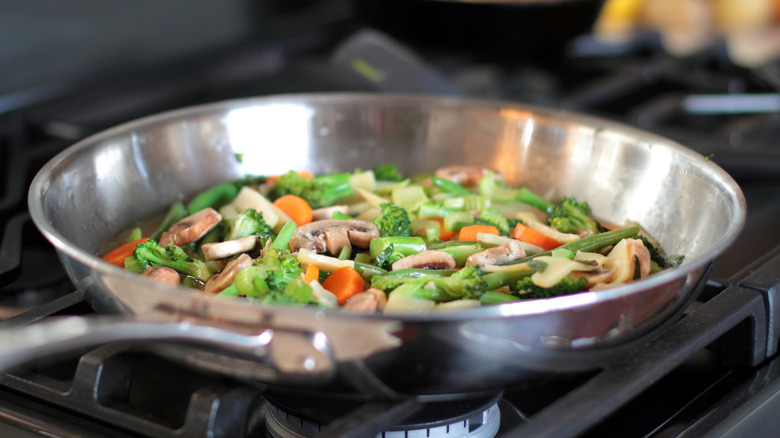
When cooking with a stainless steel pan, always make sure it's hot enough. Heat your pan over medium-high heat and test it by adding a drop of water. It may just evaporate at first, indicating the pan isn't hot enough. But when the pan reaches optimal temperature, water droplets will dance, rolling intact across the surface.
There are several ways to cook with a stainless steel pan for nonstick results that will vary depending on how and what you cook. If you're cooking beef, use our expert tips for searing a perfect steak, which includes using a high-temperature-safe pan that evenly distributes heat. A hot pan plus high smoke-point oil, and you can get a good, even sear on your steak without it sticking. Start by removing excess moisture from your room temperature meat, though (otherwise it may steam instead). You can accomplish a good sear with only a little oil, and because stainless steel is non-reactive, chemicals won't leach into your food either.
Taking into account some tips for cooking with stainless steel pans, there are foods you might want to avoid. Some cooks consider eggs and seafood difficult to cook using stainless steel cookware, not because it isn't possible, but because they're delicate. It can also be difficult to clean these foods off your pan when you're finished cooking. However, many veggies and meats are perfect for high-heat cooking. Find your comfort zone and enjoy the variety of foods that benefit from being seared, caramelizing them to perfection while they sizzle without sticking.