

Think Your Butter Has Been Tasting Different? There's Actually A Science-Backed Reason For That
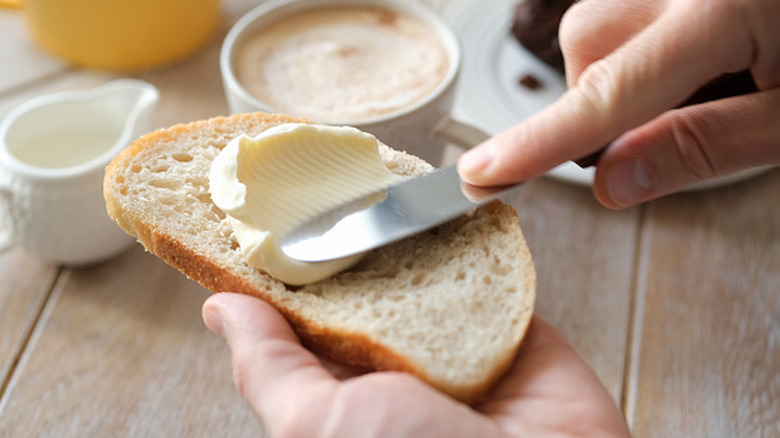
Whether you're slathering butter on toast or making delicious baked goods, butter's rich, creamy flavor is hard to beat. Real butter is made from simple ingredients: milk or cream and salt. The flavor is highlighted by the milk's quality, which contains varying amounts of milkfat, water, and milk solids, like protein, lactase, and minerals. However, if you've noticed your butter tastes different, you're not alone. Among the many possibilities, one thing that's making butter taste different is based on a simple scientific phenomenon.
The flavor of milk depends heavily on the cow's diet. You might have noticed butter from grass-fed cows tastes different than standard butter and is often considered richer and more flavorful than grain-fed butter. In addition, the herbal and tangy flavor of grass-fed butter changes with the seasons. Spring butter has a different taste and texture than butter produced in winter. During the spring, cows feast on fresh grass, which has a high level of carotenoids, especially beta-carotene, giving butter a yellow glow. The beta-carotene also converts into vitamin A, which provides the butter with a rich, complex flavor. In winter, when grass isn't available, cows eat stored food, such as hay, which changes the type of fat in the butter from unsaturated to higher saturated fats, making it firmer, paler, and changing the flavor.
The numerous influences on butter flavor

There's also a science-based reason for American butter tasting different from European-style butter. The majority of American butter is sweet cream butter, whether salted or unsalted, and contains about 80% fat by U.S. law. European-style butter boasts 82% to 85% fat, which contributes to a richer flavor. In fact, among the highest-ranking grocery store butter brands, European-style butter ranked the best, with Kerrygold at number one. Though the European brands tend to be higher in price, if you're an Aldi fan, you're in luck because there's an affordable Aldi dupe for Kerrygold butter.
The breed of cow makes a difference in the taste of butter, too. Jerseys and Guernseys produce milk with higher carotene content during all seasons. In addition to the breed, milk's processing method affects flavor. The milk used for butter is first separated into cream, then pasteurized at a higher temperature than for cheesemaking or milk processing, though unpasteurized butter can be purchased from some U.S. farms. Pasteurization inactivates some of the enzymes that can affect the butter's flavor.
Even more flavor is produced when butters are cultured, which is done by adding bacteria and letting the cream ferment. This breaks down lactose and citric acid to form lactic acid and a compound that has a buttery aroma. Whatever your favorite type of butter, you can still find quality-tasting butter in your grocery store. You just need to choose the best variety based on the season, fat content, and your culinary needs and tastes.