

Here Are The Key Differences Between Scotch And Bourbon
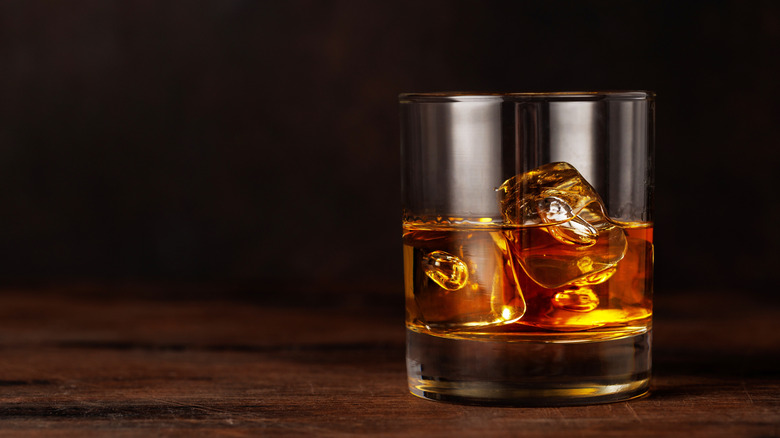
Scotch and bourbon share some similarities. To the unfamiliar palate, they're closely related, but any expert on either spirit can tell you they're far from the same. Still, if you absolutely need to interchange them in a cocktail recipe, you can get away with it. They're both dark-colored liquors aged in oak barrels, but they have unique characteristics that give them different flavor profiles. Scotch tends to have different notes and undertones depending on where in its country it comes from, for example. Bourbon, on the other hand, has barrel-aging requirements that directly impact its notes (spoiler alert: the barrel has everything to do with why you taste vanilla notes in bourbon).
Whether you call them variations of whisky or whiskey, these spirits have four key differences you need to know. They're made from different grains, aged for different time periods, and, of course, come from different places. For that last one, each spirit has to meet certain location requirements for it to be referred to as true Scotch or true bourbon.
They're produced in different locations
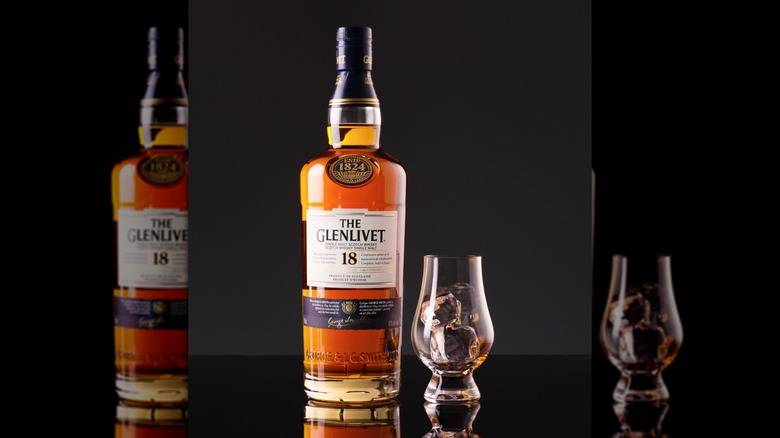
The most obvious difference between these two spirits is the country of origin. For Scotch to be considered Scotch, it must be made in Scotland. Within Scotland are six distinct Scotch regions (Speyside, Highlands, Lowlands, Islay, Campbeltown, or The Islands), and all of them have a slightly different process for creating this liquor, giving each one flavor variations. In Speyside, for example, in the northern part of the country, Scotch tends to be richer tasting, with fruity, floral notes. Islay, meanwhile, an island region on the western side of the country, has intense, smokier notes in its Scotch.
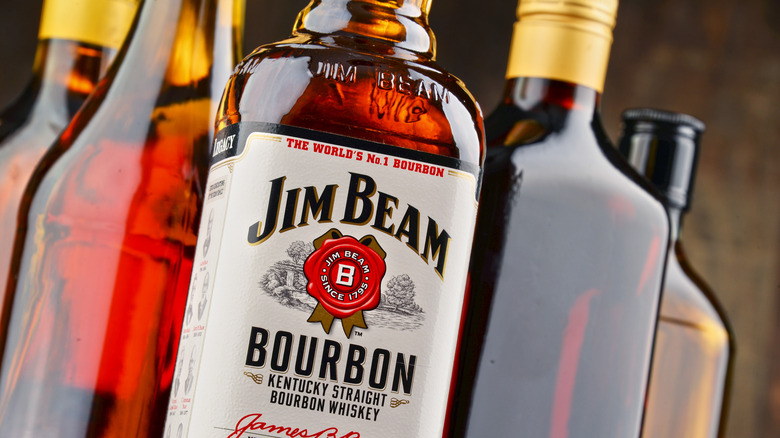
Bourbon, on the other hand, is an American spirit and must be made in the United States. Although it's commonly produced in Kentucky, it can be made anywhere in the United States. However, it has to meet other criteria beyond location to classify as bourbon. Otherwise, it's just called American whiskey.
They're made from different grains

Single malt Scotch, a type you probably know, is made from barley; it can only be made with three ingredients: barley, water, and yeast. Otherwise, it's not true Scotch. The process gets more complex from there, with the barley being steeped in water before it's spread out to malt. The malting process is what helps turn those barley starches into sugars, which then combine with yeast to produce the alcohol.
When it comes to grains, bourbon has slightly looser rules than Scotch. The majority of bourbon (meaning 51%) must come from corn, but as long as it's a majority, it can be made from other grains, such as malted barley and rye. You might see wheat used as well, and many bourbons do use more than 51% corn. Beyond the grain, bourbon also uses water and yeast.
They have different alcohol-by-volume requirements
Distillation is how newly developed alcohol is concentrated after the fermentation process. Scotch is typically distilled twice; the alcohol is evaporated out of the water through a boiling process, then it returns to liquid form before the process happens once more. This is what gives Scotch its alcohol-by-volume, which is usually a little more than 40%. For Scotch, 40% ABV is the absolute minimum it's legally allowed to be distilled to. The maximum ABV for Scotch is 94.8%.
Bourbon has a similar distillation process, but its alcohol concentration has a different maximum. Bourbon's minimum alcohol-by-volume after distillation is also 40%, but bourbon consumed in the U.S. cannot have an ABV greater than 80% — more than 14% lower than the maximum allowed for Scotch. Plus, bourbon is commonly distilled three times, once more than Scotch. You could see the opposite, though; it's not impossible to find thrice-distilled Scotch and twice-distilled bourbon.
They have different aging requirements
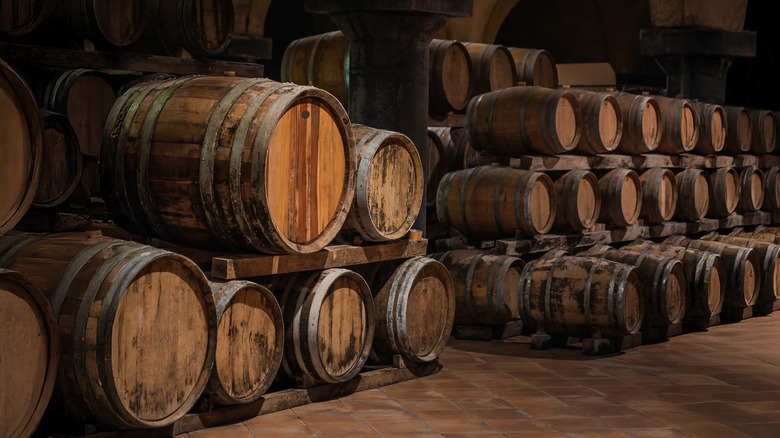
Once the alcohol is distilled and its alcohol by volume is established, the final part of the process is aging. Scotch's aging process has two main requirements: it has to be aged in oak casks and must be done so for at least three years. With that said, some high-quality Scotch can be aged for up to 50 years. Aging is important for any kind of whiskey because it's where the spirit develops its flavor. Think of it as leftovers tasting better the next day; the ingredients have a chance to fuse into something even better. With Scotch, the oak infuses into the alcohol, which is where it gets those rich, flavorful notes that make it what it is.
For bourbon, the importance of aging is all the same, but it must be aged in new charred oak barrels (barrels are a category of casks). This means the barrel interiors have been exposed to high heat to get that char, and they have to be new, meaning you can't reuse a barrel you used for a previous batch. The charring process introduces new notes into the bourbon as it ages, such as the hint of sweet vanilla you usually taste. However, bourbon doesn't technically need to be aged at all. Still, "straight bourbon" is the name bourbon receives when it's aged for at least two years.