

Always Consider This Before Pairing Food With Smoky Whiskey
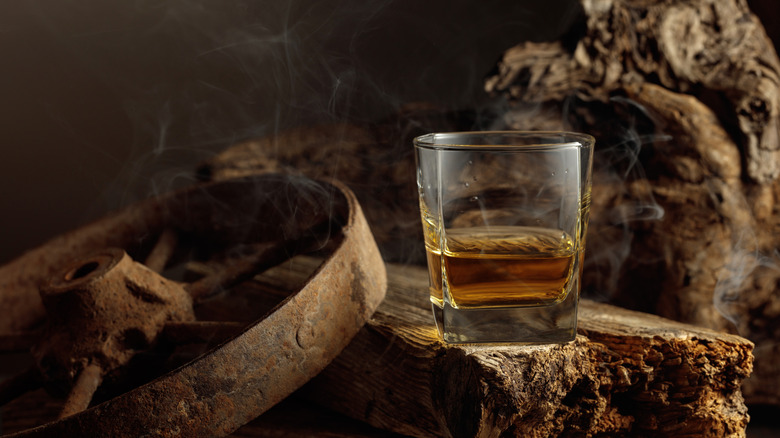
Earthy, peaty, and beautifully aromatic, smoky whiskeys are anything but forgettable. In case you're unfamiliar with the style and feel unsure about what to look for when you want a smoky whiskey, just scan the label for peat, smoke, or fresh charred oak. But, while these qualities define this unique liquor's taste, they also deepen its intensity. This means smoky whiskey can easily overpower delicate dishes, which is why knowing what to pair it with makes all the difference.
Private chef and certified sommelier Robert Morales highlighted in an exclusive conversation that both the type and intensity of smoke influence how smoky whiskey works with a dish. "The type of smoke is generally classified into three types of flavor profiles: char, woody, [and] barbecue. There is also another flavor profile known as peaty that most people would group... together with smokiness. Peat tends to express more natural characteristics, such as earthy, medicinal, or iodine."
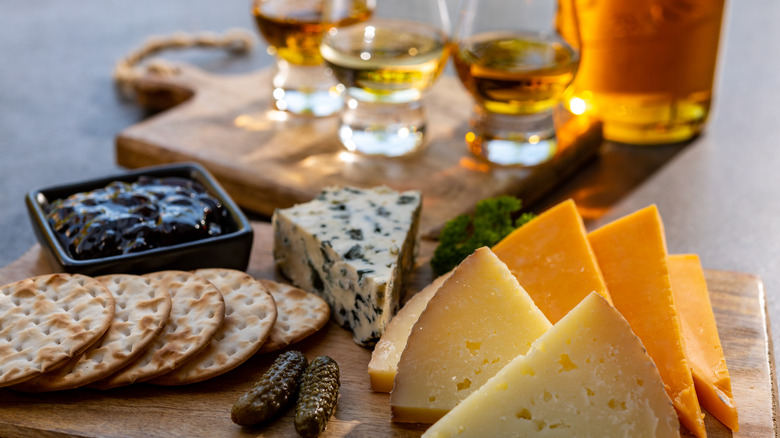
Jim McCourt, a whiskey pro and celebrated beverage director at Georgia's Repeal 33, confirmed that both the type and amount of smoke can alter the overall flavor experience. While lighter smoke can taste earthy and toasty, heavier smoke is more intense. In general, smoke intensity in whiskeys comes from the phenol parts per million. This indicator reflects the phenol content in the malt. Heavily peated styles can reach more than 100 PPM. "A peaty smoke pairs well with ingredients like mushrooms and blue cheese, while a barbecue-style smoke pairs with barbecue and grilled meats," McCourt told Chowhound. "A mediational smoke overpowers a lot of foods."
Identify the smoke before you pick the dish
The intensity of the smoke is a crucial factor you need to know before buying whiskey. "Before I pair anything, I first decide what kind of smoke I'm dealing with, then I match the food's flavor profile with that," Robert Morales noted. When it comes to smoky whiskeys with intense peat, such as Octomore, one of the world's most heavily peated whiskeys, you want rich, flavorful foods that can temper the liquor.
For example, fatty foods can help absorb the smoky intensity. According to Morales, salty and umami flavors anchor the smoke, while acidic or sweet foods redirect it. "If the whiskey feels too aggressive, you can change the pairing outcome simply by changing the serve — a little water or a highball opens aromatics and softens the impact, which makes food pairing easier," Morales recommended. "If it is lightly smoky, you can go more delicate and let the whiskey sit in the background."
Jim McCourt stated that smoky whiskey pairs amazingly with barbecue, grilled steak, sausages, blue cheeses, seafood (including smoked oysters or fire-roasted shrimp), grilled mushrooms, and root vegetables. "They can also be great with desserts — especially s'mores," he added. "Personally, I really enjoy bourbon with smoked brisket." Morales also suggested roasted nuts, dark chocolate, and pickles as classic smoky whiskey matches. "I enjoy pair heavily peated whiskey (like Ardbeg or Laphroaig) with oysters in mignonette sauce," he said. "The brine and acidity sharpen the pairing and make the smoke feel coastal rather than medicinal."
Always strive for balance when matching whiskey with a dish
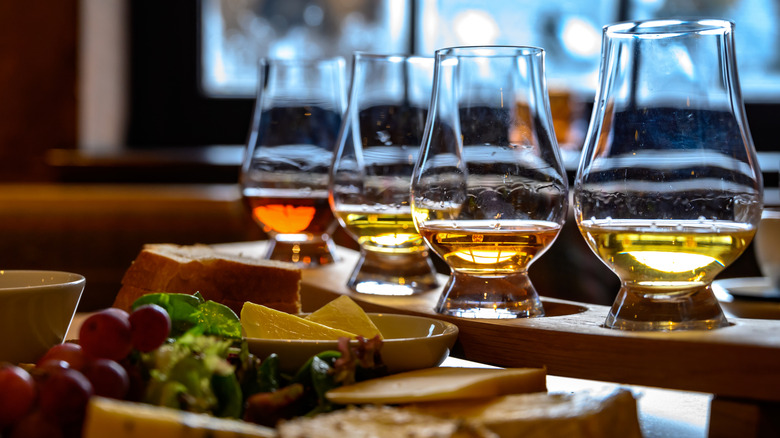
Even though Robert Morales encouraged experimenting with smoky whiskey and food pairings, he noted that it's crucial to avoid certain rookie mistakes when tasting whiskey. "The most common mistake I observe is that people just think that smoke is just one note," he said. "They ignore some more subtle notes, like fruity or coastal, which can be overpowered by food with strong flavor."
Smoke actually contains a wide range of phenols, with guaiacol and cresols being the most dominant. Phenols are a class of aromatic organic compounds that affect our sense of smell and taste, and are responsible for the whiskey's various smokiness levels. "Another frequent mistake happens when paring smoky whiskey with smoky food; they sometimes go overboard by paring heavily peated whiskey with heavily smoked food," Morales added. "These can overwhelm the palate and ruin the whole meal." In such cases, to prevent an ashy aftertaste, it's best to stick to smaller pours of smoky whiskey.
Jim McCourt agreed that matching a heavily peated whiskey with smoked dishes can be overpowering. But, at the same time, he highlighted that pairing smoky whiskies with light dishes is also a major no-no since it ruins the meal's balance. "For example, a delicate whitefish with an Islay Scotch would probably not work great," he pointed out. Ultimately, pairing the whiskey before tasting it first is another wrong move. "They each have their own nuances, which need to be considered when creating pairings," McCourt concluded.