

It's Almost Impossible To Overcook T-Bone Steak If You Prepare It This Way
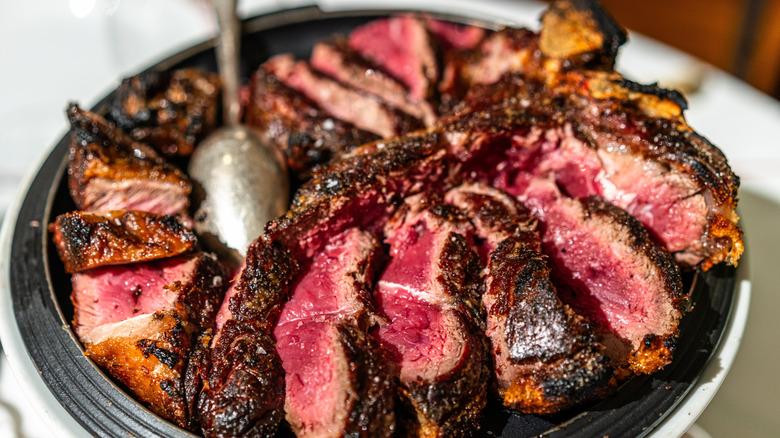
T-bone steak has something of an unfairly intimidating reputation among home cooks. Perhaps it's the size or high price tag, but more often than not, rookie chefs are afraid to tackle this delicious cut. T-bones are unique because they actually contain two steaks in one: Sirloin, with its plentiful fat cap and rich, beefy flavor, sits on one side of the bone, while tender, luxurious filet mignon is on the other. These are separate muscles with different compositions, and as such, cook at different rates. Though the bone acts as an insulator, helping to prevent the meat from overcooking, the challenge with a T-bone is cooking consistency. So if you're simply grilling or pan frying your T-bone, then by the time one side is perfectly cooked, the other may well be overdone and dry.
Enter sous vide. You've probably heard of this technique before — which has a reputation for being fancy — but this is a technique beloved by professional chefs in high-end kitchens, and it's more accessible than ever for a home cook. Sous vide solves the problem of your T-bone overcooking by holding the steak at a precise temperature for the entire duration of cooking. Sous vide constantly circulates water to keep steak (or whatever food you're cooking) at exactly the level of doneness you set it to — you can't overshoot the internal temperature you're looking for. Then, once your steak is cooked using the gentle water bath, you have more leeway to get a great crust using a hard sear, without the meat toughening up.
How to cook your T-bone steak using sous vide
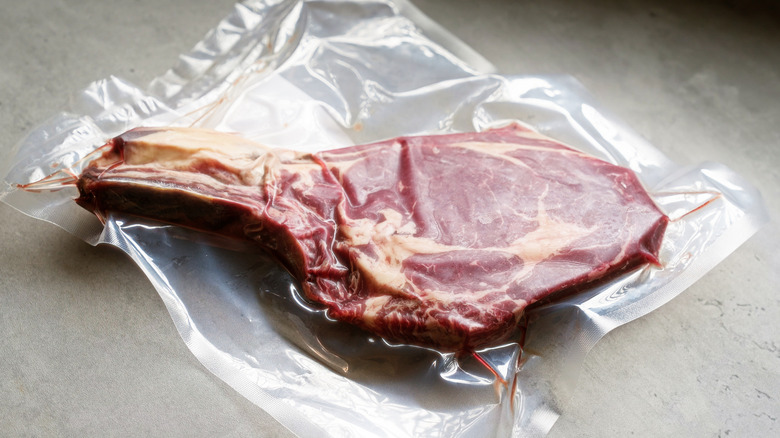
If you decide to take the plunge and buy yourself a sous vide machine, there are a few things to know to get you started. The basic principle of sous vide involves vacuum-sealed food placed in a water bath until the interior temperature of the food reaches equilibrium with the temperature of the water. When sealing your meat, first season it well with flavorings like rosemary, garlic, thyme, and butter. But remember, the vacuum seal will intensify the flavor of whatever is in the bag, so use strong aromatics sparingly.
The temperature of the water will eventually be the internal temperature of the meat. That's wonderful for you, because it makes cooking your T-bone extremely simple. All you need to know is what level of doneness you want, and its corresponding temperature. For rare, aim for 125 degrees Fahrenheit. This is optimal for a T-bone, as both cuts are relatively lean and don't have much intramuscular fat to melt down. A rare cook will help to really accentuate the meat's natural tenderness.
If you're aiming for a crowd-pleasing cook, on the other hand, and want to take things a little further, go for a solid medium-rare and set your water bath anywhere between 130 and 135 degrees Fahrenheit. Most T-bone steaks should take about an hour and a half to reach a consistent internal temperature — but again, don't worry about overcooking it. Once two hours have passed, take your steak out and get ready to finish it!
How to finish your T-bone steak after cooking sous vide
One of the cardinal rules of cooking steak is to rest it properly — at least it is if you cook it the traditional way. The purpose of resting is to allow steak to come to a consistent doneness throughout, as the intense heat of the grill eventually carries through the entire cut. But with sous vide, because the entire steak is held at a specific temperature, there's no need to rest it. This means you can get a far more precise cook and once your steak is up to temperature, it'll hold up much better to a hard sear without the risk of overcooking — it won't contract in the same way cold proteins do when they hit the grill.
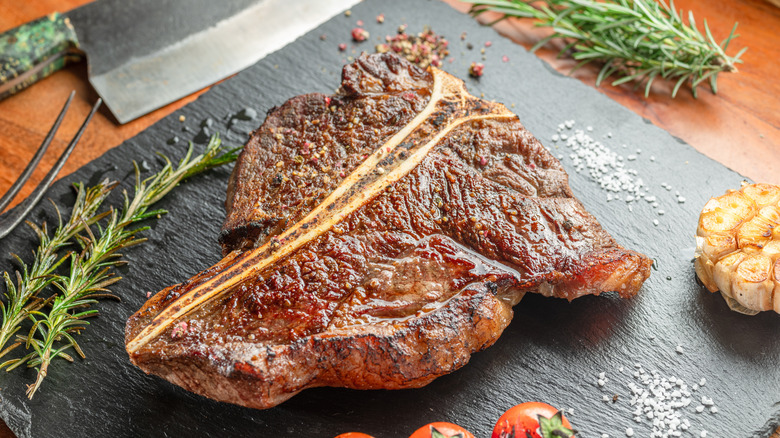
The final step is to put some color on your T-bone after it comes out of the water bath. Make sure it's completely dry before you sear it — any excess moisture on the surface will render steamed steak, not a perfect golden crust. Use a neutral flavored oil with a high smoke point to allow you to immediately transfer your steak to intense heat. Get your pan ripping hot and give the steak a good sear on both sides (which takes about a minute each) until it's nicely browned — this develops its flavor, giving you an intense beefy hit and a welcome bit of textural contrast. Then, slice your steak and serve it with plenty of Maldon salt for extra crunch and a delicate salty finish!