

For The Best Irish Cabbage, Remember The 4 'B's'
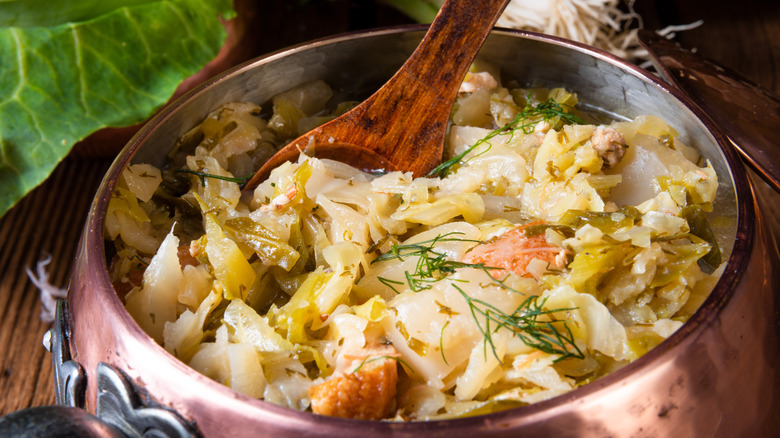
If you're preparing a hearty Irish meal (perhaps some corned beef), there's one classic veggie you'll want to serve alongside it: cabbage. And to nail that cabbage, all you need to remember are four "B's." Spoiler alert: One of them is not "boiling," as this veg should not come out plain and watery. It's four flavor-packed ingredients: bacon, black pepper, broth, and butter. Generally speaking, this combination works because cabbage has a naturally mild, slightly bittersweet profile, making it pair well with salty and fatty ingredients (black pepper is obviously not salty or fatty, but as we'll highlight, it brings its own strengths to the table).
Let's start with bacon, arguably the star alongside cabbage, as the Irish dish is often referred to as cabbage and bacon. In Ireland, bacon is standardly cured pork loin that comes from the back and is somewhat thick-cut, rather than the streaky American kind, which comes from the belly and is fattier. Irish bacon is similar to English bacon and particularly Canadian bacon; some argue that they're the same, but in any case, the functional differences aren't huge. Bacon adds both a smokiness and richness to cabbage that balances out the bitterness that some find off-putting. It's the same reason why Brussels sprouts work so well with bacon: The two veggies are from the same family.
Of course, Irish cabbage needs more than just bacon to be the best version of itself. Enter: The three "B's" that aren't as highly visible but still play important supporting roles in this dish.
The remaining B's: butter, broth, and black pepper
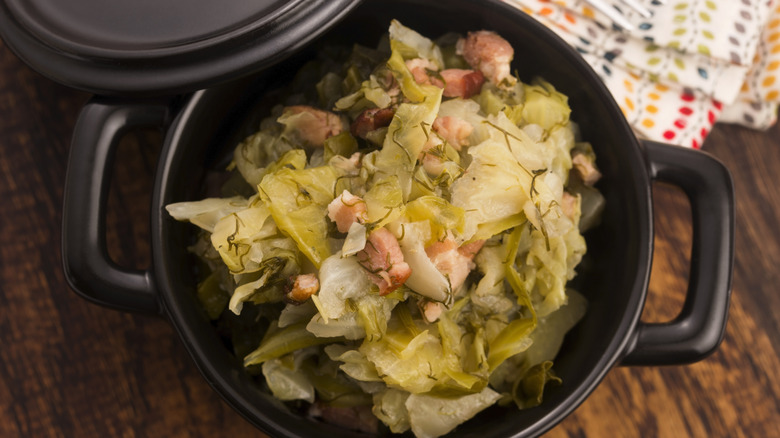
Next up is another beloved Irish ingredient: butter. Boiling causes cabbage to release sulfuric compounds, giving it that nasty smell that sometimes comes from cooked cabbage, so gentler heat from a method like sauteing is preferable for this dish. Of course, you can't saute in a dry pan, so you'll want some fat, and butter does the trick. (If you're concerned about bacon and butter making your cabbage too rich, remember that Irish bacon is leaner.) Choose Irish butter, which is made from higher-butterfat cream produced by grass-fed cows, giving it a more pronounced dairy taste (from the fat) as well as a more complex flavor profile from the forage.
The last two ingredients aren't so specific to Ireland but still essential for a rich cabbage dish. Broth (or stock, if you prefer) is perhaps a little controversial. It seems that many Irish cabbage recipes simply call for water (no more than a cup, and often much less — remember, you don't want to boil the veggie). But frankly, and this is the case with many other foods, water won't add much in the way of an appealing flavor, and bear in mind that there's not many herbs or spices in your typical Irish cabbage recipe. So, do yourself a favor and add a ½ cup or so of broth.
Finally, black pepper will add a little zing and heat that helps detract from cabbage's bitterness, while also cutting through the fattiness you're getting from butter and bacon. Some recipes will just say to add it to taste, but don't skimp too much; start with a ¼ teaspoon so the peppery flavor shines through.