

How To Dye Your Beer That Iconic St. Patrick's Day Green
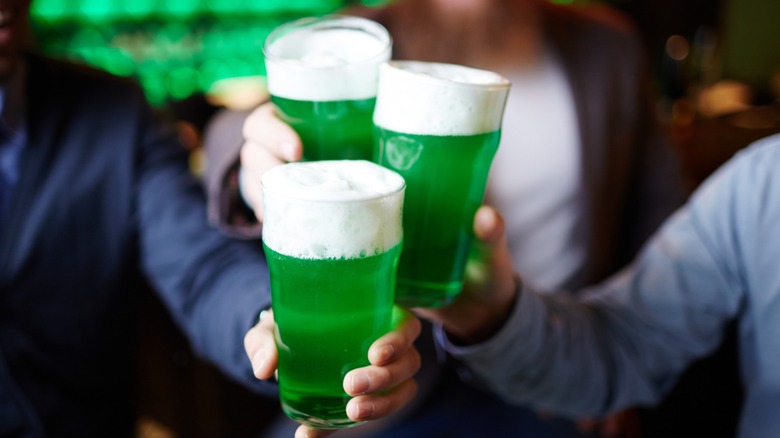
Americans love dyeing things green on St. Patrick's Day. Take Chicago's green-dyed river, the Shamrock Shake at McDonald's, or green glazed donuts from Krispy Kreme. Americans even have a history of drinking green beer on St. Patrick's Day. You could find a pub serving the festive concoction, but if you prefer to avoid the chaos, you can easily make green beer at home.
To get the perfect emerald-toned pint, you just need your favorite beer and one or two drops (up to six in some cases) of green food dye. Most food coloring is flavorless, so as long as you don't use too much, it won't affect the taste or fizz of the beer. But double-check the packaging (especially on natural food dyes) to ensure you don't end up with veggie-flavored beer. Also, make sure you use liquid water-based food coloring, as food dye gels and pastes don't easily combine with liquids.
Generally speaking, the best beer to dye green for St. Patrick's Day is a light-colored beer, like a pale or light lager, pilsner, pale or blonde ale, or wheat beer. The color of the beer changes how it interacts with the dye. Darker beers are less likely to give you the color payoff. It generally only shows up on the head. But in the right light, you may see a nice green tinge. Paler beers provide that stereotypical green hue and may get there rather quickly. More golden colors may start off looking more olive than emerald, though you'll get there with more drops. Add the color a drop at a time to get a festive St. Patrick's Day green without having to drink a beer that tastes bitter or flat.
Tips to dye your beer green without affecting the flavor or fizz
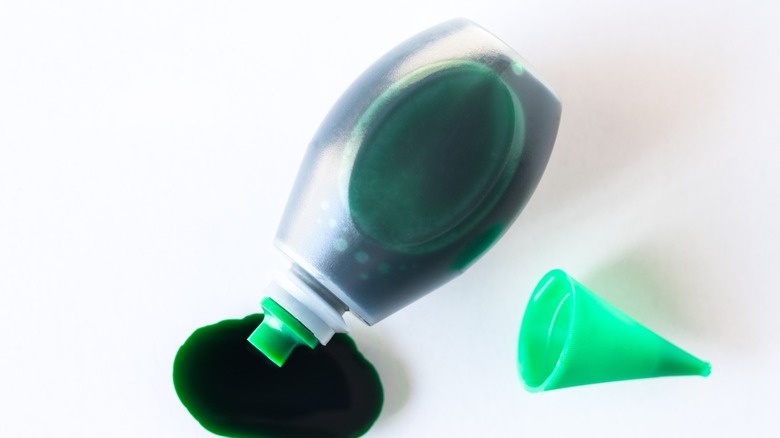
When it comes to the best ways to achieve a green beer without affecting the mouthfeel, it's best to drop your food dye into the bottom of the glass. That way, your beer begins changing color as you pour it over the dye, reducing the amount of stirring needed. The more you agitate the carbon dioxide bubbles in your beverage, the more likely you are to affect the flavor and fizz of your beverage.
If you still have to stir it, give it a gentle mix. To reduce the amount of CO2 released, use a thin utensil rather than a spoon. Instead, stir with a chopstick, knife, straw, the reverse end of a bar spoon, or anything thin, long, and food-safe — all of which will agitate the beer less than the bowl of a spoon.
If you're out of green food dye, the good news is you can also use blue, though in a lesser amount. This is because your beer is naturally yellow, so when combined with blue it will transform into an emerald-toned final product. But pay attention to avoid oversaturating your beverage. That's why it's good to experiment with different beers and dyes before the big day to see what you like best.