

Butter Or Oil? How Each Fat Impacts Your Brownies' Taste, Texture, And Appearance
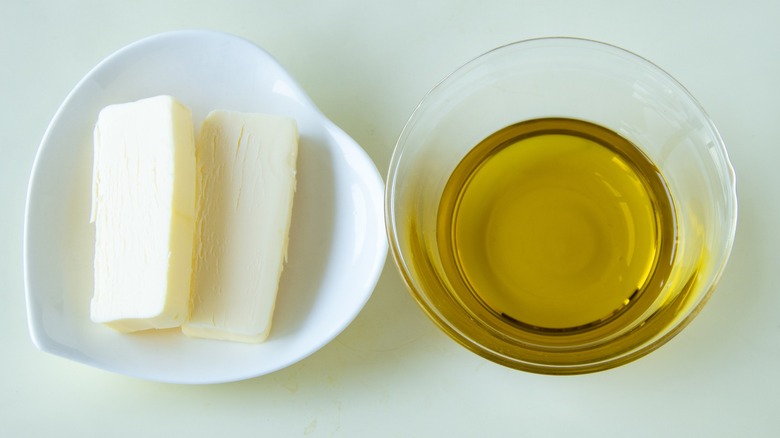
Whether you prefer cakey, chewy, or fudgy brownies, you probably think of chocolate — most brownies' reason to exist — as the most critical component. And it certainly is of primary importance. But the fat you use in your sweet treats can also lead to different outcomes.
Butter and oil, two of the most common fats in brownie recipes, allow you to adjust your final product's textural qualities. Choosing butter creates brownies that look and taste lighter and cakier, while oil results in a glossier finish and denser appearance and bite. Now, whether you use butter or oil, you're probably still going to end up with some pretty tasty brownies. But those density differences can have an effect on your flavor concentration, too.
This isn't some high-stakes, algebraic baking-soda-baking-powder switcheroo, however. You can often substitute butter and oil in brownies one-for-one without any chaotic consequences. But choosing your fat more intentionally will lead to a more predictable finish.
Butter-based brownies are your best bet for a fluffy, cake-like crumb
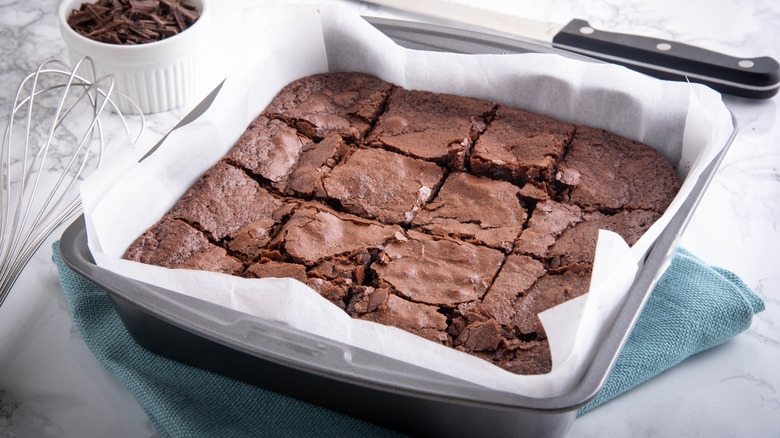
Cakey brownies are airy with loose, delicate crumbs that separate easily and a springy texture that rebounds when gently prodded. That consistency is often created not only by the use of butter alone, but also how you incorporate it.
A lot of cakey brownie recipes call for you to mix room temperature (not melted) butter and sugar together in a process called creaming. It's similar to how cake preparations often begin. Creaming introduces oxygen to the batter, pumping in air to puff up your brownies for the less dense, cakey bite you're aiming for. Those barely perceptible air bubbles expand your brownies and make them stand a little taller. They also create more space for your brownies' flavor to stretch out, which is why you might find that cakey brownies end up with a less concentrated, subtler taste. And some of that airy quality lends itself to the higher water content in butter, versus that of full fat oil.
Oil-based brownies give you a fudgy bite
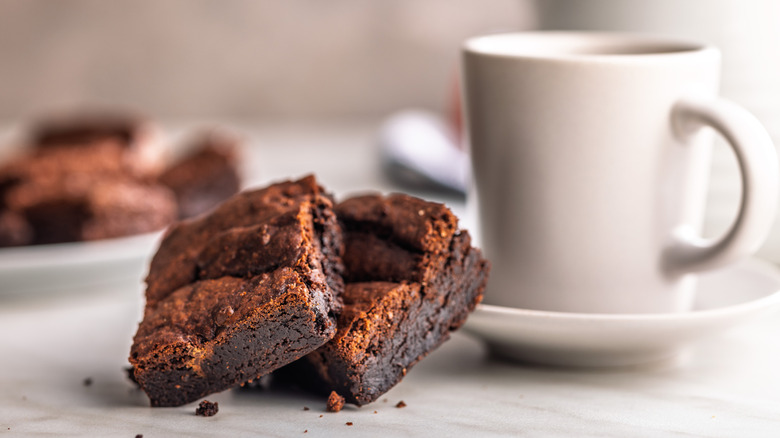
Fat can help your baked goods stay moist. And because oil is fattier than butter, it's just the thing you need for a fudgy brownie. Choosing oil in lieu of butter is a fairly reliable place to start if you want a chewy texture, as oil inhibits the aeration that the butter allows. And without the aeration that helps create a taller, lighter looking brownie, you end up with denser, more compact, glossy-topped squares. That the oil stays liquid, rather than starting in a more solid state like butter and melting while baking, is also what can give those oil-based brownies a slicker feel.
Fat also tends to enhance flavor. That's part of the reason "fat" and "rich" are so often used synonymously. It's also why fudgy brownies just taste more chocolatey: The fattier oil helps to create a richer chocolate taste. Because they're often denser than the cakey variety, that flavor also gets more concentrated bite for bite with fewer of those aforementioned air pockets.
Add-ins and add-ons that work with your carefully crafted cakey or fudgy brownies
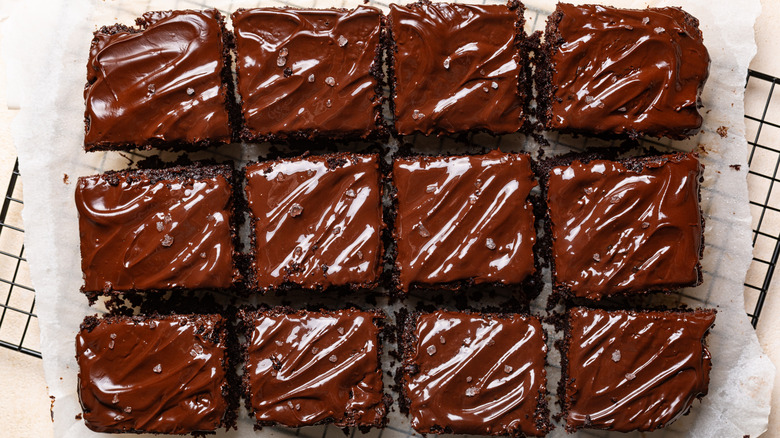
One of the best things about brownies is how adaptable they are, and that extends beyond the butter or oil that might make them more cakey or fudgy. Brownies are also a great canvas for all manner of additions. But, like fats, not all upgrades are created equal. And the fat that you've chosen should also dictate those additions.
Since cakey brownies have a subtler flavor, they can stand up to a lot more additions. While even a light sprinkling of powdered sugar could be overkill on fudgy brownies, it can enhance these fluffier squares. Cakey brownies are also conducive to frosting, which would threaten an intensely fudgy brownie's very palatability. The icing on top can also come in many forms: an easy, three-ingredient pudding-based frosting, some whipped cream (provided you're serving these treats immediately before it can deflate), or even a fun layer of marshmallow fluff.
Fudgy, oil-based brownies really don't need a ton of extra sugar from toppings. But they're great with mix-ins like crushed nuts or the dynamic freshness of something like crushed peppermints. You can also add a few handfuls of dark chocolate chips to bring more depth of flavor without tremendous sweetness or some chopped white chocolate to cut their overall intensity.