

The Reason Restaurant Pork Chops Always Taste Better Than Homemade
We may receive a commission on purchases made from links.
Eating out can be expensive. Cooking at home is not only cheaper but also fun and rewarding. Unfortunately, there can be a bit of a disconnect between the food we eat at restaurants and the food we create at home. With some dishes, no matter what you do, they just never seem to taste as good at home. Whether you are working on a better-tasting burger or trying to make your from-scratch soup taste like a pro made it, the pursuit of restaurant-quality flavor is never ending for home cooks.
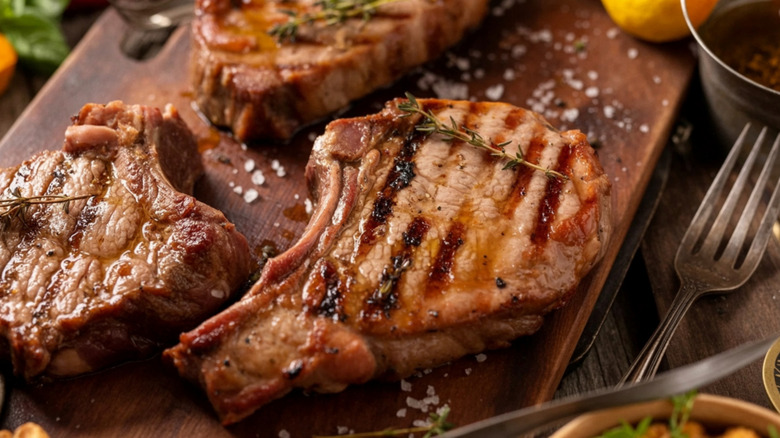
Pork chops are an excellent example. In a restaurant, they are usually moist, tender, and full of mouthwatering flavor, but if the ones you make at home are just not as satisfying, don't give up hope. Temperature and cooking time might just be the culprits. Thankfully a few experts have chimed in to give Chowhound the inside scoop on why this happens and what you can do about it.
Ashley Lonsdale, chef-in-residence at ButcherBox, points out the importance of temperature and cooking time when it comes to making great-tasting pork chops. To get it right at home, she suggests an instant-read thermometer. Seven-Time World BBQ Champion, BBQ Hall of Famer, and author of the upcoming cookbook "Fanning the Flames," Melissa Cookston, also agrees.
"Insert the thermometer into the center of the pork chop to get the most accurate reading and pull it off the heat a few degrees before it reaches the desired temperature as it will continue to cook off the heat," says Lonsdale. Whether you're grilling a seasoned pork chop or making them smothered in an aromatic sauce, using a thermometer to get the right temperature is key for flavor, texture, and safety.
A few notes on temperature
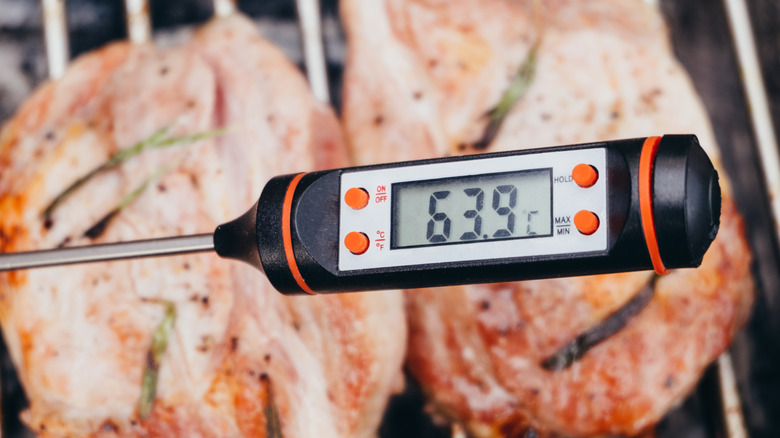
The safe internal temperature for pork is 145 degrees Fahrenheit, followed by a three minute resting time. However, experts have a different take when it comes to removing your meat from the heat. Ashley Lonsdale, for example, recommends using your instant-read thermometer to aim for a temp just under 140 degrees Fahrenheit for a nice, juicy piece of meat, depending on your preference for how well-done you like your pork.
Melissa Cookston is on the same page, especially when it comes to an instant-read thermometer, which she recommends to improve all cooking, not just pork chops. But for those chops, her advice is clear. "Many people still think pork needs to be cooked well-done," she says, but the cooking temp she recommends is a bit lower than the general guideline for pork chops. If this worries you, remember that resting time — the pork will continue to cook once it comes off the heat. "Pull your pork chops when they reach 135 to 140 degrees, lightly cover them, and rest for five minutes," says Cookston. "You'll end up with a perfectly cooked medium pork chop — one that will be juicy and flavorful." She says that if you wait till the meat reaches 145 degrees before you take it out, "the internal temperature will rise, and you'll end up with well-done, tough pork."
Size really does matter
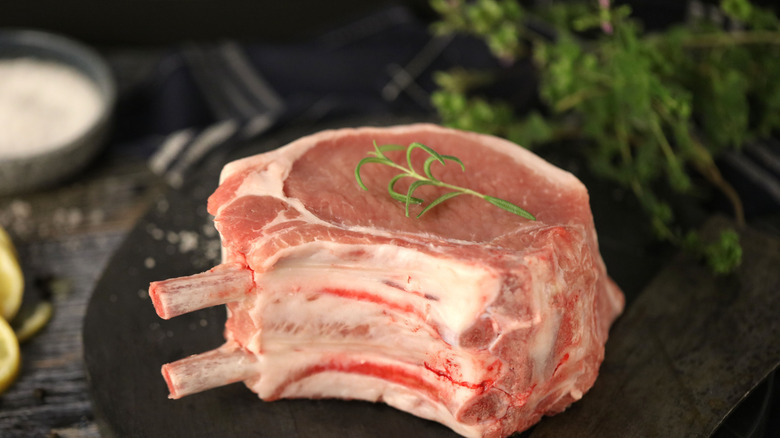
Temperature isn't the only issue that Ashley Lonsdale and Melissa Cookston stress when it comes to perfect pork chops. The size of the pork chop matters — or more specifically, the thickness. Cookston recommends adjusting the temperature throughout the cook, and utilizing both the stovetop and the oven. For a 1-inch-thick pork chop, she recommends searing it on the stovetop for two to three minutes per side before placing in a preheated oven at 325 degrees Fahrenheit.
For thicker pork chops, she has a slightly different approach. "For thick chops, I like to set up a two-zone fire and cook them in a reverse-sear. Start on a cool side, allow to cook up to 120 degrees, remove, and rest for ten minutes," Cookston says. And this is where things get fun. "While resting, fan the hot side of the grill to get it searing hot. Place the pork chop back on the hot side. Sear each side for about two minutes, then remove and enjoy — no more resting needed!"
Lonsdale also recommends adjusting your approach based on the thickness of the chop. "The thing to consider regarding bones or thickness is cook time. Thinner pork chops will cook much faster, so a screaming-hot pan or grill is essential to get a delicious brown crust on the outside," she says.
Temp and cook time aside, Lonsdale also suggests opting for crate-free pork for better taste, whereas Cookston recommends brining the meat before cooking. Even a simple dry brine in salt can give your pork chops more flavor and a crispier crust, she says.