

What Does Walmart Do With Its Returned Food?
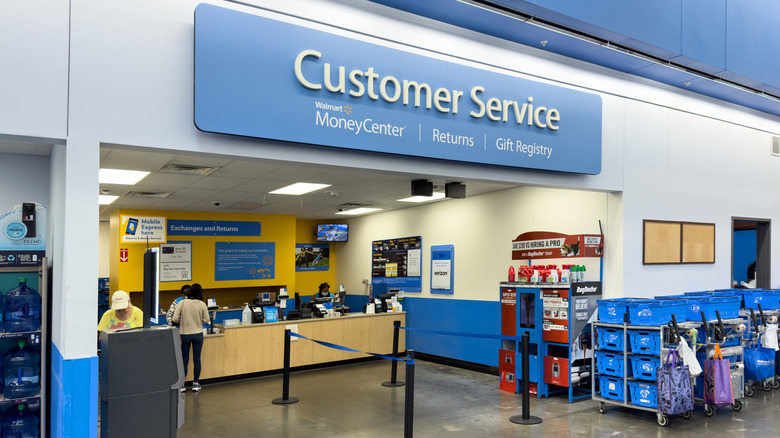
Maybe you picked up a package of ground beef that just seemed a little bit off by the time you opened it up in your kitchen. Perhaps you discovered that the bread you got from the bakery was less-than fresh. Many of us have found ourselves waiting in line at the customer service desk at Walmart to return a food item. If you've ever wondered what happens to the food that gets returned to Walmart though, you're not alone. Unfortunately, the answer seems to be pretty disheartening. According to social media reports, the retail giant throws away all returned food products, no matter the item's condition or the reason for the return.
While many assume this is the case for perishable items, some people on social media were surprised to learn that canned goods and other nonperishable foods — even if they are unopened and still in perfectly good condition — are also tossed if they're returned. While you'll still get your money back if you return food items, the store takes a loss — and the food is tossed in the dumpster. Some people have expressed frustration at the fact that the food isn't marked down or donated. While Walmart and Sam's Club do separately donate food to people in need through various charitable organizations, returned items are not, and it's tough to know that perfectly good-to-eat food is being thrown away.
Why Walmart — and other retailers — have to throw away food returns
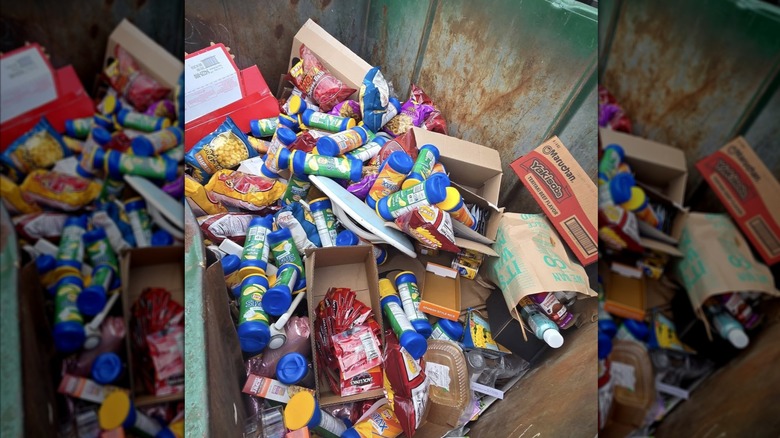
In a time when grocery prices continue to climb and millions of Americans are living with food insecurity, it's frustrating to know that so much perfectly-good food reportedly gets tossed into the dumpster. The supposed reason behind Walmart's policy makes sense, however. The store doesn't put returned food back on store shelves — or donate it to charitable organizations — due to safety concerns. Social media users who say they work at Walmart explain that since the chain can't tell what happens to food products after they leave the store, it's not safe to place them back on the shelf, even if there aren't signs that tampering has occurred. There's also the risk of cross contamination. Walmart isn't alone in its policy — Trader Joe's operates under the same rules for returned food items, as does Costco.
In case you've purchased food from Walmart (or any other retailer) and simply didn't end up needing it or won't be able to use it before it goes bad, you have options if your wallet is okay with taking the hit and you'd rather not see it go to waste. If it's a nonperishable item, consider looking for a community cupboard or little free pantry in your area (they're often located near churches). Rather than going into the dumpster, your nonperishable item will go to someone in need. If you have a perishable item that isn't damaged or spoiled, reach out to local food banks or soup kitchens to ask if they'd be able to put it to good use. In addition to offering items that don't expire, many food banks also offer nonperishable items to support people in need.