

For Perfect No-Flip Fried Eggs, Don't Skip This Step
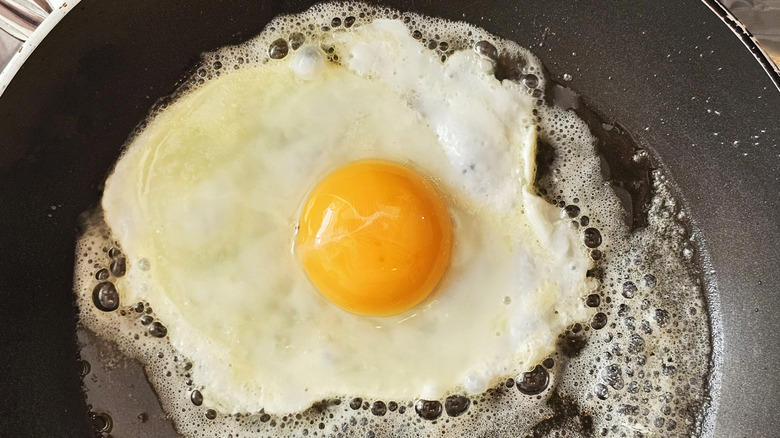
In the quest to master the perfect fried egg, there are many hacks that promise all the golden edges, fully set whites, and popping yolks that you dream of. In reality, though, getting that balance right can be tricky. This is because yolks and whites actually set at different temperatures; whites set at a higher heat than yolks. Luckily, one of the most effective techniques to combat this issue is also one of the simplest. By simply placing a lid on top of the pan, you will trap enough heat and moisture inside to cook the egg's surface and yolk, while the hot pan crisps up the whites. Think of it like creating a double heat environment where the pan creates a crispy bottom layer and the steam cooks the top in a much more gentle fashion so that the yolk doesn't burst.
It's an incredibly handy move, whether you're cooking one egg in a weekday morning rush or multi-tasking many eggs as you grill sausages and bacon to make a full English (or a full Irish) breakfast for multiple people. This one little step guarantees you'll end up with perfectly poppable fried eggs at the end, either way. And all without having to flip them over.
Steam is the key to evenly cooked fried eggs
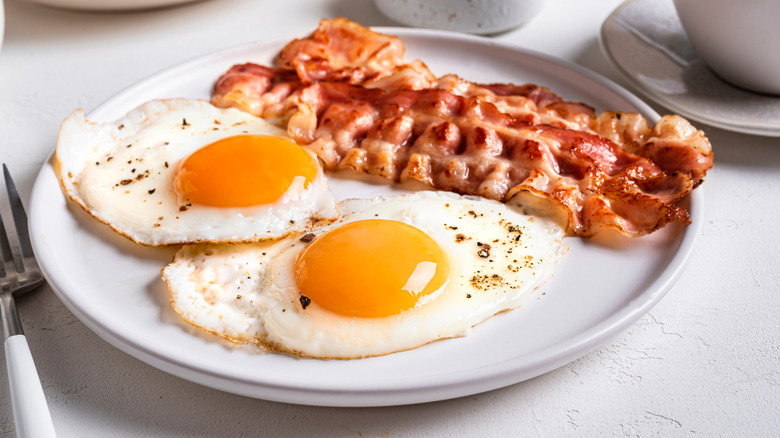
It's the steam that is so important in utilizing this trick. Just a lightly steamy environment is enough for the top to set and ensure a soft yolk but fully cooked whites. Otherwise, you often end up having to flip the egg to ensure all the whites cook through and to avoid burning the bottom. And that's the fasted way to end up with a poorly set yolk. This trick bypasses all of these issues.
Some home cooks swear by adding a splash of water to the pan before they cover it, which will create more steam and help the egg cook faster and more evenly. There's a similar method when making the gooiest grilled cheese that involves an ice cube. Steam is the winning move.
Adding a lid doesn't change the other ingredients you rely on to fry eggs. You'll still need to use fat, whether that is butter or oil, to create golden edges. Then, as your egg cooks, you can add whatever other combinations of chili oil, flaky salt, or cracked black pepper you like. Just make sure that you cover the egg with the lid for the majority of the cook time — so you'll need to season either at the first crack or once your egg is done frying. Once the whites are no longer transparent and the yolk is slightly solid but still has a little wiggle to it, then you know it's ready to serve. Voilà — eggy perfection every single time.