

Always Be Cautious When Tossing Out Your Fruit Peels And Cores. Here's Why
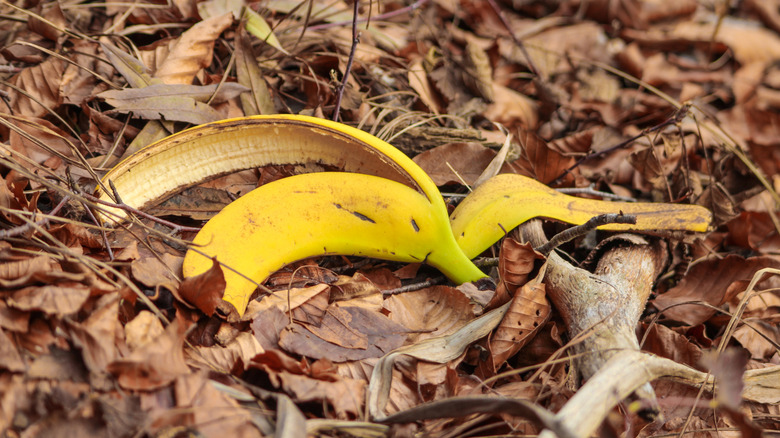
When you've finished a piece of fruit, you might be tempted to toss the peel or core onto the ground. It's natural and should break down fairly soon, perhaps nourishing some wild animals or fertilizing the soil — right? Unfortunately, no: this is a misconception. Food refuse, even from fruits, is not good for local wildlife, the environment, or even the humans around the area. It's litter, pure and simple.
If you dispose of fruit leftovers along roadsides, you're inadvertently luring animals to a high-traffic area where they could be killed by vehicles. Roadkill draws scavengers like coyotes, bears, or vultures, who also risk being hit by cars. Not only is this a dangerous cycle for the wildlife, but it's a danger to human lives as well, since swerving vehicles could get into a collision. Hikers who toss fruit peels or cores in the woods or along trails, or even animal lovers who dispose of fruit waste around their property, could be attracting animals that pose a threat (imagine encountering a hungry bear!).
Even if a wild animal makes it away alive with the fruit debris in its stomach, there are other problems. For one, they've learned to associate human environments with food rather than danger. Additionally, that fruit likely isn't a natural component of their diet — bananas, for example, are not native to North America. There's a balance to maintain. Deer, for instance, shouldn't consume too many foods rich in carbohydrates, like apples, as it can make them ill. And if this weren't enough, those fruit peels and cores don't break down as quickly as you may think.
How long it takes fruit peels and cores to decompose
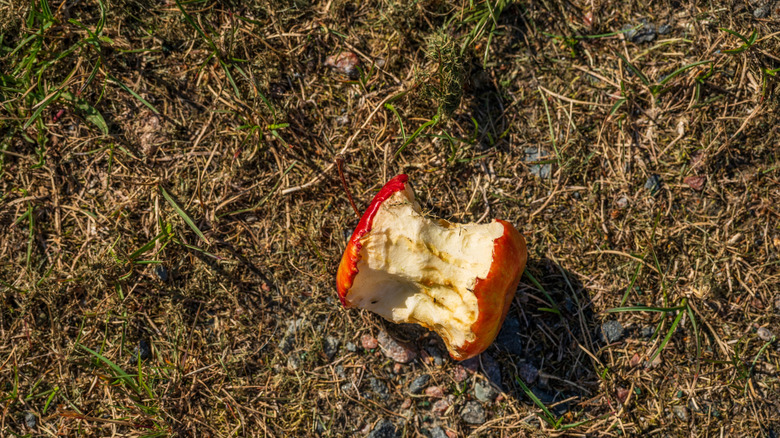
While it may take a rubber boot 50 to 80 years to break down and a monofilament fishing line around six centuries, that doesn't mean the detritus of your all-natural snack rapidly disappears into the biodegrading arms of Mother Nature. The side of a road or forest floor is not a compost bin – an environment optimized for decomposers that can break a banana peel down in a month or so. Without these controlled conditions, you're looking at more like a few months up to two years, depending on geographic factors. An apple core typically takes about two months to decompose. While an orange peel can take up to six months, and a banana peel may linger for as long as two years, meaning it may still be there long after you've forgotten about it.
While nature eventually takes care of decomposition, the cost of convenient disposal is everything that happens in the meantime: wildlife drawn to unsafe food sources, roadside animals put at risk, unpleasant encounters for other people outdoors, and even the spread of non-native seeds. In short, there are better things to do with your food waste than toss it willy-nilly.
What to actually do with fruit scraps
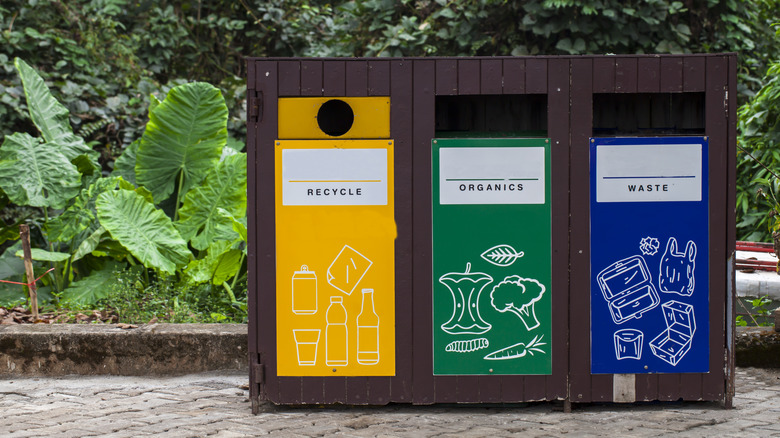
Instead of throwing your fruit peels and cores onto the ground, take a more cautious approach. If you're out in nature, bag the leftovers up with the rest of your garbage and dispose of them at home or designated trash disposal sites. If fertilizing soil was one of the main appeals of tossing fruit scraps in the first place, composting them at home is a better solution. You can include other unexpected ingredients to fertilize your garden, too, like onion peels and even stale, moldy, or dairy-free bread.
Composting isn't the only way to squeeze a little more life out of food waste. There are plenty of ways to use banana peels before throwing them away (or even instead of doing so). Blend them with a little water in a food processor to form a paste, and incorporate eggs, flour, sugar, and butter to make a banana peel cake. For a different take, try banana peel bacon: fry the peels before brushing a sweet-and-savory marinade on both sides and baking for about five minutes. If it's orange peels that you're working with, make an old-fashioned citrus peel paste to use in traditional panettone or dessert frostings. So while these fruit scraps may not be safe for the wildlife, they make delicious food for humans.