

The Origins Of The Classic Whiskey Sour Probably Aren't What You Think
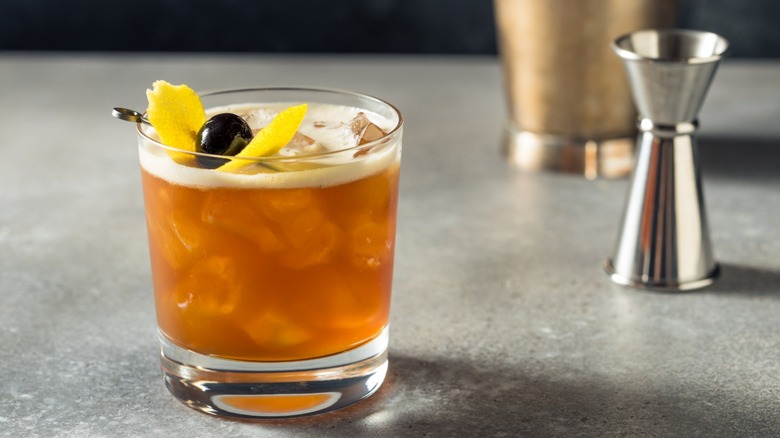
Cocktail trends come and go, but the whiskey sour is one of the oldest and most enduring classics. If you've frequented cocktail bars at all over the past decade, you've probably seen tasty versions of the whiskey sour all snazzed up with various garnishes and liquid additions, maybe a velvety dry-shaken egg white on top. Contrary to popular belief though, that last one is technically called a Boston sour; the original whiskey sour is a relatively simple drink that necessitates just whiskey, lemon juice, and simple syrup. Still, the real misconceptions about the whiskey sour have more to do with its origins than its ingredients. If you think this one came from Prohibition like many other classic whiskey-based cocktails, you'd be wrong.
The whiskey sour doesn't have one distinctive creation point like some popular cocktails with fascinating origin stories, and there are also a lot of varying claims over when exactly it was invented. While we might never know the exact year of its invention or have a specific bar or bartender to thank, we do know that the whiskey sour's history is older and more complex than many of its counterparts. To understand how it began, we have to look back almost 300 years, starting with the nutritional needs of sailors.
It all started with the need to fight off scurvy
Depending on where you look, you'll see a lot of different timeframes for when the first whiskey sour was poured. The truth is that it's just not clear when or where exactly it was invented, but its origins can be traced back at least to the 18th century. That's because in the mid-1700s, British sailors began mixing lemon, lime, and other citrus juice rations with alcohol and sugar to make their daily vitamin C intake more palatable. This was done to prevent scurvy (and, fun fact, the rations are also why the British became known as "limeys") and primarily involved rum, but the grog was so popular that it naturally made its way onshore into homes and public houses and became further refined.
Fascinatingly, the prevalence of scurvy helped usher what would become the whiskey sour further along. There are various reports from the 1800s of American settlers combining citrus with alcohol to help fight off the illness, including one that claims a surgeon treated a patient in Fort Laramie, Wyoming, in 1858 with a combination of whiskey, lemon essence, and cactus plant. Whereas rum and other liquors may have been more popular with the British for this drink, the United States' love of bourbon helped whiskey cocktails — medicinal and recreational — thrive.
We may never know who coined the name whiskey sour
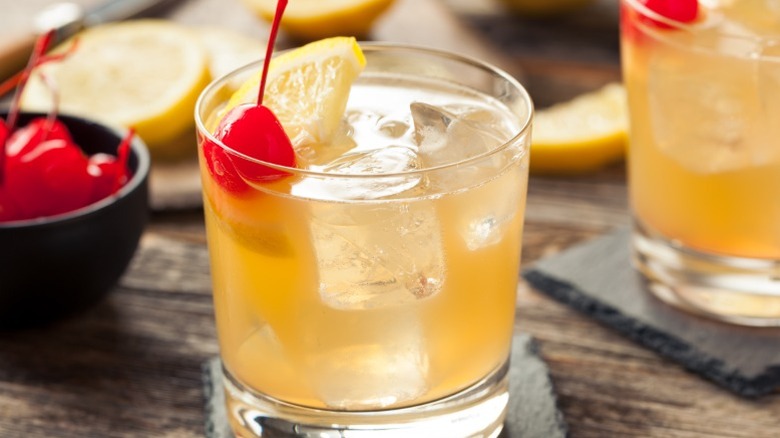
So, when did the whiskey sour actually become "whiskey sour?" The first known printed reference to any cocktail sour appeared in 1862 in a section of "The Bartender's Guide" by Jerry Thomas simply titled "Sours." While some references to this suggest the guide was also the first time a whiskey sour recipe was published, this simply isn't true. The book contains some similar whiskey cocktails featuring lemon and sugar like a Scotch whiskey punch or 69th regiment punch (both often served warm), but its Sours section only offers recipes for brandy and gin versions.
Instead, the first printed reference to the whiskey sour appears to have been in an 1870 article in the Waukesha Plaindealer, a Wisconsin newspaper that ran from 1854 to 1873. But here's the catch: the term appears casually in an article describing someone ordering the cocktail. It's not an article describing how a whiskey sour is made; instead, the way it's presented seems as though the cocktail was already well established at the time and needed no definition for the reader. Much like its exact origins, the whiskey sour's rise to fame remains a bit of a gray area.
Nevertheless, it is well established that American whiskey boomed across the nation's bars and saloons in the 19th century, so it seems likely the whiskey sour became a staple long before Prohibition. And since whiskey remained legal for medicinal purposes at this time, it's no surprise that the sour pulled through and went on to become the beloved cocktail it still is today.