

The Common Storage Mistake That's Causing Your Cast-Iron Pan To Rust Too Soon
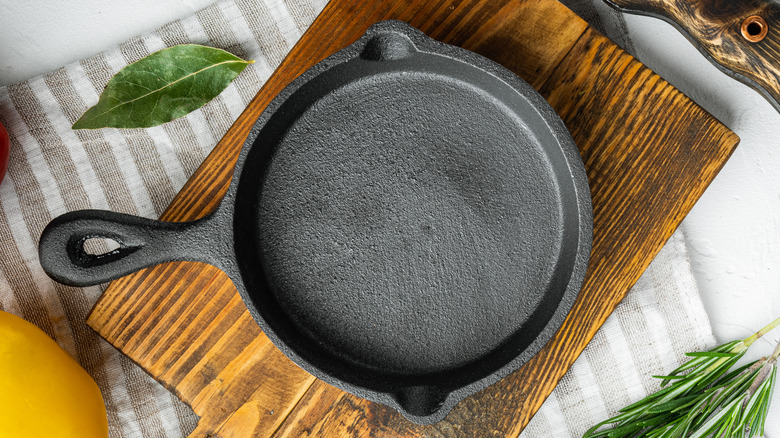
Treat your cast-iron pan right and it'll last a lifetime. No wonder it's among the best cooking pans you can find out there. Whether you're sautéing fresh vegetables, searing a juicy steak, baking a melty Margherita pizza, or simply frying crispy french fries, nothing quite beats a cast-iron pan. But even the most well-maintained pans have an enemy, and for cast-iron ones, that's moisture. That's precisely why keeping your cast-iron skillet with the lid on is a storage mistake that might be sabotaging it.
While you might think you're protecting your cast-iron pan from dust by storing it with the lid on, this is actually a very easy way to trap moisture inside and create ideal conditions for rust to form. Cast iron is both porous and highly reactive. What's more, it doesn't just react with acidic foods like tomatoes, alcohol, or citrus, but also with water. A single drop of trapped water can lead to rapid oxidation, the exact chemical process which leads to the creation of iron oxide (aka rust).
Even with proper seasoning, which is the process of covering the skillet in a thin layer of oil to make a protective barrier and a non-stick surface, cast iron isn't completely immune to humidity. As a matter of fact, the skillet still has microscopic pores that can still let moisture inside, even when you think it is completely dry. This is why proper storage can make all the difference and extend your cast iron's shelf life.
Briefly heating the cast-iron pan will remove leftover moisture
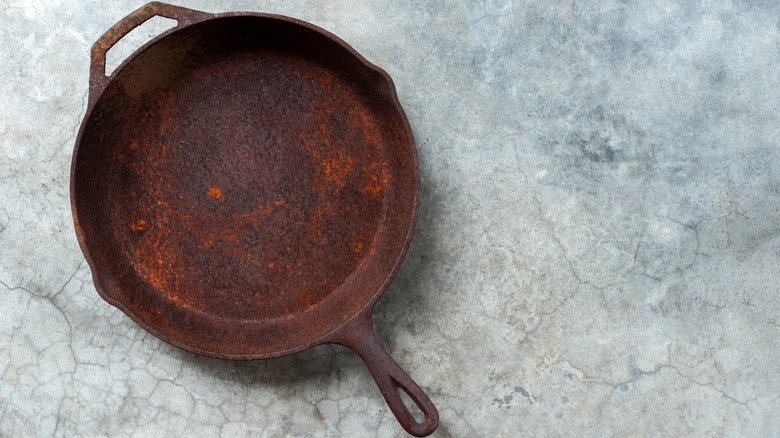
First things first, always hand-wash your cast iron with a drop of mild dish soap and warm water, before giving it a good rinse. Don't ever think about soaking it or washing it in the dishwasher. From there, the proper way to store it begins by heating the washed cast iron on the stove for a couple of minutes to burn off the moisture and make sure it's absolutely dry. If you season it with oil, use a paper towel to remove the excess grease. Then, make sure to store the pot and the lid separately to allow proper airflow. An open cabinet or the stovetop are both ideal storage spots.
That said, if your pan already has rust buildup and you now keep wondering how to remove it without ruining the cast iron, don't lose hope just yet. As long as the rust is superficial and hasn't caused deep damage (warping, cracks etc.), restoring cast iron to its original state is much simpler than it seems. Just give it a thorough scrub to remove all the corrosion and dry it once clean. In case dish soap alone doesn't do the trick, you can soak it in a vinegar-water solution for a couple of hours. The acetic acid present in the vinegar will trigger a chemical reaction once it comes into contact with the iron oxide. The process will result in a soluble compound called iron acetate that can be easily washed or wiped away. Once done, all that's left to do is re-season the cast iron.