

Why Water Spills Could Actually Be Damaging Your Kitchen Floors
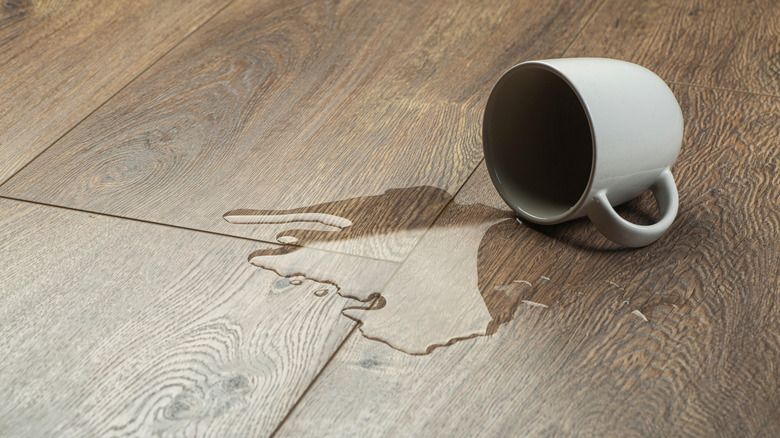
Hand-washing your dishes typically means that a little water will almost always find its way onto the floor, regardless of how careful you are. And chances are, in most cases, you probably leave it to dry on its own, rather than take a paper towel and wipe it away. While tile floors can handle occasional water spills (even though they're not completely immune to them either), wood and laminate are among the worst kitchen flooring you can choose when it comes to water resistance.
Wood and laminate floors can easily be damaged by water. This is precisely the reason why you should not pick these kitchen floorings unless you're ready for costly repairs. In case the water spills are not cleaned up quickly and these floors are exposed to excess moisture, they can easily warp, swell, or even buckle. With wood flooring, extended contact with water can cause unpleasant odors. In some cases, it can even lead to structural decay, as a result of fungi (which grows in such damp environments) digesting and breaking down the lignin and cellulose present in the wood. And even though laminate is considered a more durable alternative, it is still made of compressed wood fibers and susceptible to similar damage.
Hence, the flooring's lifespan will be cut short, and as a result, you'll be forced to replace it much sooner than you initially intended. And that's not exactly cheap, so this essentially means that you could end up spending top dollar to fix or replace your kitchen floor. So, the best thing you can do is protect your floor from the start by wiping those spills.
These simple tricks can help your kitchen floor keep its original shape
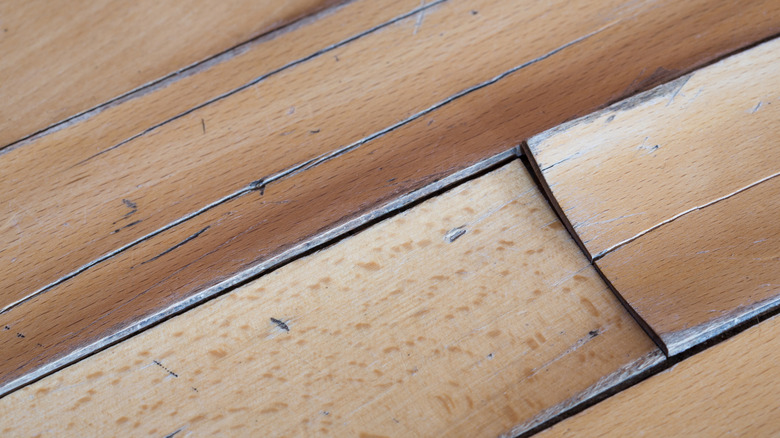
There are certain things to keep in mind when preventing that stylish kitchen flooring from getting damaged. Of course, the first and most important step is to clean up water spills right away as they occur, instead of just letting them sit. Keep in mind that even though some wood-based floors can tolerate moisture for up to 24 hours, others may begin to warp within minutes or hours.
At the same time, kitchen rugs can be extremely useful when it comes to absorbing small splashes of water. Placing them in areas that are most exposed to water, like under the sink or near the fridge, can make a huge difference. However, it's also important to wash and dry them regularly, as they're not water-resistant. This will help protect your floors from further damage such as discoloration due to exposure to a damp rug, or prevent mold growth in the form of green, white, or black patches between the planks.
A dehumidifier can also be a very helpful tool, as it can absorb excess water that has penetrated between or underneath the flooring. All you have to do is place it near the affected area and keep it running for about a day. Ultimately, unlike tile or vinyl, laminate and wooden floors should be cleaned with a vacuum or microfiber mop, instead of a regular wet one. You can further protect your wooden and laminate floors by using pH-neutral cleaning products or natural agents. Diluted vinegar can also be an effective cleaning solution in certain cases. Even then, make sure to not use too much of the cleaning liquid — the mop should be only slightly damp at best, not wet.