

Why You Should Avoid Buying Olive Oil In Bulk
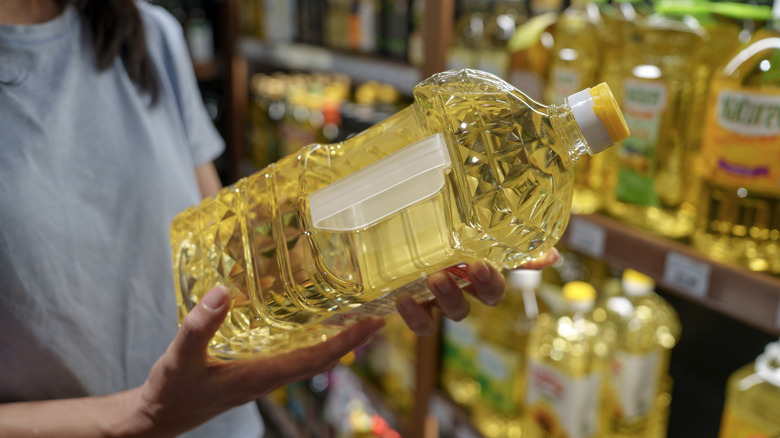
You've studied our ultimate guide to buying olive oil, you're in the store, and you see a fantastic deal. The catch: it's a massive quantity of olive oil, and you're not sure whether it's a smart buy. Unless you're running a restaurant or hosting a massive dinner party, it's usually not a good idea to purchase olive oil in bulk. Once you open a bottle of olive oil, you've got about three to four months before it starts to go bad. It's tough for the average at-home cook to go through more than a regular bottle or so of olive oil in that time, so it's not a great idea to buy it in a bulk package (even though the lower price that often comes with buying in bulk can make it super tempting).
If you find a deal on a bunch of smaller, individually packed olive oil bottles, that's a comparatively better option, though there is still a time limit. Olive oil can stay good in unopened containers for a year and a half, so you may be able to to get away with using them one at a time. But before you buy, you'll want to make sure to check the date of harvest on the back, as the 18-month window starts from that point. It will also clue you in on how long the bottles were sitting on the grocery store shelf. Also be sure to follow smart storage tips to protect the oil from early spoilage.
Bought too much olive oil? Follow these tips to avoid spoilage

While you can't make olive oil last forever, there are a few steps you can take to help it last a little bit longer, which can be key for getting your money's worth if you bought in bulk. You'll need to protect against olive oil's three biggest enemies: heat, light, and oxygen. In most cases, you'll want to store olive oil in its original bottle (as long as it's made of dark-colored glass — you'll want to steer clear of plastic containers). You'll want to keep your olive oil in a cool area, if possible. While your bottle may look pretty on your kitchen counter, it's key to never store it next to your stove and any other appliances that generate heat. A tight seal on your storage container is also important for keeping oxygen out and lengthening the life of your oil.
Before you toss out olive oil that you've had sitting around for (maybe) a little bit too long, you'll want to take a few steps to tell if it's still fresh so that you don't unnecessarily throw away any of the good stuff. While there's no hard-and-fast test to make sure olive oil is fresh, you can rely on your senses to give you some solid info. Good olive oil should smell bright — if you notice a wax-like scent, it's probably time to toss it in the trash. Tasting your oil can also give you some clue as well. If you notice a stale taste, it's likely that your bulk buy is past its prime.