

Here's Why Ikea's Prices Are So Cheap
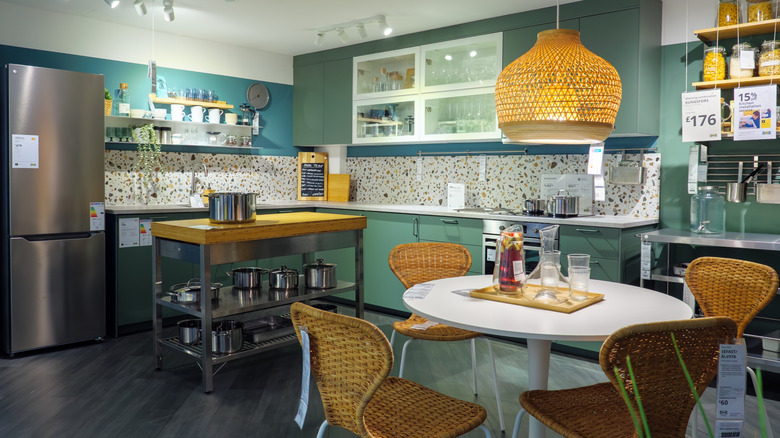
Whether it's building a new kitchen or just buying a few utensils, shopping at Ikea can feel like a mystifyingly good deal, with no shortage of affordable kitchen essentials to snag for $5 or less. So, how does the Swedish furniture giant manage to offer, what are considered, affordable prices for well-designed products that do the job (even though they may not be built for decades of use)?
It comes down to a few factors. First is Ikea's flat-pack design, referring to the way its furniture is stored in compact boxes that you have to assemble at home. This means Ikea's products take up less space, so you can transport or store more in a confined space. The savings from this method stack up when a company operates thousands of stores and ships millions of products. And as previously mentioned, flat packing means you have to assemble Ikea's furniture yourself. This also saves some dough as the company doesn't need to pay workers in factories or stores to do this, outsourcing it to consumers at home instead.
Then there's Ikea's focus on "democratic design," where designers are pushed to create simple yet functional accessories and furniture by skipping frilly flourishes (think about it: Can you recall an ornate piece of Ikea furniture?). This way, products can be made efficiently, relying on standardized components that repeat across different furniture items. Plus, as a huge company, it also benefits from economies of scale, so it can negotiate lower prices for raw materials.
Materials, logistics, and furniture that isn't made to last

Design, assembly, and mass production aren't the only things keeping Ikea cheap. The materials it chooses for many products also keep prices down: Specifically, hybrid materials like particleboard and fiberboard are cheaper options than using solid wood, and relatively easy to cut or shape. Additionally, they're lightweight, which can help lower shipping costs.
Ikea's firm control over its supply chain is one more factor in its affordable products. The company restricts stores from ordering too much of any one item, so if it doesn't sell well, they aren't stuck storing huge quantities of unwanted furniture (although this can backfire with items running out, as happened during COVID).
Then there's the question of quality. Many Ikea items are designed for short- to medium-term use. To put it not so kindly, many of its products are not built to last generations, and there's more than a few kitchen items you should avoid buying. This means the company can get away with using cheaper materials and slapping things together fast, in part due to its target market of renters, students, and budget-minded households who are looking to pay less now, rather than invest in furniture they'll keep for life.
Overall, Ikea doesn't have one magic trick for its cheap kitchens: It's a carefully integrated system where everything from design to the materials to shipping and assembly are set up to keep costs down, even if this means only okay quality of its products.