

The Fast Food Chain Responsible For A 24-Year-Old Burger That Never Rots (Yikes)
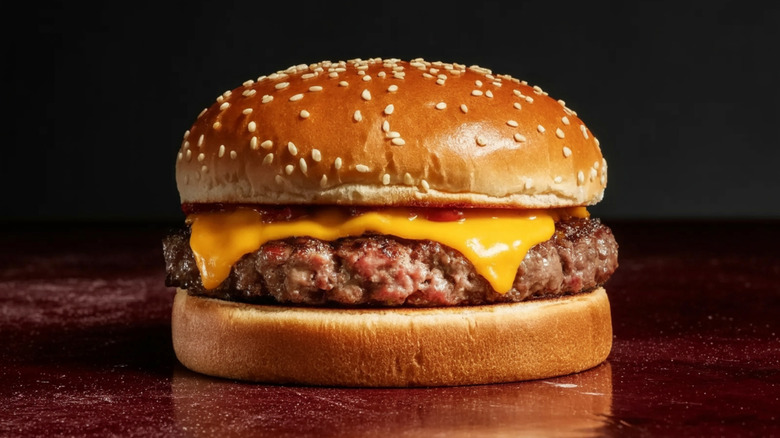
Anyone who's ever been on the internet — so, all of us — has seen them. Those photos and videos that resurface every few years of McDonald's burgers that have apparently been sitting out for years, but still look alarmingly okay. Certainly not edible or appetizing, but just like a dried-out version of what you'd buy if you walked into a McDonald's now. There's the case of a 6-year-old Happy Meal posted about in 2016, the decade-old burger and fries discussed in 2019, and a more recent iteration — a 2020 video shared to TikTok in which a woman pulled a McDonald's order still in its wrapper from the back of a closet. It turns out, this burger and fries meal was an incredible 24 years old, but contained no rot, mold, or fuzz to show for its age.
The reason why these stories tend to go so viral (the 24-year-old burger and fries amassed 4.4 million views on TikTok) is because they're just plain mind-blowing. We understand how food works; we've all watched food break down over time even when stored in our fridges, so seeing a meal look recognizable after such a significant amount of time is alarming. It makes us wonder what we're putting in our bodies. It makes us question the health implications of eating foods that apparently time can't touch. Some of these meals have even been brought into classrooms to teach young people about nutrition, and the fear behind them is spread so wide and so far that they become undisputed facts. But is there more to the story?
The truth behind the viral never-rotting burgers
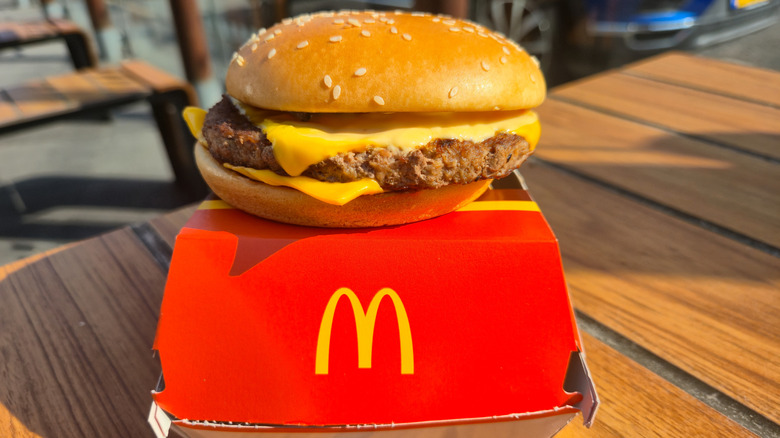
These videos and images are usually cited as proof that fast food is full of ingredients that should send you running, and at first glance, they do look pretty sinister. However, food science may have a much more boring explanation. Simply put, bacteria needs moisture to grow, so if the burger was left somewhere dry where it was able to dehydrate quickly, then it's not going to rot in the ways you'd expect. It's kind of the same idea behind jerky or dried fruit; once the water is removed, then the decomposition slows right down. So it could be less about what's inside the burger and more about what's around the burger — and in most of these cases, the burgers were stored in air-tight bags or even glass cases.
However, even with science debunking it, the story of the never-aging burger perseveres because it's much more scandalous and exciting than the truth. These fossilized burgers may have nothing to do with McDonald's adding preservatives, or the cut of meat McDonald's uses in its burgers, or even the ways in which McDonald's cook its food — but that doesn't make headlines because the visual of seeing an intact hamburger that could legally vote, drink, and drive is one that's hard to shake.