

This 1953 Chili-And-Gelatin Dish Has Us Wondering What Cooks Were Thinking
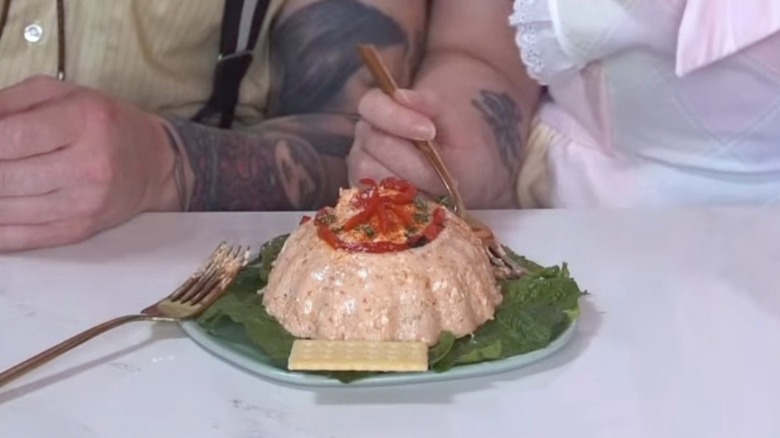
It's tough to create a chili and cheese dish that isn't delicious. Poured over nachos? Delicious. Used to top a hot dog? Iconic (the origin of the chili dog is still a culinary mystery, by the way). Mixed with gelatin? Maybe not so much. The account @retrorecipeskitchen recently shared a video recreating a 1953 chili cheese salad, and it wasn't exactly appetizing.
The recipe started by combining a number of questionable items — chili sauce, salt, cottage cheese, mayonnaise, and gelatin (bet you didn't see that combination coming). From there, the recipe says to whip up (literally) a cup of heavy cream before folding it into the gelatin. And it wouldn't be a '50s gelatin recipe without a festive mold — this specific video uses a pineapple mold, adding a slightly confusing touch to the fruit-less gelatin salad. While the recipe calls for the gelatin mold to be chilled in the fridge until it's firm, the fun doesn't stop there. Home chefs are instructed to place it on top of lettuce leaves before garnishing with tomatoes — nothing quite like dressing up a gelatinous mound of condiments and cottage cheese with some salad bar vegetables.
Why, exactly, were 1950s recipes so unbelievably gelatin-heavy? It wasn't a conspiracy from big gelatin (at least, we don't think it was). Let's take a look at exactly why '50s kitchens were always stocked up on the wobbly stuff.
Why '50s home cooks — and those who came before them — were so into gelatin
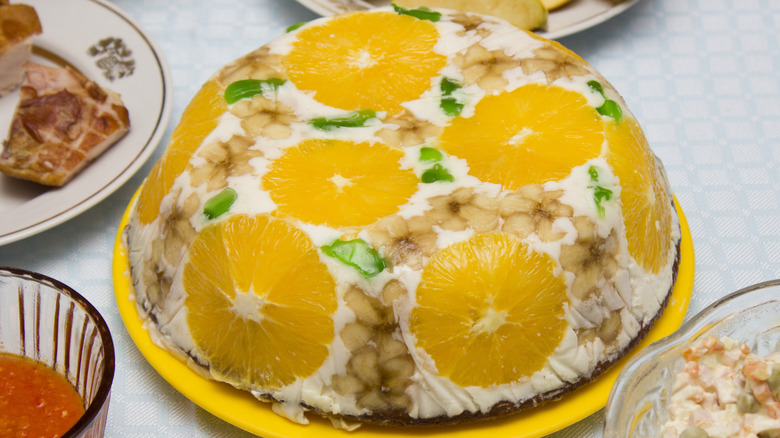
Chili-cheese-gelatin salad certainly wasn't the only cold, jiggly main dish that graced post-war dinner tables. If you could hop into a time machine and join a family for dinner in the 1950s, there's a pretty good chance something wobbly would hit your plate. Gelatin was crazy-popular in the mid-century era, and many '50s cookbooks leaned heavily on Jell-O as a main ingredient. Some say it symbolized a commitment to home cooking, despite many women heading to the workforce for the first time.
The '50s weren't the first time gelatin-infused items hit the table, though. Back in the 1400s, gelatin represented wealth and status. Making gelatin was a long, arduous task that most people didn't have the time or resources (namely, large quantities of animal bones) to brew up a fresh batch over a fire. By the late 1800s, gelatin was easier to obtain thanks to the launch of powdered Jell‑O. So while a chili cheese gelatin salad might make us squirm today, medieval diners and mid-century families alike would have happily dug in — showing that humans have been weirdly devoted to wobbly, savory dishes for centuries.