

Heavy Kitchen Use Doesn't Stand A Chance Against This Ultra‑durable Countertop
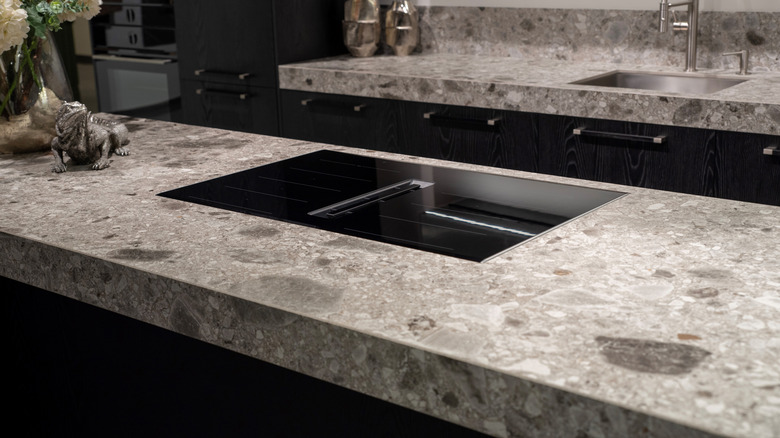
People who use their kitchens on a daily basis need to carefully choose their countertops. Durability, visual appeal, and maintenance are just a few factors worth taking into account. Marble, for instance, is undeniably beautiful, but its soft texture and porosity make it vulnerable to stains and damage. This is precisely why you should think twice before choosing white marble kitchen countertops. Glass is yet another material you should rule out. It's fragile, prone to scratches, and can't withstand high heat. This has prompted many homeowners to turn to Dekton instead.
Developed by Cosentino, a Spanish company that produces innovative architectural surfaces, Dekton is a non-porous, scratch- and stain-resistant countertop material made by combining quartz, porcelain, and glass. During an exclusive conversation, Jan Odesanya, founder and principal interior designer at Mondän & Co. Interiors, said she has used Dekton for years and seen firsthand how it performs in kitchens.
"Dekton is an ultra-compact surface made under extreme heat and pressure," Odesanya told Chowhound. To make such ultra-compact countertops, engineers expose raw materials to temperatures reaching nearly 2,200 degrees Fahrenheit. They then compress them under 25,000 tons of pressure. Because of this, Dekton countertops can safely handle temperatures of 752 degrees Fahrenheit without sustaining any damage. "Heat is where it truly stands apart," she said. "I would never recommend putting a hot pan directly on quartz, but with Dekton that kind of use isn't an issue."
Where Dekton stands among other countertop brands
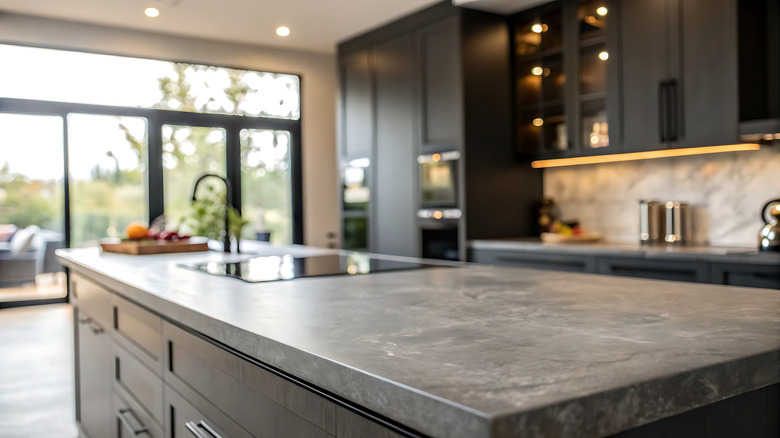
When asked how Dekton compares to other countertop materials, Jan Odesanya said the main difference from granite and quartz is Dekton's consistency and stress tolerance. "Quartz is durable for daily life, but it relies on resins, so heat is always something to watch. Granite handles heat well, it's porous and unpredictable. Some slabs chip or stain more easily than others," Odesanya explained. At the same time, you really don't want marble countertops in your kitchen.
On how it stands against Corian, another premium non-porous surface made by U.S. chemical firm DuPont, Odesanya stated they're two fundamentally different materials. "Corian is an acrylic-based solid surface. It's forgiving and repairable, but it's also sensitive to heat and scratching," she disclosed. "In everyday kitchens, that shows up quickly. Hot pans, curling irons, or sustained warmth can permanently mark it."
While Dekton is a proprietary material with no direct generic match, there are other ultra-compact surfaces on the market. Neolith, for example, is made from minerals, clays, feldspar, silica, and natural oxides. The process uses laser sintering to merge the raw material layers into a single unified piece. There's also Italy's Lapitec, a sintered stone. The slabs are silica-free, fully natural, and made by blending mineral powders, such as anorthite, wollastonite, albite, hematite, mullite, zircon, and hematite, with water. However, according to Odesanya, these surfaces are not equivalent to Dekton. "There are other ultra-compact surfaces on the market that aim to compete in the same category, but they're not interchangeable just because they look similar."
Dekton is impressive, but far from perfect
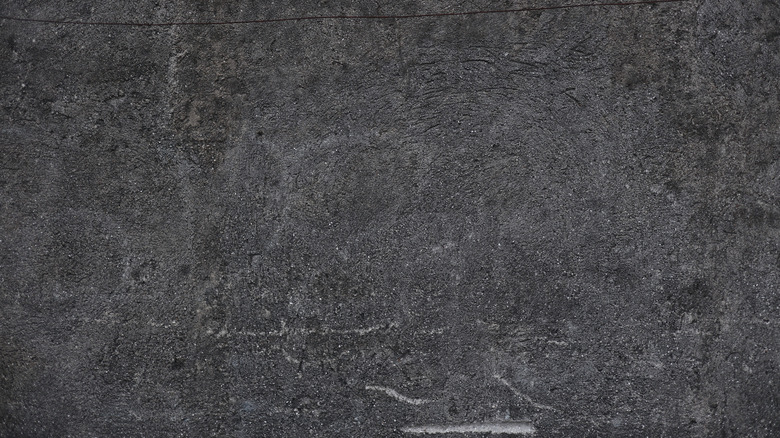
Because of Dekton's outstanding ability to withstand heat and scratches, it's ideal for homeowners who spend a decent amount of time cooking, but want to avoid countertop stress. That said, while it's not the worst kitchen countertop choice if you hate streaks and constant cleaning, Dekton isn't flawless. "Where clients need to be aware is impact, especially at [the] edges," Jan Odesanya pointed out. "Because it's very dense, a hard knock on a corner can chip it, and repairs are not seamless like they can be with softer solid surfaces."
What's more, due to its density and weight, Dekton could require professional installation. This can further increase overall costs, which are already high; they can even reach up to $160 per square foot. "There's no perfect countertop material," Odesanya said, adding that each countertop alternative has its own strengths and weaknesses. "Dekton excels at heat resistance and durability, but it requires careful detailing and realistic expectations around edges."
On whether it's worth the investment, Odesanya stressed that Dekton is a great fit for people who need a surface that can handle heat and heavy daily use without constant maintenance. "I often recommend it for serious home cooks, busy families, and clients who treat their kitchen as a working space rather than a showpiece," she concluded. "For lighter cooks who mainly want a beautiful surface, Dekton can be more than they actually need. For many households, quartz still performs very well at a lower cost."