

Why Your Beautifully Marbled Ribeye Isn't Ideal For A Pot Roast
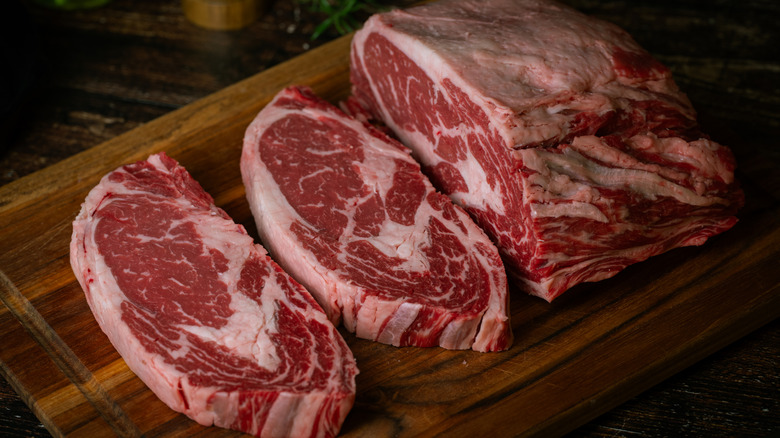
It can be tempting to use only what seems to be "the best" for any recipe. But there's a reason you don't see a ton of chateaubriand or filet mignon smash burgers. Some cuts of beef are better suited for certain applications — and others you'll regret throwing in the slow cooker altogether. The type of meat you use becomes especially important when it's destined for a long cook, like a pot roast. So, while that beautifully marbled ribeye you might have spied at the butcher's counter would be best with little more than salt, pepper, and the kiss of fat and a flame, it would fizzle out under the pot roast slow-cooking treatment.
The same qualities that make a ribeye great as a standalone entree make it totally unsuitable as the primary component of a pot roast. The ivory fat that gives a ribeye its dainty, lacy appearance against an otherwise crimson canvas would turn to mush after hours of cooking. Cheaper chunks of cattle are just better for a pot roast recipe, which actually does make them "the best," at least in this case.
Why cheaper, less marbled beef is the best for pot roast
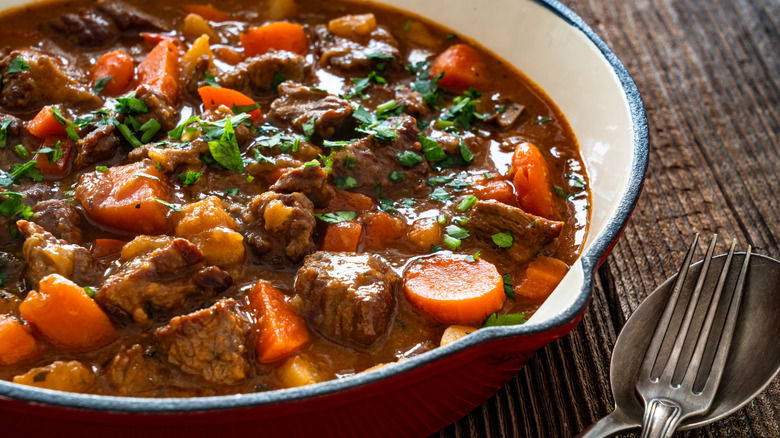
Big, tough cuts of beef without a lot of marbling best stand up to long bursts of heat. Their heartier constitution takes longer to reach an appealing tenderness — just about as long as it takes to make a pot roast, as luck would have it. That's why none other than Julia Child preferred a bottom round for her pot roast, a selection that you can still reach for today.
A bottom round, which will generally be among your cheaper cuts per pound, is from near the rear of the cow, where it gets consistent working out. That tightens up the fibers and creates what would be a pretty tough bite, were you to mistakenly prepare it like one of your more marbled steaks. Given the time to bathe in a braise with other ingredients like carrots, onions, and potatoes, however, it renders just right. A good, old chuck roast, from the shoulder or neck area, is similarly tough but richly flavored, thanks to its higher collagen content. Slow cooking transforms it into a tender, juicy centerpiece, and in a pot roast, both bottom round and chuck will surpass a marbled ribeye every time.