

Japanese Whisky Is Similar To Scotch, But There Are Some Key Differences
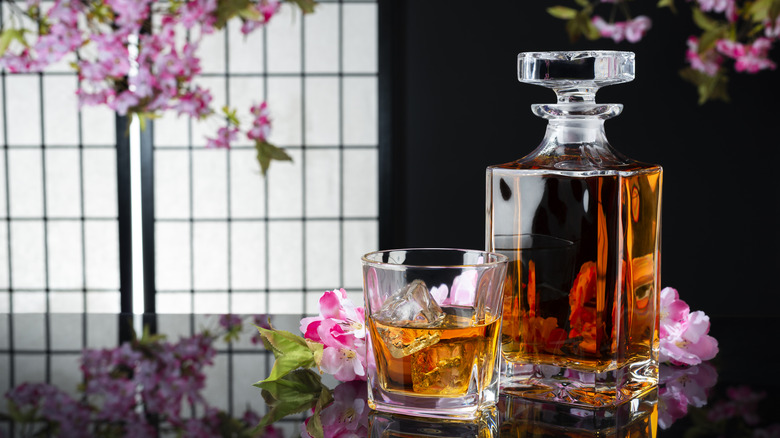
The honor of the origin of whisky – or whiskey depending on where it comes from – would seem to go to Ireland, with evidence of distillation recorded as far back as 1170. Yet, it's Scotch whisky that has become more renowned, perhaps in part due to its signature smoky flavor originally derived from peat fires. But while Ireland and Scotland have the heritage, Japanese whisky is a relative newcomer that's been growing in popularity. In fact, Japan has gone from welcoming its first distillery in 1923 to boasting 140 or so distilleries today.
The origin of Japanese whisky begins in Scotland. In 1918, Masataka Taketsuru traveled to Scotland to learn the art and science of whisky distilling. In 1923, when Shinjiro Torii founded the Yamazaki distillery in Japan, he hired Taketsuru to produce the brand's first batches of whisky. Japanese whisky may have started with Scotch techniques and flavors, but, guided by Japan's philosophies of monozukuri, shizen, and kaizen, it quickly evolved into something uniquely Japanese. It was this focus on craftsmanship, constant improvement, and working in harmony with natural elements that created an industry unafraid of experimentation.
Rather than everyone adhering to a single process, distilleries in Japan pride themselves on producing a wide variety of whiskies. Companies use different types of stills, proprietary and imported yeasts, sometimes even peat from Scotland, and casks of varying ages and types. They can then blend to create the flavor profile desired.
Exploring Japanese whisky's distinctions
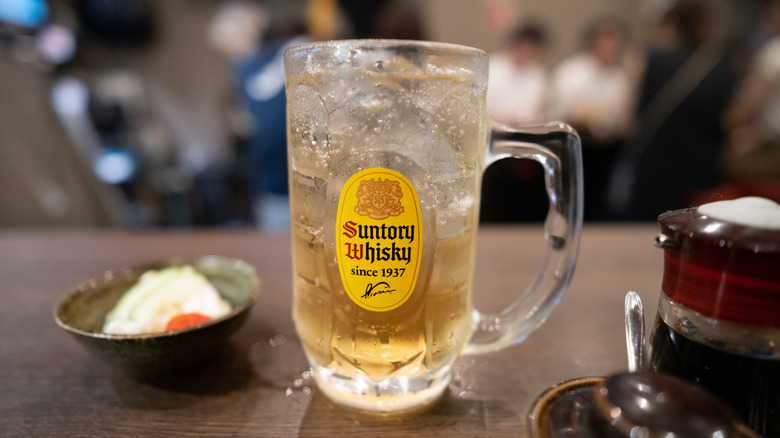
Japanese whisky must be made in Japan, aged for at least three years, and bottled in the country, according to the guidelines set by the Japan Spirits Liqueurs Makers Association (JSLMA). Many brands rely on low-mineral soft water for a gentler taste and take a similarly chill approach to aging, choosing high-altitude distillery locations for a more manageable, balanced maturation. And, just like Scotland's distillers turned to peat to dry their barley because it was readily available, Japanese distillers capitalize on their natural resources. Some Japanese whiskies are aged in Mizunara oak barrels, which is more porous than its American white oak counterpart, and imparts notes of sandalwood and incense.
Another key difference between Scotch and Japanese whisky is not in how it's made but rather, how it's enjoyed. While many prefer their Scotch simply neat or on the rocks, Japanese whisky culture prizes fastidiousness, right down to how many times it's stirred or how many ice cubes to add. There are a couple of popular whisky drinks you'll see in Japanese bars: the highball and mizuwari. The highball is a straightforward concoction commonly made with whisky, soda water, lemon, and ice in a tall highball glass. Mizuwari, which translates to "cut (wari) with water (mizu)," consists of only whisky, ice, and still water. With how well whisky works in cocktails, it's no wonder there are numerous variations of traditional whisky cocktails, like the Tokyo sour or umami old fashioned. Whisky should be an enjoyable experience, whether at home or your favorite whisky bar, so drink it the way you prefer.