

Why A 'Fandelier' Is The Kitchen Upgrade All Home Cooks Need ASAP
We may receive a commission on purchases made from links.
Keeping your kitchen cool and comfortable is almost always a struggle, especially when you're whipping up classic Salisbury steak for dinner or baking a batch of your favorite chocolate cherry-stuffed cookies. Kitchens are working spaces, full of activities that naturally generate heat, both from cooking and gathering with loved ones. Even if you're the kind of person to always be putting on an extra sweater or aiming for the seat near the radiator, an overly warm kitchen quickly becomes a less than pleasant place to hang out.
That's where creative solutions like the fandelier come into play. While you can easily reduce the heat in your kitchen with an exhaust fan or open window, extremely hot or cold outdoor temperatures render these solutions pretty ineffective. A fandelier, on the other hand, creates a steady breeze that efficiently circulates air in your space to keep it from feeling stuffy — and it does it very stylishly. Though ceiling fans have been labeled as ugly and outdated for a while now, the fandelier is helping to bring them back in a new and exciting way.
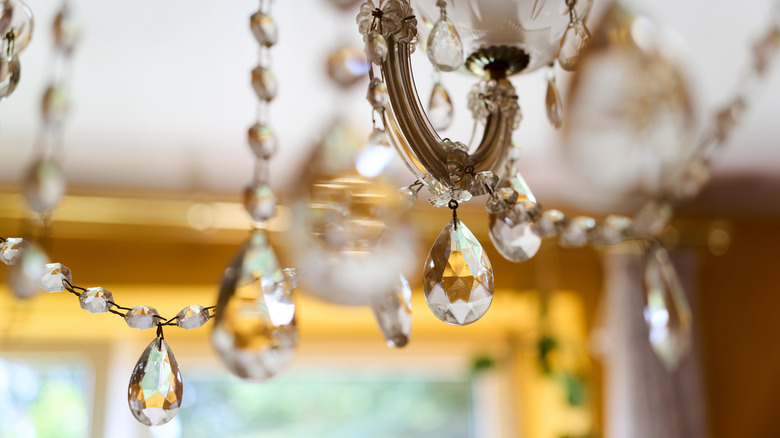
As the name suggests, a fandelier is a combination ceiling fan and a chandelier, offering the functionality of a ceiling fan with the beauty and style of a chandelier. The short fan blades are hidden behind beautiful metal or woven latticework or strands of crystal, with lighting clustered in the center where the blades meet. Take, for instance, Ledier's black caged fandelier with a modern, industrial look, or Opkmb's boho rattan fandelier. Choosing the right one not only keeps your kitchen cool, it also helps brighten the space.
Pros and cons of a kitchen fandelier
The greatest advantage of installing a fandelier as opposed to a conventional ceiling fan is the hidden fan blades. Regular ceiling fans often disrupt the look of a room with long blades that collect dust and often look dingy from wear and tear due to constant movement. With a fandelier, the blades are hidden or obscured. They may still need to be dusted and cleaned to keep your kitchen sanitary and free of allergens, but even if they wear down over time, no one will be able to see them. Some models even have retractable blades that disappear inside the central light fixture when the fan function is turned off.
Another advantage is that the fan blades are shorter than most conventional ceiling fans, making fandeliers a great choice for small spaces. The smaller blades still move air fairly efficiently, but won't dominate your kitchen with their presence. Of course, this is also a disadvantage in larger spaces, as the smaller blades may have trouble evenly distributing air in spacious kitchens with higher ceilings. In this case, it may be best to install more than one fandelier and combine them with other methods for keeping your kitchen cool in the summer.
Fandeliers do tend to be pricier than either chandeliers or ceiling fans, making them something of an investment. Because of this, it's important to make sure the style and size of fandelier you choose will work in your space before committing to a purchase.