

Here's What To Know Before You Put That Wooden Bowl In The Microwave
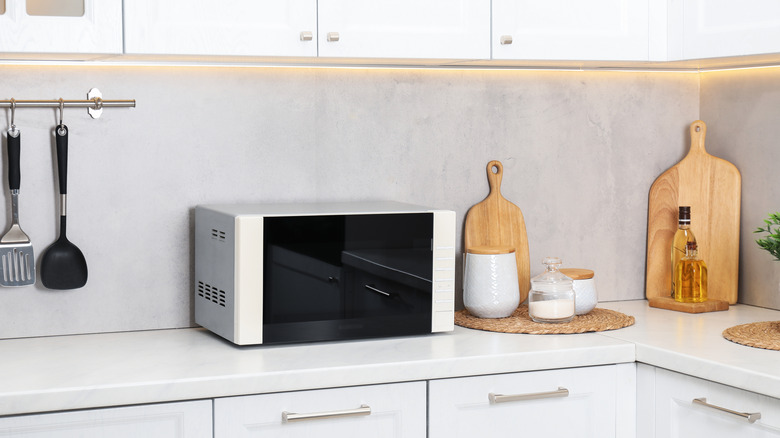
Though there's an argument to be made that there's simply no need to have a microwave anymore, they're not completely obsolete just yet. Many of us still have microwaves in our homes and use them daily for everything from heating water for that morning cup of tea to using the microwave to temper chocolate to coat homemade treats. For now, at least, they're still a pretty useful item to have in our kitchen — provided, of course, that we use them safely and with a healthy dose of common sense.
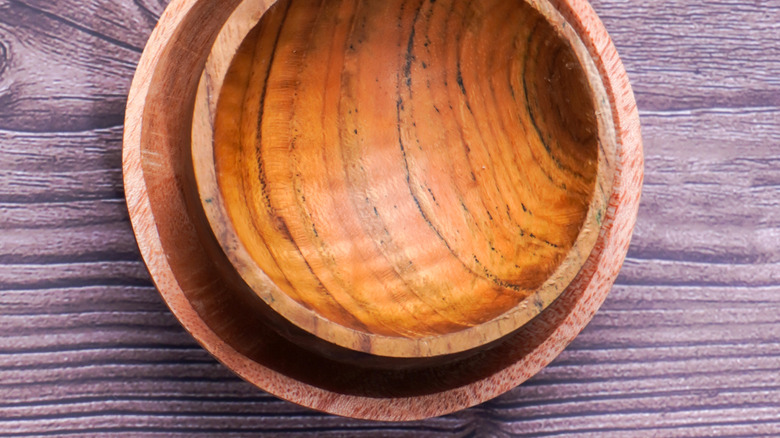
Though plastic vessels are the traditional container of choice to chuck into the microwave, increasing concern over potential health risks associated with microplastics has many people turning to more natural materials, like wood. Many assume wood is a safer choice than plastic for warming food — but the opposite may be true. Wooden bowls aren't made to withstand repeated exposure to direct heat, so microwaving can cause them to dry out over time, resulting in warping and cracking.
Additionally, many wooden bowls are made using a variety of glues and finishes that make the vessels sturdy and smooth. This means that when you're heating your wooden bowls in the microwave, you're not just heating the wood, but also the chemicals in these other materials. When heated, these chemicals could leach unhealthy materials into your food just like plastic, making them no safer and potentially more hazardous, as heat-related cracks in the finish could foster bacteria or mold growth.
Microwave-safe alternatives to wood (and plastic)
The best way to protect your wooden bowls from heat exposure is to keep them out of the microwave altogether. Glass containers offer a safe way to make your favorite hot pot in the microwave without exposing yourself to potentially toxic materials. Glass is nonporous, meaning it doesn't have tiny nooks and crannies that harbor germs or mold, and it's very easy to wash and disinfect. BPA-free silicone is another microwave-safe alternative to wood — in fact, some silicone food storage containers, such as Souper Cubes, are also oven-safe. This often indicates they're also microwavable, as they're made from food-grade silicone that's FDA-approved for heating food. When choosing containers made of alternative materials, be sure to stick to trusted brands or check labels to ensure they're heat-proof and microwave-safe.
If you've already microwaved your wooden bowls and they're starting to look a bit dingy, don't worry — unless they're severely cracked or moldy, you can likely still save them. Small cracks can be filled with food-safe wood glue, while finishes can be restored with olive oil, beeswax, or similar food-grade products. Avoid putting wooden dishes in the dishwasher and store them in a cool, dark, dry cabinet. Additionally, if you'd like to continue eating from your wooden dishes regularly, you can simply microwave your food in a glass or silicone vessel, and transfer it to the dish of your choice. This keeps your wooden bowls beautiful and protects your overall health.