

This Nutritious, Underrated Vegetable Is Packed With Prebiotics For Gut Health

If you've been around "health-conscious" spots online or in brick-and-mortar stores for the past few years, you've likely encountered someone talking about gut health and its driving force: the microbiome. Experts confirm that yes, gut health is a real thing. Trillions of microorganisms inhabit our gut; their collective community is known as the microbiome. Keeping the microbiome happy is a key part of overall health, and eating foods containing prebiotics is a great way to support healthy gut bacteria. (It's partly why prebiotic sodas are suddenly everywhere.) Sunchokes, or Jerusalem artichokes, are one prebiotic-rich root vegetable that doesn't get as much attention as it should.
Sunchokes look like gnarled, warty, bedimpled potato-ginger hybrids, but don't let their unusual appearance turn you away. They're a very high source of prebiotics – specifically inulin, a type of soluble fiber that the body does not digest, which can help keep you feeling fuller for longer. (They're packed with as much as 75% inulin by dry weight.) When raw, sunchokes taste a little sweet and nutty, not unlike water chestnuts or potatoes, and they have a crunchy texture. Cooking brings out a more starchy texture and artichoke-like notes (though these veggies aren't artichokes at all). Sunchokes have plenty of culinary versatility, allowing you to reap their prebiotic benefits while enjoying them in a range of dishes.
How to prepare sunchokes
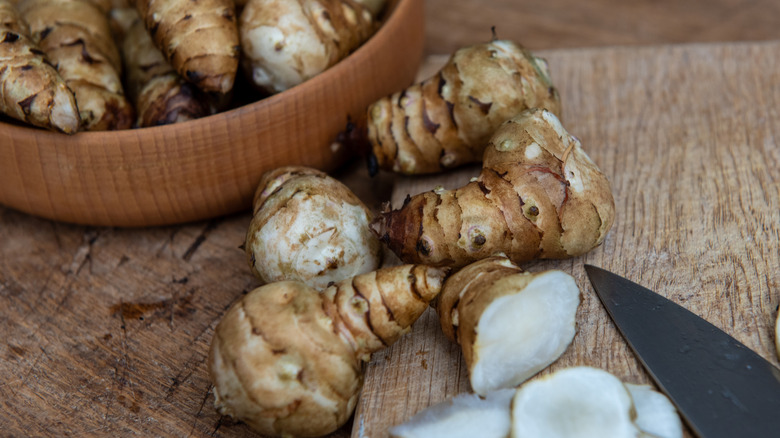
Before we go into the best preparations for sunchokes, there's something you need to know: Sunchokes aren't nicknamed "fartichokes" without reason. Their reputation as a toot inducer is due to the high inulin content that makes them so rich in prebiotics in the first place. This is similar to why you have to watch out when introducing keto breads (which we ranked) into your diet — they typically contain added inulin.
When trying sunchokes, start with a small serving, especially if you know you have gastro sensitivities; remove the peel, and avoid eating them raw. Some cooks find slow-cooking helps convert the inulin into a more digestible form, much like cooking meat low and slow breaks down its collagen. A simple soup with garlic, onions, celery, stock, and sunchokes is a delicious way to enjoy this nutritious tuber. Cook the aromatics first, add the sunchokes and stock, and simmer for about an hour. Puree it until smooth and creamy. Another method for taming sunchokes is to slice them into ¼-inch pieces and boil them in lemon juice for about 15 minutes. This yields a nice sweetness, though you'll sacrifice the artichoke flavor that typically comes out from cooking.
If you know you are ready to graduate from slow-cooked or boiled sunchokes, roasting them enhances their nutty flavor and offers a texture reminiscent of potatoes, minus the potential blood sugar spike; sunchokes have a lower glycemic index than the spud. Try 325 degrees Fahrenheit for an hour and a half to ensure that the inulin gets a chance to break down.