

The Dead Giveaway On Coffee Packaging That You're Drinking Low-Quality Beans
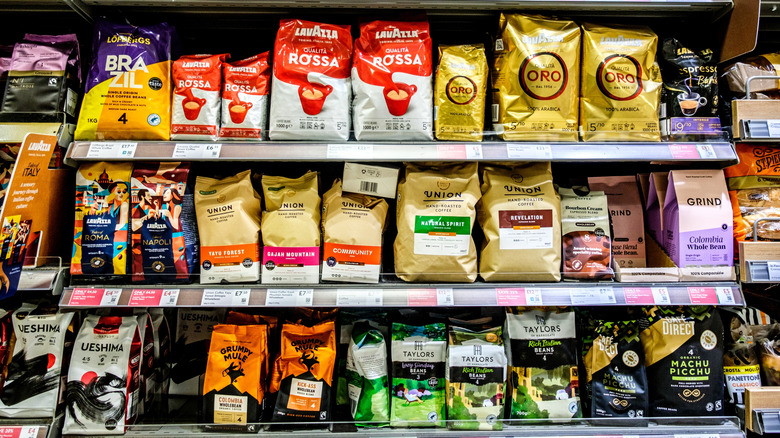
Few things can derail a day faster than a bad brew. Good coffee isn't cheap, but with all the options on the shelf, it can be hard to choose just one bag of coffee beans. To avoid buyer's remorse, it's best to start learning how to spot the best coffee bean brands for all your brewing needs. One dead giveaway that you're drinking low-quality beans is right on coffee packaging, and that's the lack of one important disclosure: the elevation at which those beans were grown.
Everything from the roasting process to a coffee's country of origin can tell you something about its flavor. Elevation plays a role as well. Generally speaking, coffee beans grown at higher elevations produce a better flavor. The cooler temperatures at these heights slow the growth of the coffee plant, giving it more time to develop the sugars that translate into more nuanced flavors. Drainage also tends to be better at higher elevations. This means less water in the beans and a more concentrated, distinct taste.
Coffee plants grown at high altitudes might bear less fruit and take a longer time to mature, but the wait is often worth it. When shopping for coffee, look for words like "altitude," "elevation," or a number with the acronym MASL (or just M) beside it. This stands for "meters above sea level," and anything above 1,200 MASL will likely have the depth and richness serious coffee drinkers are looking for.
What to expect from beans grown at a higher elevation
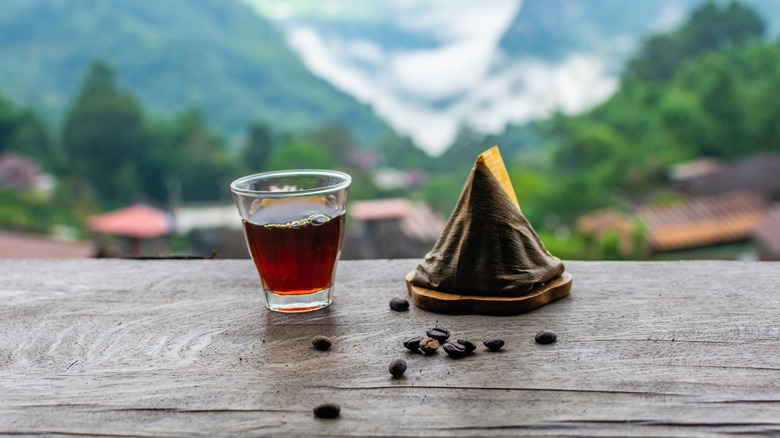
The actual taste of any coffee bean varies depending on a myriad of factors, and you shouldn't rely on elevation alone to decide whether you should buy a bag. For example, if a country is located near the equator, or the climate is unusually hot, a higher elevation might not equal cooler temperatures. There's no reason to choose coffee beans by altitude in this case. Still, if elevation is noted on a package of coffee, it is often a good sign. It suggests a brand is not only affected by elevation, but is also proud of its process. Who doesn't appreciate a little clarity and passion?
That said, if a bag notes that the beans were grown 1,200 meters above sea level or higher, you can often expect a more distinct flavor profile. Expect something acidic, fruity, spicy, or sweet. The appropriate adjectives will also likely be listed on the packaging, so you won't have to guess. Beans grown below 1,200 meters tend to have a more subtle, generic flavor. If something mellow is what you're looking for, this might be a good option for you. A bag of beans that lacks any signifier of elevation is likely a part of this category. After all, if the flavor is generic, there's little reason to highlight where it was grown.