

How This Pantry Staple Can Up Your Fried Egg Game
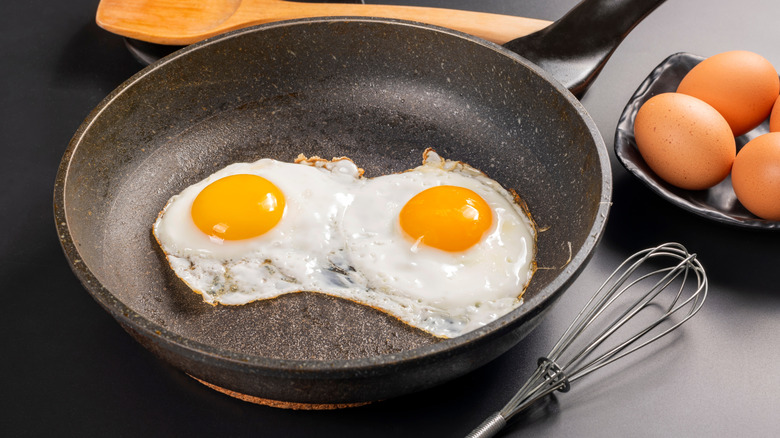
When it comes to cracking a fried egg in a pan in the morning, most of us default to salt and pepper. But did you know that a small dash of vinegar could be the game changer your breakfast has been waiting for? And just a little goes a long way. The acidity in vinegar helps egg whites to set faster so they don't spread across the pan too much (it's the same reason why people add vinegar to the pot when poaching eggs as well). When used for frying eggs, vinegar ensures you don't end up with a large, thin white, but rather a more compact shape that sits neatly around the yolk.
That's not all. By adding just a splash of vinegar, your fried egg will not only look much more aesthetic, but it will also ensure your yolk doesn't harden as you wait for your whites to cook through, resulting in a more tender texture. So if your idea of a perfect fried egg is one with a runny yolk and fully set whites, this could be the trick you've been looking for. Moreover, the vinegar also helps to brighten up the richness of the yolk in a similar way to how a squeeze of lemon brightens a fatty sauce, making your fried eggs feel a little lighter.
How to use vinegar alongside classic egg-frying fats
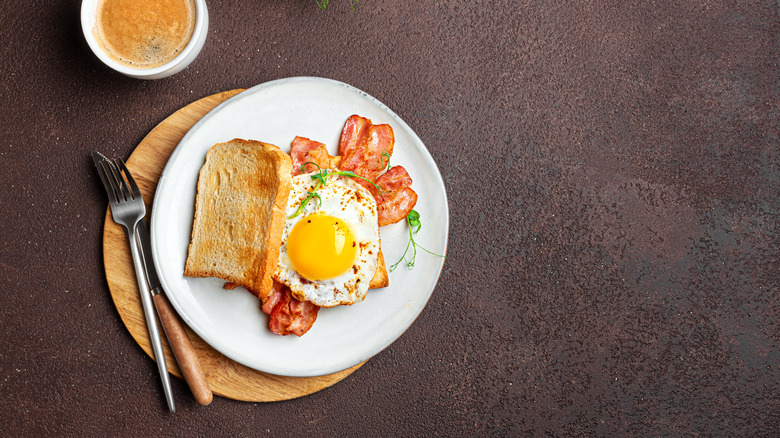
In order to really implement this trick, you don't need to completely change the way you make fried eggs. Instead, add it into your typical fried egg cooking method. We're not replacing the fat for vinegar here — a lot of the flavor and texture for fried eggs comes from the fat you fry them in. Whether you prefer bacon grease or butter, fat is what stops the eggs from sticking and creates the crispy edges. What vinegar brings to the party is much more subtle. Think of it like a small addition to create some balance and improve the texture of the fried eggs.
All you have to do is add a light splash (about half a teaspoon) to the pan once the egg has been cracked to watch the acid work its magic on the white. Just make sure you don't go overboard, because too much vinegar will overwhelm the taste. It's also best to stick with a mild vinegar. Red wine vinegar is a riff on the French dish "oeufs à l'assassin", but white wine vinegar or apple cider vinegar would be good options too.
And once you're comfortable with this trick, you can then start to get a little creative. There are herb-infused vinegars, shallot vinegars, or even easy three-ingredient red wine vinaigrettes that can be used to take your fried eggs in all different directions, depending on how you're serving them. It's one tiny little tweak that could make all the difference.