

When To Leave Those Shrimp Tails On For Easier Cooking Overall
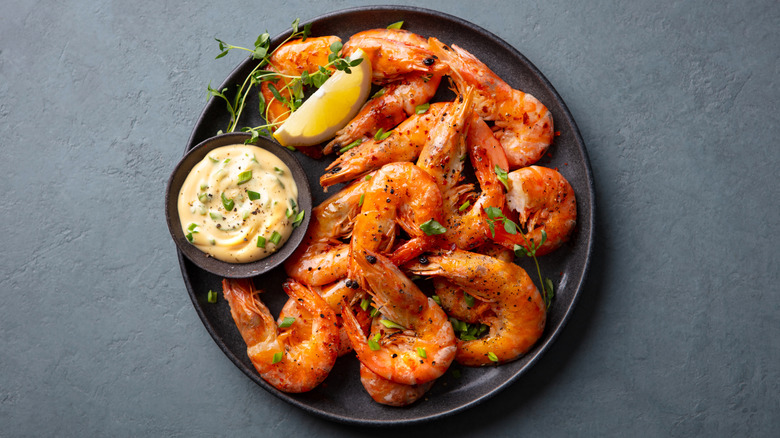
For every taste and personality, there is shrimp preparation to match. Crispy coconut shrimp fits the bill for those in want of a tropical twist (it's also a great use for leftover coconut milk). And those hoping for a crunch to accompany a sushi night may find ample snacking with shrimp tempura. However, when it comes to cooking up those tasty little crustaceans, some basic guidelines may override serving preference. For example, you should clean and devein your shrimp prior to cooking, thaw the crustaceans in the fridge and never in your sink, and cook them until they reach 145 degrees Fahrenheit internally. Another tip? Make sure to cook shrimp with the tails on, especially when frying.
Now, this may be upsetting news for those who are staunchly anti-tail, and we get it. The tail is often the least-loved part. It seems only to be a crunchy impediment to enjoying the tasty crustacean in one bite. However, it might just be the key to the perfect shrimp dish (seriously). Not only does keeping the tails on your shrimp add flavor, but it also makes prep and cooking much easier to handle, literally. The hard shell tails make a great handle for cooking or dipping each shrimp in breading and batter, making the process simpler and less messy. It even helps during the cooking process, as the tails can help prevent your shrimp from rolling up into a tight curl and sloughing off that essential breading.
Embrace the crunch, or enjoy shrimp tails another way
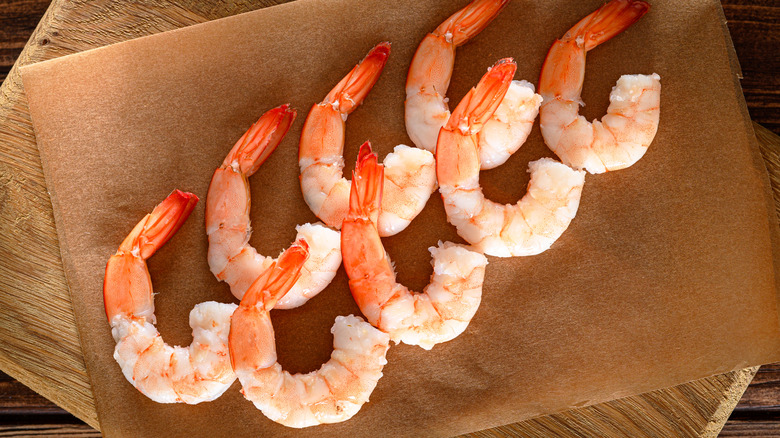
The good news for tail haters is that you can absolutely remove the tails of your shrimp while eating. However, if you're shell curious, you just might want to consider trying a bite of the tail. And, yes, you can absolutely eat the tail of shrimp. Not only are shrimp tails great for cooking, but they're also pretty good for you too. Shrimp tails are full of vitamins and minerals, as well as chitin, which is a source of fiber that's good for gut and immune health. Plus, the tails are really quite delicious if you're able to acquire a taste for them.
If you're simply not a fan, you might still want to keep a hold of those crunchy little tails (and shells), as cooked shells make a great base for a seafood stock. Put that to use for various soups, sauces, gumbo, risotto, or even a creamy shrimp bisque. That way, you can rest assured that those tails won't go to waste.