

The 1800s Canned Dairy Brand Past Generations Put In All Their Recipes
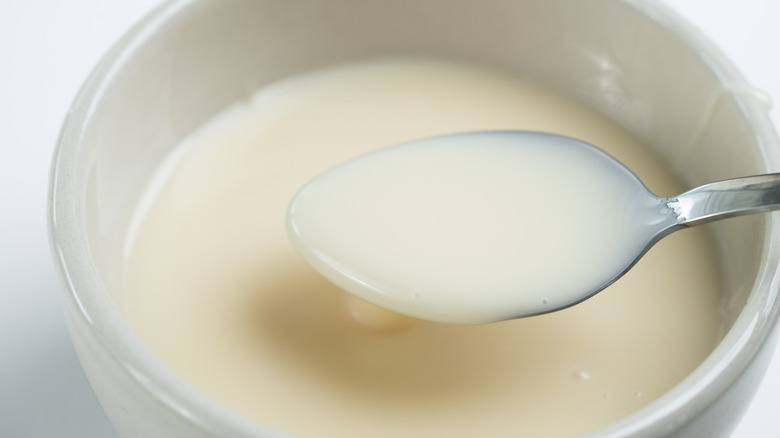
Canned evaporated milk may seem like an anachronistic food, a relic from a different time, like canned whole chicken or canned cheeseburgers, which were once popular but have fallen out of favor. But evaporated milk was once a go-to recipe ingredient and should still have a spot in your pantry. Evaporated milk, as the name suggests, is cow's milk that's been slowly heated until it's lost 60% of its water content and sterilized in cans. This isn't the same product as sweetened condensed milk, which has added sugar.
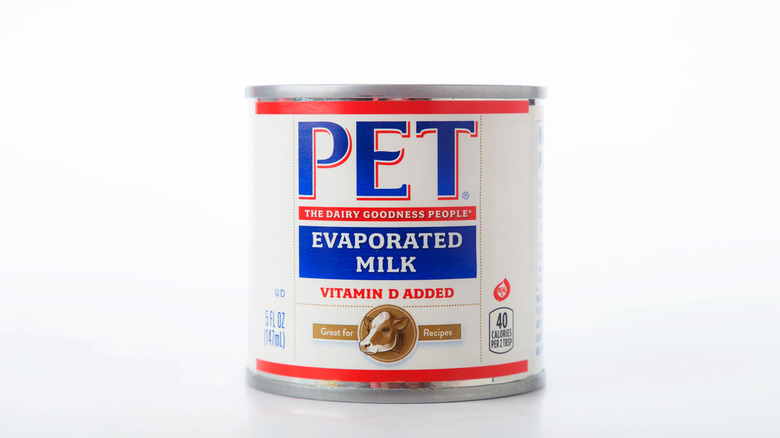
Canned evaporated milk, especially under the PET Milk name — the original that's still around more than 140 years later — has quite a history. It's gone to war multiple times as rations for soldiers and was a kitchen staple for generations of Americans because it didn't require refrigeration. Its popularity was also due in part to the company's free recipe books available from the 1930s to the 1960s. Home cooks used it in everything from cream sauces to cakes to soups. And it all started with Napoleon (kind of).
History in a can that's still useful
French confectioner Nicolas Appert came up with a method of canning food in the early 1800s and was awarded the equivalent of around $300,000 by Emperor Napoleon I in 1809 for his revolutionary work. Appert created the first evaporated milk in 1810. Then, in 1853, Gail Borden came up with his own method for evaporating milk in a vacuum, but added sugar to create sweetened condensed milk.
But it wasn't until Swiss inventor John Meyenberg patented a new method for producing evaporated milk in 1884 that what we recognize as today's evaporated milk came along. After convincing the townspeople of his new home in Highland, Illinois, to back his venture, production began on Meyenberg's product in 1885. It would eventually be called PET Milk. The U.S. military used the brand's products during the Spanish-American War and World Wars I and II. From there, it became a household essential.
Today, it remains a staple in Hispanic cooking in dishes like tres leches cake and flan, and the eggnog-like drink coquito. With its slightly caramelized flavor and smooth texture, it's also the secret to creamier macaroni and cheese, soft pralines, and even tender whole wheat bread. So try this secret weapon from your grandmother's kitchen arsenal and get cooking.