

The Condiment You Should Always Ask About At A Mexican Restaurant

Mexican food now makes up 10% of all U.S. restaurants. From modern spins to traditional Mexican spots, there's no shortage of them in America, and we're not complaining. Despite Mexican cuisine's popularity, however, you might not be aware of this important detail. Here's something to consider to ensure a great time: always ask about the salsa and whether it was made in-house — if the menu hasn't told you that yet. When Chowhound spoke exclusively with Luis Gómez, executive chef at Lomas Hospitality, we learned more about the essential role of this condiment. "Salsas are a fundamental part of Mexican cuisine," the chef highlights. "They can be used not only as an appetizer, but also as part of the dish itself, or even as the main element that defines the flavor and character of the meal." This is also a good baseline that goes a long way in spotting a traditional Mexican restaurant.
Salsas aren't an afterthought; rather, the flavorful sauces captivate the taste buds for a more meaningful bite, whether it's tacos, burritos, or quesadillas. But other than being a versatile condiment, it's also a reflection of culture. "Creating house-made salsas that respect our gastronomic culture while adding a personal touch can result in truly unforgettable experiences," Chef Gómez mentions. If the restaurant has some house-made salsas, it's best to take advantage of that and watch them do wonders for your food.
The art of fresh salsa
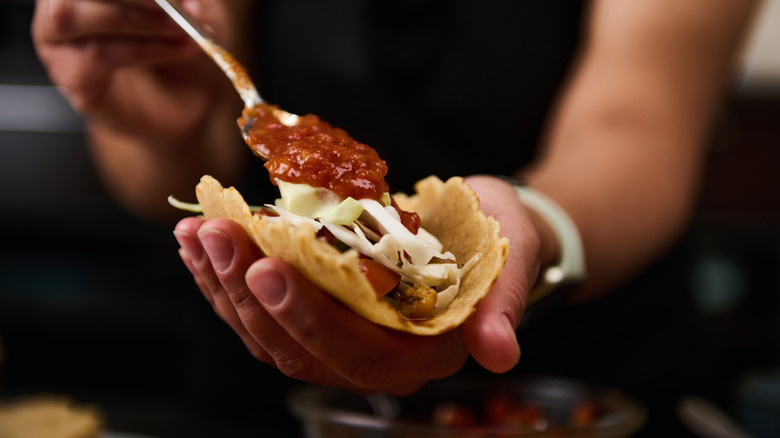
The key to a more flavorful salsa – and why it's incomparable to a bottled version — is the freshest ingredients, and the freshness starts with the tomatoes. Roma or plum tomatoes (especially the variety helpfully called "fresh salsa" tomatoes) are usually preferred to create the perfect base. This fresh foundation gives the condiment its vibrancy, and, of course, this isn't something you can find in ready-made jars. Instead, you might notice a blander spoonful and softened veggies. Meanwhile, even though fresh salsas can taste different depending on the ingredients, you can expect an overall harmonious flavor.
Nutrient-wise, fresh salsa has more of them, too, including vitamin C and quercetin, which is considered an antioxidant, whereas bottled salsas tend to lose these during the cooking process. You might even be able to spot added sugars and preservatives hiding in the jars, which can add to the amount of calories.
When it comes to flavor, beneficial compounds, and cultural significance, the importance of asking about the salsa at a Mexican eatery seems more than justified. So, the next time you stop in for some enchiladas, don't be shy to ask more about the restaurant's traditional condiment. The chef will even tell you proudly about its freshness if that's the case. As Chef Luis Gómez highlights, "... As a chef, I believe it's important to work with fresh ingredients and represent Mexican gastronomy at a high level through house-made preparations." And house-made salsas perfectly embody this approach, making their distinct flavors the backbone of every Mexican restaurant.