

The Kitchen Traditions 8 US Presidents Brought With Them To The White House
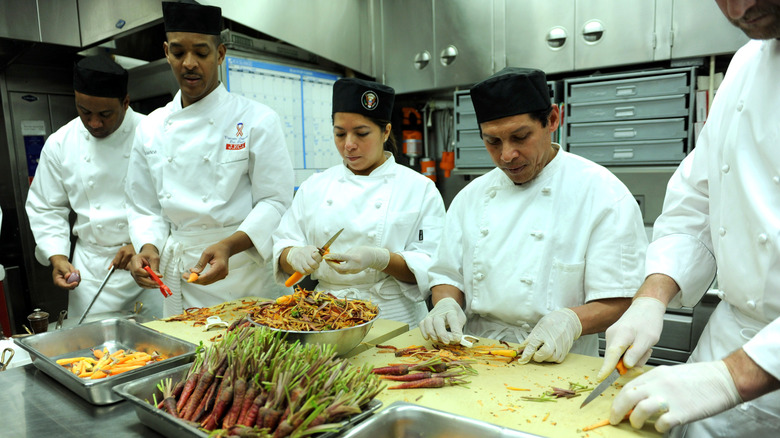
Whatever the president and first lady of the United States eat tends to both reflect and influence the national diet. We don't mean those formal state dinners and fancy affairs. Instead, it's the everyday dining habits that the first couple brings with them that get the public's attention. These habits change with every administration, forcing White House chefs to adapt daily menus every few years and sparking national debate and, sometimes, a national craze.
There are actually studies about how much the presidential diet affects everyday Americans. Take President Donald Trump's love of fast food. One study from Penn State University revealed that people who paid more attention to news about Trump's dining choices were also more likely to have a positive view of fast food, and were more likely to eat it.
So, with that in mind, grab something to nibble on — the favorite snacks of a few former presidents would be appropriate — and read about the kitchen traditions that eight U.S. presidents brought with them to the White House.
1. George Washington had a typical Virginian diet
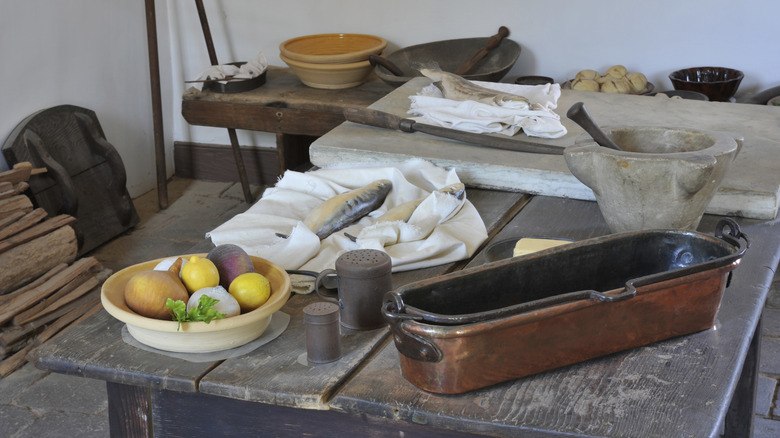
At Mount Vernon, George Washington's family usually ate two meals a day. A late-night supper was a rare occurrence. Early presidential diets were more varied than a lot of people think, although the Washingtons did have favorites that they ate almost daily. Meals could be fancier than normal depending on the occasion, but at least a couple of guests noted that the food seemed to be very typical of Virginian eating habits at the time.
Meals usually included Virginia ham, and fresh vegetables were a fixture. Copious amounts of herring and shad from the Potomac River were also common, and meals would also feature cod. Mutton and corned beef made regular appearances at breakfast, although hoe cakes with honey and butter, along with tea, were Washington's preferred morning meal. Ice cream, too, was a favorite served frequently, and the Washingtons owned an ice cream maker along with many different dishes and utensils for serving the treat. Martha Washington and Washington's longtime enslaved cook, Hercules, provided the meals.
Despite the assortment of foods that each meal could provide, Washington was careful to eat in moderation. He did drink alcohol and loved chocolate, which was available only as a beverage at the time, but his family had been plagued by a number of relatively young deaths. Washington's attitude toward food was heavily influenced by the fact that he didn't want to die at the same young ages as his father and brother.
2. Thomas Jefferson brought French food to the White House
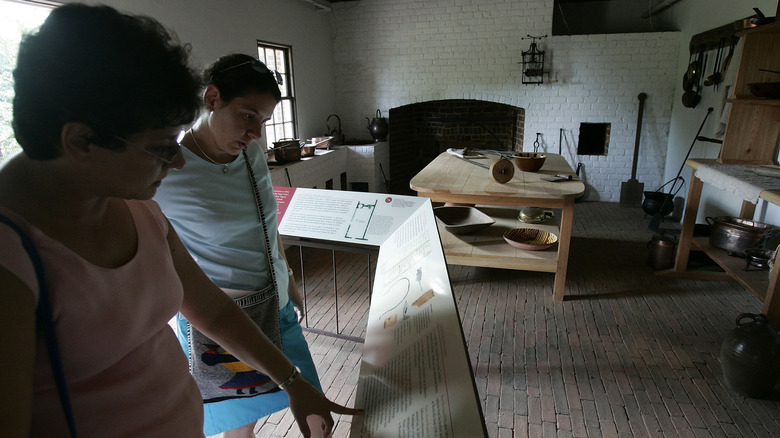
Thomas Jefferson's love of French food is well-documented, and he indulged that love of French recipes and wine from his Monticello estate right into the White House. Jefferson's love of wine was legendary. He'd drink up to four glasses per day, and he bought over $10,000 worth of European wine while he was president. That was in 1809 dollars — over $263,000 in 2026 dollars.
Jefferson has been called one of the most important influences on food and was the nation's very first foodie. He reportedly avoided American food in favor of French food after coming back from his time as a U.S. representative to France, but he still loved a lot of American ingredients. Even when he lived in France, he'd import Virginia ham and pecans and grow sweet potatoes, corn, and melons in his garden.
Back in Virginia, the president's meals blended the two cuisines and included everything from American rice soup to French blanc mange. Venison, pineapples, cheese, pickles, fruit, and much more often graced tables. French mustard and Italian olive oil could be part of meals along with ice cream. When Jefferson was living in France, his enslaved chef James Hemings trained in French pastry and cookery, including the dish that was the basis for modern macaroni and cheese. When Jefferson moved to the White House, he hired French chefs to help Hemings train more of his slaves, shortly before Hemings was freed.
3. Franklin Roosevelt focused on economical food
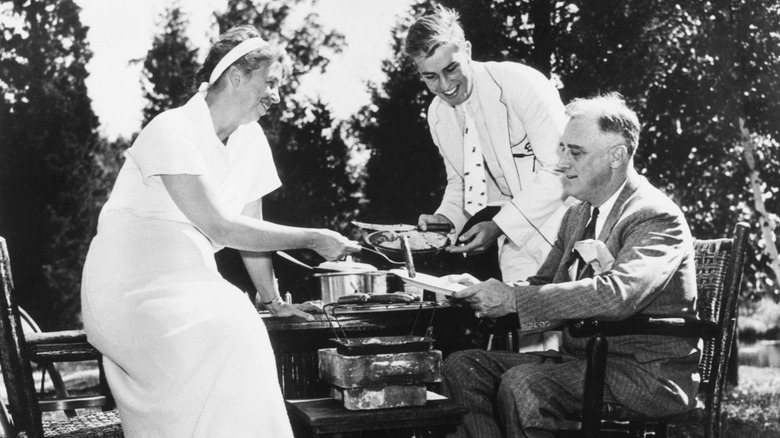
Franklin D. Roosevelt entered office during the Great Depression, when meals had to be affordable, even if it meant having some unusual foods. He loved good food, but First Lady Eleanor Roosevelt knew the times called for scaling back. Even before the couple moved into the White House, she had been asking instructors at Cornell University to come up with meals that were both nutritious and incredibly cheap. The first family would be a model for the rest of the nation by eating nothing but these economical meals, which would cost only 15 cents for two people.
However, the meals (which included dishes like eggs with a simple tomato sauce and prune pudding) focused on nutrition and cost only. Eleanor Roosevelt rejected slightly fancier but economically sound menus because she didn't understand why the taste of the food mattered. She wanted food to focus on objective nutritional values and prices for shoestring budgets. Another problem was that the person who ended up making the meals had baked for the Roosevelts but never worked as an actual cook. This was housekeeper Henrietta Nesbitt, whose legendarily bad takes on the Cornell recipes (and later, wartime rationing recipes) were widely despised by both FDR and White House guests.
One positive effect was that the Roosevelts and Nesbitt brought their desire for functionality to the White House kitchen itself. The kitchen was in awful shape when they arrived, infested and extremely out of date. A massive renovation gutted the old structure and updated everything, including wiring and plumbing.
4. Dwight Eisenhower brought a love of grilling
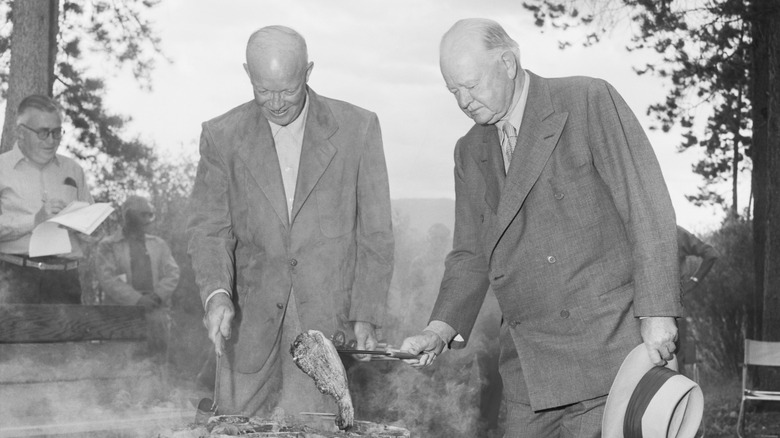
When Dwight D. and Mamie Eisenhower moved into the White House in 1953, the energy in the White House food scene amped up considerably. Eisenhower was an extremely good cook who loved grilling. He even had a portable grill that he'd set up on balconies around the White House. He reportedly used it so much that passersby would see smoke rising from the residence. One of his specialties was "outdoor steak," in which he'd toss a 3-inch-thick strip steak right onto the hot coals, much to the astonishment of guests. Rather than burning the steak to a crisp, the method resulted in rare steaks with crusts like no other. Steaks grilled that way are now often called Eisenhower steaks.
Eisenhower was so interested in cooking that he even created some recipes himself, including a vegetable beef soup that became a favorite among U.S. households. Mamie Eisenhower wasn't used to cooking, but she too contributed a recipe that won the cooking public's heart: her "Million-Dollar Fudge," which was much easier to make than traditional fudge. Turns out she likely didn't invent the recipe, but it became so popular after being printed in newspapers that it now often goes by the name "Mamie Eisenhower fudge."
5. Lyndon B. Johnson turned his love of barbecue into a diplomatic tool
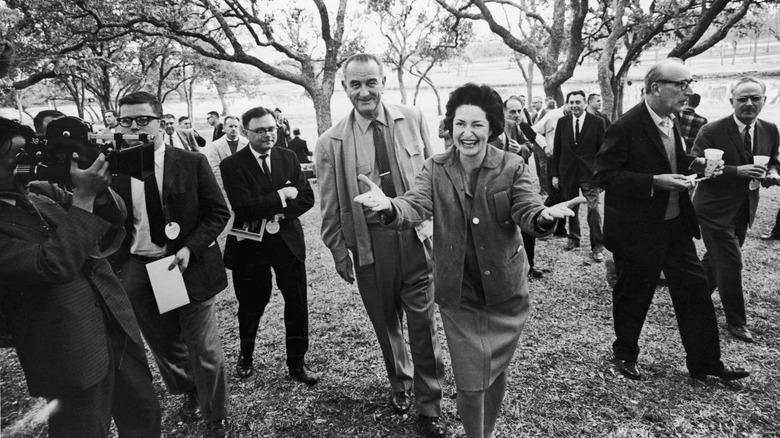
Lyndon B. Johnson's White House kitchen took a sudden Southern turn when he assumed the presidency after John F. Kennedy's assassination. After the Kennedys' chef quit a couple of years into Johnson's administration, he brought in his longtime Texas cook, Zephyr Wright, while also appointing Henry Haller as the executive chef. Meals would include recipes like chicken-fried steak and tapioca pudding, with peaches sent directly from Texas to Washington for ice cream. Texan and Tex-Mex appeared at many a hosted dinner, too, and it wasn't uncommon for guests to be served dishes like chili con queso with Ro-Tel tomatoes and chiles. However, Haller also had an influence, often serving Swiss recipes like rösti during the meetings between Johnson and army officials, where they created the administration's policies regarding Vietnam.
Johnson had used barbecue as a diplomatic tool for years before becoming president because he knew what a great impression a meat feast made. His secret was barbecue master Walter Jetton, who'd prepare the food. A typical barbecue would have foods like pinto beans, spareribs, and sausages, and Jetton's barbecue sauce was similar to the one Lady Bird Johnson used at home. During his 1964 campaign, Johnson arranged for Jetton to fly with him to cook barbecue at campaign rallies. Jetton continued to prepare barbecues for Johnson throughout his administration, including the party Johnson threw after announcing he wasn't going to run again. Jetton died in 1968.
6. Jimmy Carter kept Southern food on the menu
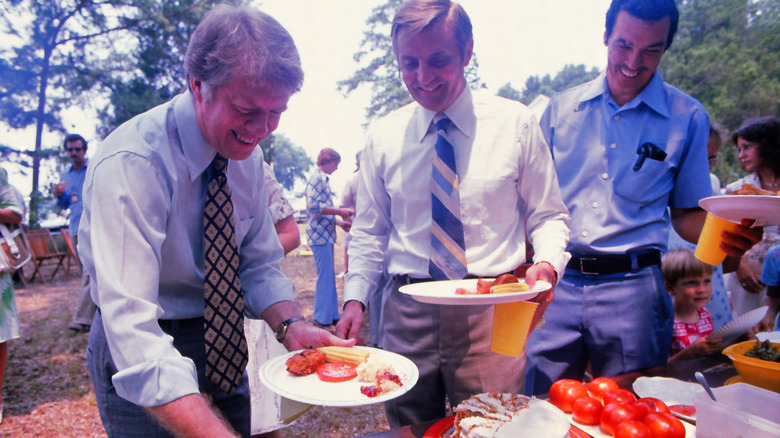
When Jimmy Carter was campaigning for the White House, he played up his Georgia roots, mentioning the very Southern dishes he liked to eat, like fried chicken, grits, and collard greens. While some say this was part of his strategy — presidential candidates like to present themselves as being just like you, so you'll vote for them — it was still totally true. The Carters brought their love of Southern cooking to the White House kitchen, and while First Lady Rosalynn Carter added lots of salads to the menu, their main diet of Southern home cooking stayed the same for much of the administration, including Carter's favorite peanut butter pie dessert. Carter was also a fan of cheese, as well as buttered saltines.
Time did bring some changes and an expanding palate. Toward the middle of the Carter administration, daily menus started showing more Chinese-influenced dishes and recipes from other cuisines. However, Southern food continued to be the main star and would reappear when comforting meals were needed, such as during the hostage crisis. It was also common for Southern dishes to be on the menu when the White House hosted guests.
7. Ronald Reagan made his favorite jelly beans famous
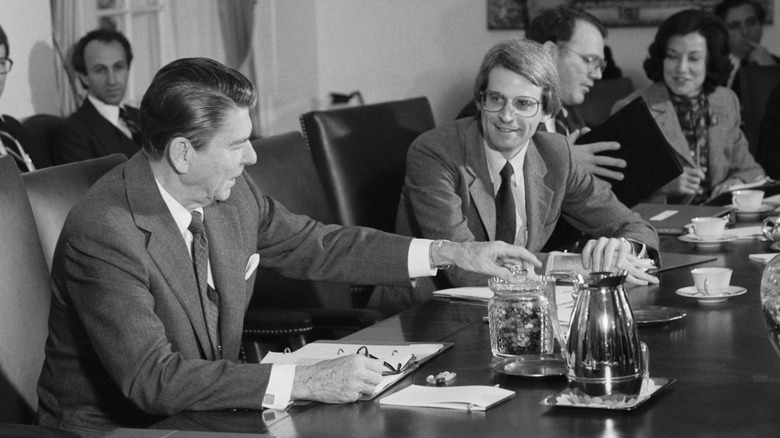
If one food tradition is going to stand out when you mention Ronald Reagan, it's the jelly bean. Specifically the Jelly Belly brand, which became his favorite dessert. Reagan began eating jelly beans in the mid-1960s because he wanted to stop smoking during his presidential campaign. He really liked these mini jelly beans from the Goelitz Company, and the company sent him shipments every month for the next several years. Goelitz included some of its new Jelly Belly jelly beans at one point, and by the time Reagan won the presidential election in 1980, he'd switched entirely to Jelly Bellies. Licorice was his favorite flavor.
What followed exceeded any candy maker's dream. Reagan not only special-ordered Jelly Bellies in red, white, and blue for the inauguration (the company had no dark blue beans, so it created a blueberry flavor especially for the event), but he managed to make the candy so popular that it sold out, setting the company months behind on fulfilling orders. Reagan continued to have Jelly Bellies in a jar just about everywhere, even when meeting with other heads of state. During his presidency, he'd order 720 bags per month for different government facilities, or over 306,000 Jelly Bellies.
8. Barack Obama brought balanced diets and health food
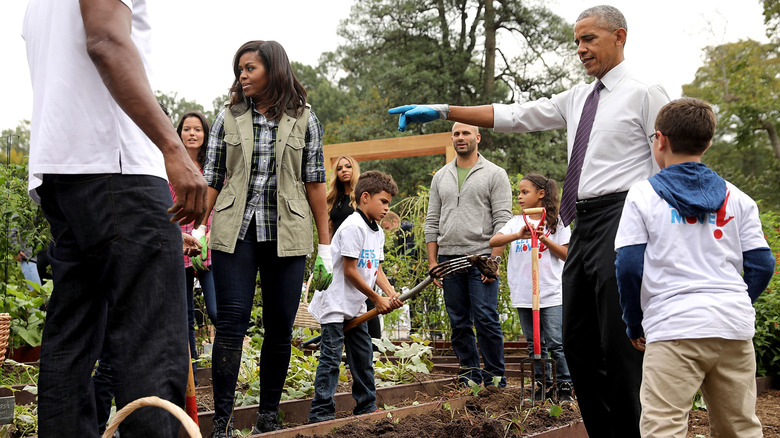
Barack and Michelle Obama weren't the only presidential couple to eat healthy, nor were they the only ones to try to influence the national diet. But they were unique in that they found that balance between healthy eating, exercise, and still enjoying treats. They caused a stir during the presidency because everyone wanted to know how they stayed slim while publicly eating food that was notorious for not being the most slimming. The answer was simply that their everyday diet and level of exercise were very good and well-balanced. Rumors about their habits still spread like wildfire, such as when the press reported that Obama snacked on exactly seven almonds each night. Obama said this started as a joke between Chef Sam Kass and Michelle Obama. Kass had told the joke to the New York Times, which took it too seriously.
The Obamas knew that balanced and enjoyable eating could be a reasonable goal for the nation as a whole, and they began implementing programs to help children improve their health. One of the steps Barack Obama took was passing the Healthy, Hunger-Free Kids Act in 2010 to improve nutrition and vegetable intake in school lunches; a study later showed that the Act succeeded. Michelle Obama also got involved, starting the current White House kitchen garden specifically to teach kids about nutrition, as well as getting them involved in gardening. The Obamas also focused on promoting exercise, such as through the "Let's Move!" program.