

The Rare High-Quality Coffee You Should Grab If You Can Get Your Hands On It
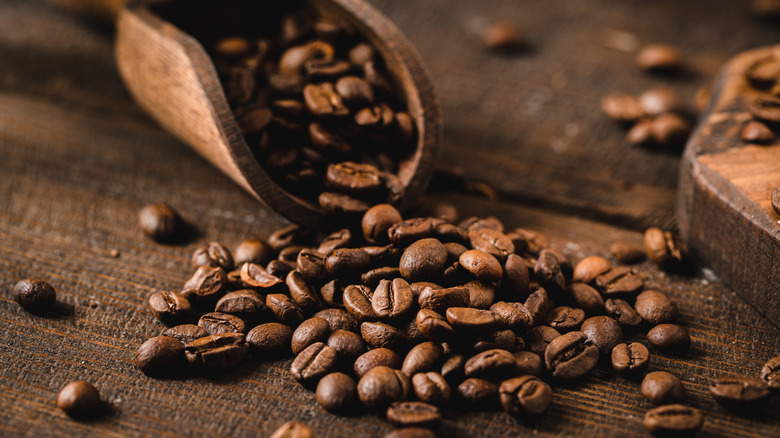
There are groceries you can save on, by shopping the sales and scoring on generic brands. And then there are instances where splurging on the good stuff is worth it. Coffee tends to fall in the latter category (though don't get us wrong, there are plenty of truly great, cheap bags hiding at the grocery store).
Choosing your coffee though can be overwhelming — with so many brands, flavor notes, countries of origin, etc. But look out for one label that can cut through the decision fatigue. If you see a coffee grown in Ecuador, grab it. And if you're forever on the hunt for a coffee that's clean, complex, well rounded, and balanced — you may want to stock up on all the bags you can get your hands on, if you're lucky enough to find any.
What sets Ecuadorian beans apart is a trademark sweetness that, everyone agrees, is something special. Thanks to the country's geography, biodiversity, nutrient-rich volcanic soil, and the practice of planting coffee beans next to flavorful cacao, sugarcane, and fruit plants, words commonly used to describe coffee from Ecuador include soft, gentle, floral, juicy, and delicate — with distinct notes of fruit and jam. It's something of a goldilocks of coffee — sweet, balanced, not too mild, acidic, or bitter, and with a pleasant, creamy mouthfeel. Ecuadorian coffee is also unique in that it's quite hard to come by — and very likely not an option you'll see at your local supermarket. If you're a coffee aficionado who thinks you've tried it all, this might be an uncharted frontier in your coffee exploration journey.
Why is Ecuadorian coffee so hard to find?
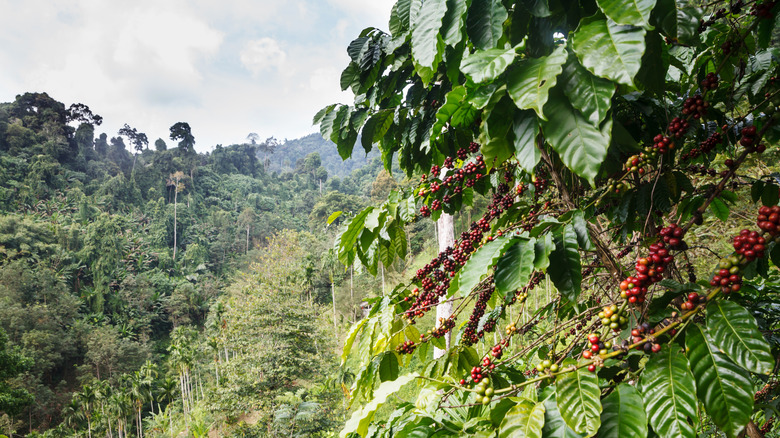
Grab a mainstream bag of coffee from the supermarket, and odds are good those beans were grown in a narrow, tropical region around the equator referred to as the coffee belt – which includes countries with warm, temperate climates ideal for the crop. Brazil takes the crown as the top producer of coffee in the world, followed by other heavy producers like Vietnam, Colombia, and Ethiopia.
Comparatively, though the coffee from Ecuador is some of the highest quality in the world, the country's output is small and in decline. Most of the precious cargo hails from small family-owned farms with limited acreage. Climate change's detrimental impact on coffee production, an aging population of growers, economic struggles, and the country's focus on keeping the coffee it does produce local — versus exporting it — all explain why Ecuador's output is so limited.
Despite this, the agricultural conditions in Ecuador are perfect for year-round production of perfectly balanced beans. And as word spreads that Ecuador's coffee is something special, we can only hope that bags will become easier to find stateside. Your best bet for now — short of boarding a plane — is to find a bag at specialty, niche online shops or keep your eyes peeled for an occasional bag at the store. If you hit the jackpot, enjoy the symphony of sweet, floral, fruity flavor — and savor each sip as the rare, luxurious treat that it is.