

The Paper Towel Trick For Removing Hard Water Stains From Your Kitchen Sink Faucet
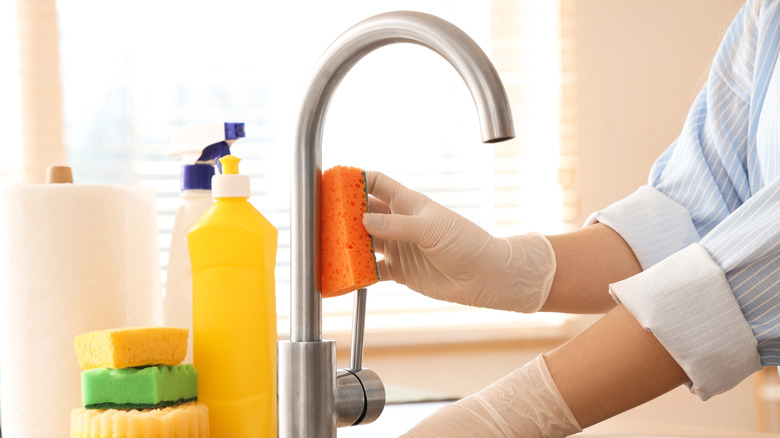
About 85% of homes in the United States have hard water. While this isn't a problem, per se, hard water can impact the quality of your cooking in addition to causing issues for those with sensitive skin — not to mention what it can do to your kitchen faucet. The term "hard water" refers to water that flows through various mineral deposits before reaching the pipes that feed the flow coming through your kitchen sink. The more dissolved minerals water contains, the harder it is, while soft water (e.g., rainwater) contains almost no dissolved minerals.
Though a small amount of minerals in your water can actually brew a better cup of coffee, they're also suspended in the water that naturally collects around the bottom and joints of your faucet. When the water evaporates, the minerals stay behind, forming a white, scaly cast that's not only unsightly, but can also damage your faucet and disrupt water flow if not addressed. The good news is that removing them doesn't require a ton of scrubbing with noxious chemicals. Instead, all you really need is a roll of paper towels and some ordinary white vinegar.
Simply soak the towels in a little white vinegar, wrap them around the faucet similar to making papier-mâché art. The acetic acid in white vinegar helps dissolve the mineral buildup on your faucet, with the paper towels as the delivery system. Let the vinegar work for an hour before removing the paper towels and wiping the faucet clean with a lint-free cloth.
Tips for giving your faucet a spot-free shine
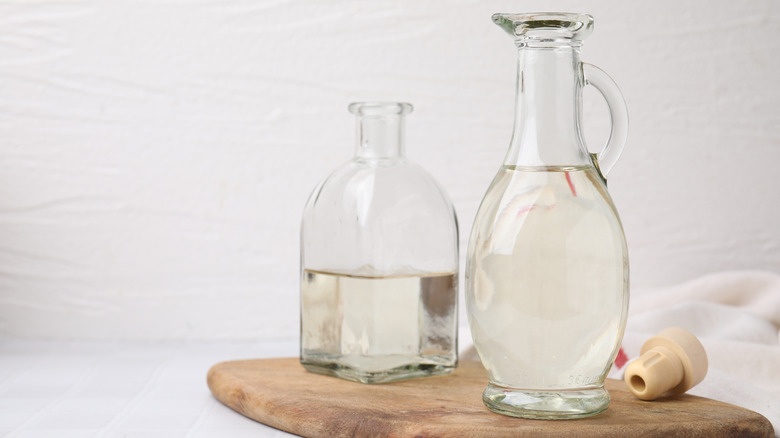
The key to making this cleaning hack work for you is proper saturation of the paper towels. Paper towels that are too dry won't cling to the faucet and remain in contact with the mineral deposits, while towels that are too wet will be difficult to handle and may tear while you're getting them into place. The idea is to ensure your paper towels are fully saturated, but not soaking or drippy, then wrap your faucet like it's dressing up as a mummy for Halloween. The wet fibers should stick to each other, so there's no need for rubber bands or twist ties.
It's also important to note that most hard water mineral buildup won't just magically disappear once you remove the paper towels. Instead, it'll still be visible, but loosened and dissolved enough that you can wipe it away. A stiff-bristled toothbrush can usually dislodge any particularly stubborn deposits. However, you may need to make a baking soda and vinegar paste to apply to areas with particularly thick buildup. Apply it to the affected areas and leave it for several hours to help break the residue down into something manageable.
This is also a great time to unclog your gunked-up kitchen sink faucet with a plastic baggie full of that same white vinegar. Secure the baggie to the faucet head with a rubber band after applying the paper towels to tackle both issues at once. Afterward, your faucet will sparkle like new.