

Where Exactly Is Heinz Ketchup Manufactured?
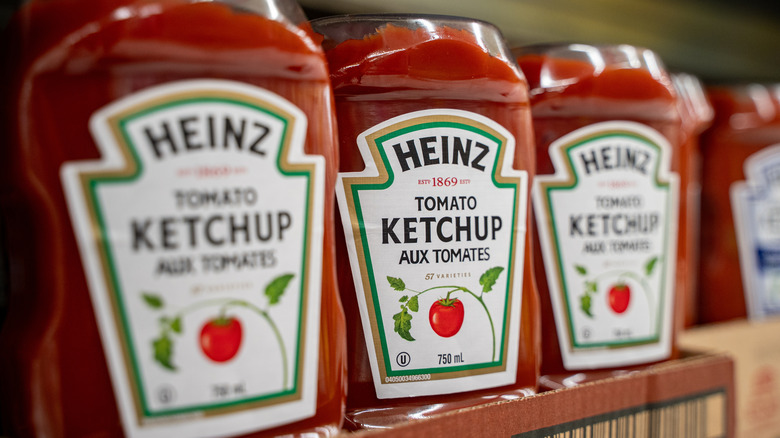
Heinz ketchup has been around for more than a century. The popular condiment first launched back in 1876, and although Heinz has sold some pretty weird products through the years, the original formula for Heinz ketchup hasn't changed much since then. In 2015, Heinz merged with Kraft, and today, there are two United States plants where Heinz ketchup is produced: Fremont, Ohio, and Muscatine, Iowa. The Fremont, Ohio, Heinz plant first opened in 1937, while the Muscatine plant opened in 1893. Both are still operating today.
But the process starts at one of the tomato farms Kraft Heinz partners with, where the tomatoes are harvested. They're then shipped to the processor in Los Banos to become tomato paste. In 2019, Kraft Heinz's former ketchup master (yes, this is a real job title), Hector Osorno gave NPR an inside look at the processing. He said that he'd make 18 mini batches of sample ketchup from the tomato paste daily to taste-test it, confirming each batch of Heinz ketchup would taste exactly the same, no matter which plant manufactured it. Once approved, it's then shipped to the two main factories to become ketchup.
That's just here in the States, though. Heinz also uses tomatoes grown around the world, depending on where its ketchup is being manufactured.
Kraft Heinz has ketchup plants all over the world
Heinz ketchup tastes slightly different depending on what market it's made to satisfy. To meet that demand, Heinz has quite a few ketchup factories and tomato growers worldwide. For example, Heinz's Canadian ketchup is manufactured in Quebec from tomatoes that are grown in Ontario.
There's also a large facility in Elst, Netherlands, which produced 1.8 million bottles of ketchup per day in 2020. A plant in Wigan, United Kingdom, received a massive $190 million investment back in 2021 to accommodate most of the U.K.'s ketchup production. Before production ramped up at the Wigan facility, Heinz ketchup was mass-produced in Telford, U.K. starting in 2014. And prior to that, it was produced at the company's Belgian facility. One reason for switching from Belgium to the U.K. was the desire to reduce transportation costs, with Heinz saying the majority of its European market were U.K. consumers.
But it doesn't end there. Heinz also works with tomato growers at major farms in Nerópolis, Brazil, and Badajoz, Spain. But you'll probably have to travel to Europe or South America to taste the Heinz ketchup grown from those tomatoes.