

To Revive Stiff, Stained, And Stinky Kitchen Towels, Wash Them With These Kitchen Staples
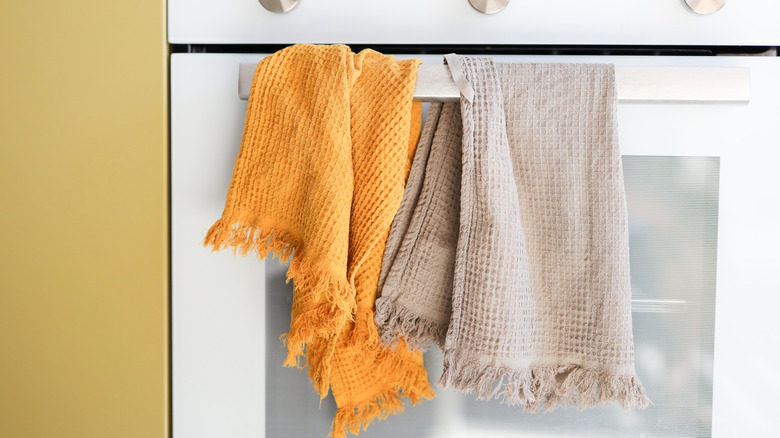
Whether you pick Zeppoli, Sticky Toffee, DII, or another decent brand from your local store, good kitchen towels are always a smart investment. Not only are they ideal for keeping your kitchen clean, but they're also absorbent, versatile, and reusable, which makes them an eco-friendly alternative to paper towels. But while high-quality kitchen towels are quite durable, they're not indestructible, and do have a limited lifespan. So, if they've recently started feeling stiff, looking stained, or smelling stinky, chances are you've likely made some of mistakes that are damaging your kitchen towels, like washing them with fabric softener, too much bleach, or alongside your cleaning rags.
However, before you decide your kitchen towels are beyond saving and simply throw them in the trash, there's a quick fix that can immediately restore their freshness. You can revitalize them in no time with baking soda and vinegar. These two common pantry staples are surprisingly effective when it comes to cleaning tasks. They'll help you say goodbye to kitchen sink clogs, deodorize your toilet, and even clean your washing machine and coffee maker.
The reason they work so well together is because they trigger a chemical process known as an acid-base reaction. During this interaction, also known as neutralization, the acidic vinegar reacts with baking soda (a base), releasing carbon dioxide gas (CO2), water, as well as sodium acetate. This chemical compound, is, as a matter of fact, a useful cleaning agent that can help tackle stains, rust, and even mineral buildup on metal surfaces. It is also used as a food additive.
How to wash your kitchen towels with baking soda and vinegar
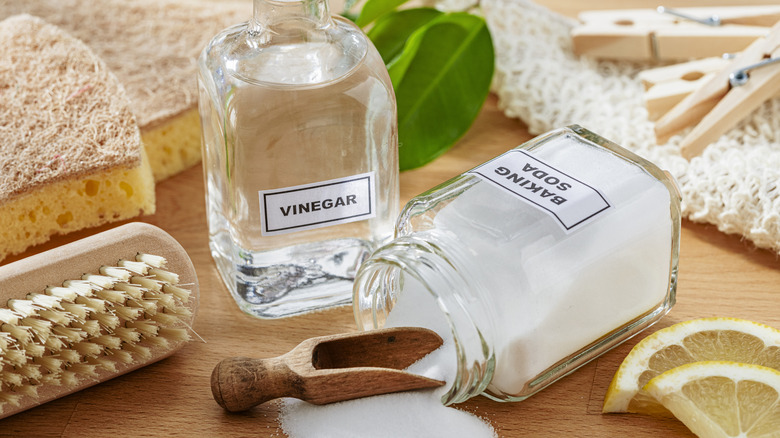
Trying out this clever baking soda and vinegar trick will keep your kitchen towels fresh, clean, and preserve their initial quality. It will also help you properly wash them to remove bacteria and odors, which can build up they're repeatedly used to dry hands and dishes, wipe kitchen surfaces, and clean up spills. Kitchen towels are breeding grounds for bacteria such as E. coli, Salmonella, and Staphylococcus aureus. These microbes can survive on your towels for weeks, especially if the fabric stays damp between uses.
To put the method to the test, collect your kitchen towels and run them through a hot water cycle with some vinegar — white or apple cider is fine. One cup usually does the trick. After the first wash is complete, run a second one with an equal amount of baking soda. Meanwhile, it's crucial not to use any fabric softeners during the process, since they can leave residue that reduces absorbency and durability. All that's left to do then is toss the towels in the dryer and enjoy the results.
That said, if you don't happen to have any baking soda or vinegar at home, you can still wash your kitchen towels with laundry detergent, especially if it's enzyme-based. The catch, however, is not to mix them with the rest of your clothes to prevent cross-contamination. Finally, soaking them in a warm water and OxiClean solution before washing can help restore their freshness.