

How Irish Whiskey Distillers Get Away With So Much Experimentation
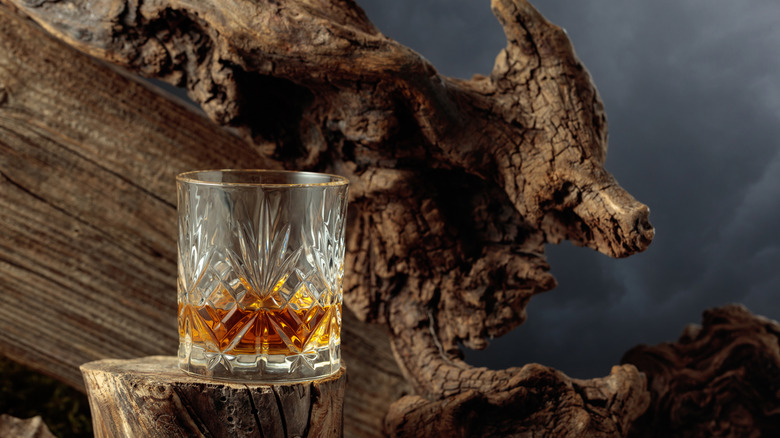
Irish whiskey makers have a certain advantage over others when it comes to experimenting with their product; for example, the differences between Irish whiskey and Scottish whisky goes way beyond whether they're spelled with an "e" or not. Irish distillers have much more flexibility when it comes to an essential process in making whiskey: the kind of wood they're allowed to use for the maturation process. Scottish law prohibits the use of anything but oak. In Ireland, distillers are free to use any kind of wood barrel they choose for maturing their product.
The kind of wood matters in the final product. It's vital for giving the whiskey as much as 90% of its flavor, plus most (or all) of its color, along with its mouthfeel. Irish whiskey makers have been pushing the boundaries with whiskey, with some spending time in barrels made from wild cherry, chestnut, and cedar, among others. While the practice is still in its infancy, and has mainly come in the form of limited releases, it seems to be catching on in the industry.
Irish whiskey and wood
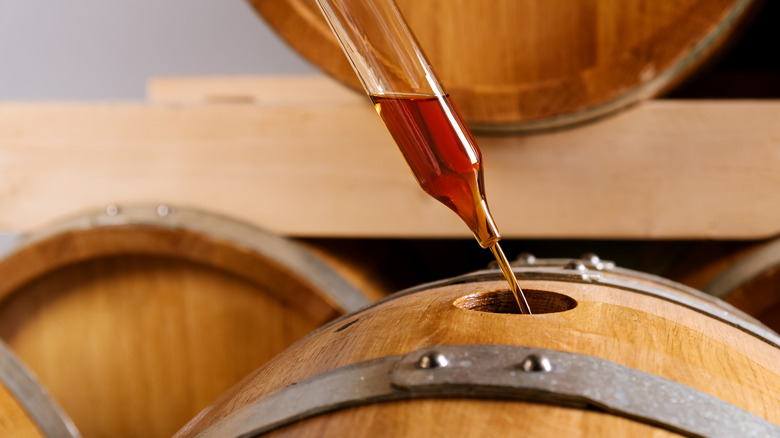
Most Irish whiskey makers use oak, either American ex-bourbon barrels or European oak casks that previously held sherry — or both, as is the case for Bushmill's 16-year-old (which is finished in port casks). However, there are a few distillers playing with other woods. Middleton Distillery, in County Cork, the Republic of Ireland, created a series of whiskeys with its Method & Madness line, including a limited edition expression made using Japanese chestnut; the wood imparts flavors of licorice, orange zest, and menthol. The brand also has versions finished in French chestnut and South American amburana.
Meanwhile, Teeling, in Dublin, created an Irish whiskey finished in virgin cherry wood as part of its Wonders of Wood collection; the wood imparts notes of sandalwood, rosewater, and Turkish delight to the 15-year-old expression. Then there's Roe & Co., owned by spirit giant Diageo, which produced an Irish whiskey matured in Japanese cedar, also known as sugi; the wood, which is more commonly used in sake production, imparts elements of wood spice and tropical fruit, such as lychee. Even Jameson, the best-selling Irish whiskey in the world and a brand to know for St. Patrick's Day, has gotten into exotic wood with its Triple Triple finished in chestnut. It seems Irish distillers are embracing their ability to go beyond oak, further separating Irish whiskey from Scottish whisky.