

5 Reasons To Always Buy Meat From A Butcher (Instead Of Costco)
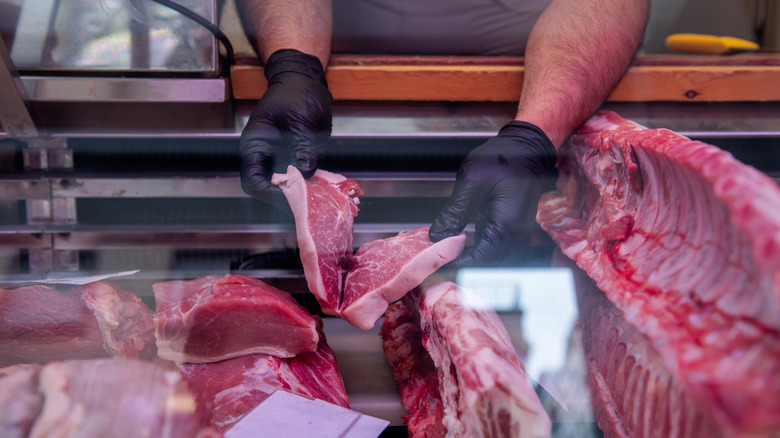
Costco is a one-stop shop for just about everything, and for the price of a membership, you get access to a whole load of fantastic value products that deliver on quality and price — people love it. But for all the must-buy items we recommend you get from Costco, when it comes to meat, we suggest taking a different approach: Buy it from a butcher, instead.
When you're buying any kind of food (and especially meat), the priorities are going to be quality, provenance, and value — and while Costco can deliver on some of those accounts, the difference between shopping there and with your local butcher doesn't just boil down to price-per-pound. Shopping at the butcher gives you some huge advantages you just don't get at big stores like Costco, especially if you're a home cook who's interested in using the best meat possible, while learning more about what it is you're actually cooking.
There are several reasons you should buy your meat from your local butcher, but Costco and stores like it are still a great place to buy your meat if you don't have access to a good butcher. But if you can, going to a butcher gives you a little extra when it comes to customization, quality, and expertise.
A butcher means better quality and fresher cuts
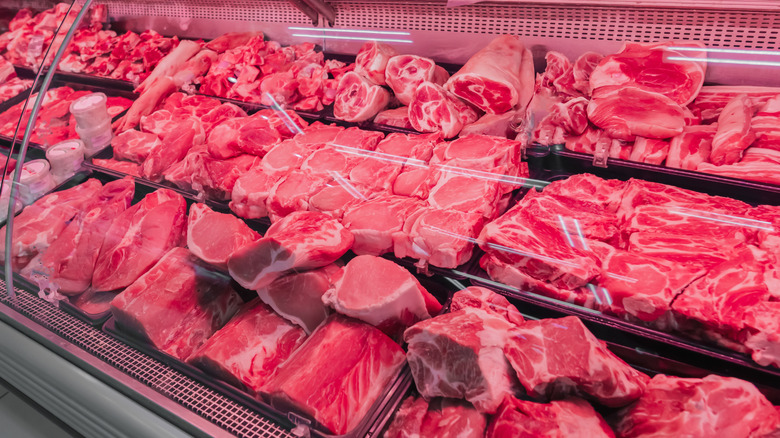
Meat from a butcher is often superior to vacuum-packed cuts from a big box store like Costco — and there's a few reasons why. Chief among these is the freshness of the meat you're getting. Butchers receive smaller, more frequent deliveries of meat directly from farmers, which means there's going to be a shorter time between the animal's slaughter and the butchering process — and consequently, between that and you buying it. For big box stores, on the other hand, the bulk-buy model means pre-packaged meat is often butchered and packed in a larger factory-like setting, often frozen, and shipped much longer distances (perhaps overseas), potentially even being repackaged during the entire process. This means the meat is considerably less fresh and has a much larger carbon footprint.
When you buy from a big store, there's also the possibility the meat itself has been manipulated with a water injection, for example, or frozen to accommodate a long ship time. You might also come across gas flushed meat – a process where the meat is starved of oxygen to help prevent it from deteriorating over time, effectively lengthening its shelf life and masking how old it actually is. But this doesn't mean you can't get quality meat at big box stores. However, when you shop at a butcher you can be pretty sure what you're getting is fresh and ethically sourced.
A butcher's expertise and skills set them apart
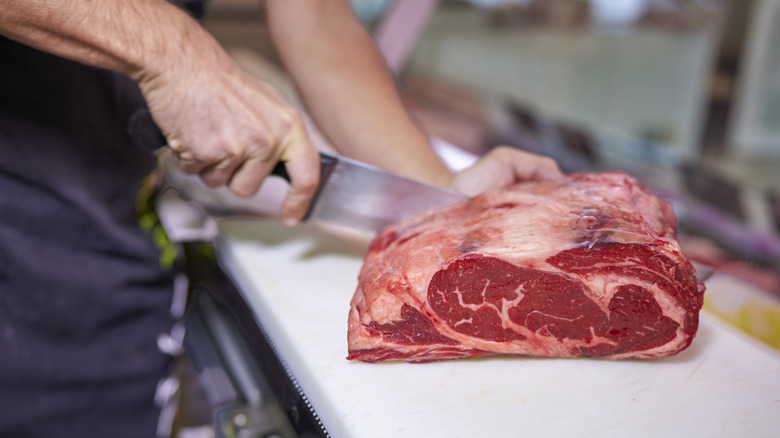
At a butcher, you get more than higher quality meat — you also get a better level of service and expertise. Butchers are masters of their craft, who care deeply about each cut they sell, and their expertise can be invaluable when it comes to choosing the right meat to use for a certain dish. But butchers can do more than just sell you meat — they can help you prepare it, give you tips on the best way to cook it, and even give you advice on what to serve with it.
A butcher can suggest a cut based on the way you plan to cook it — heartier cuts for long, slow braises or tender bone-in steaks for fast and intense grilling, for example. Big box stores, on the other hand, sell cuts that are standardized and mass produced — great for buying in bulk, but not necessarily what you might need when making certain dishes.
Butchers can prepare your meat exactly how you need it. They can remove silver skin and connective tissue from tender steaks, for example, while leaving fat in place so it enhances a cut's flavor. Alternatively, at Costco, you'll find specific cuts, sure, but you may not be able to make the most of the whole piece of meat. The butcher, meanwhile, can trim it up for you, portioning some delicious filet mignon steaks or properly tying a roasting joint to make sure it's evenly cooked. Plus, you won't be paying for any unusable, unwanted scraps!
A butcher can help customize your cuts
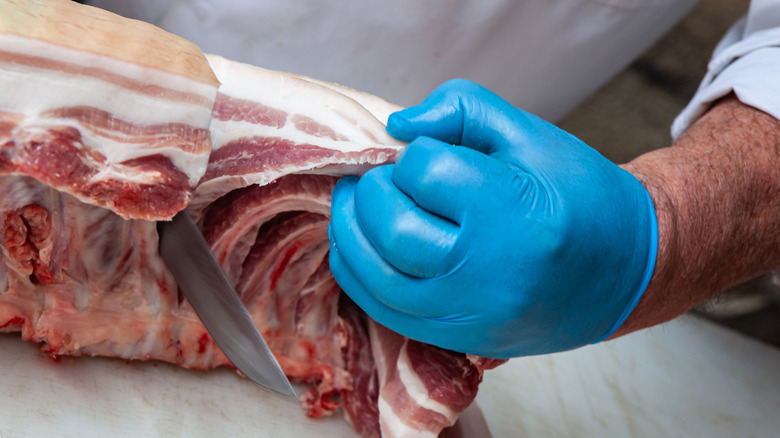
A butcher won't just give you better quality, fresher meat — they'll also be able to get you more obscure (dare we say interesting?) cuts of meat you probably won't find at the big box stores — cuts like the Denver steak (an affordable and delicious bit of meat, beloved among chefs) or the underrated hanger steak, also referred to as the onglet. They can also customize the thickness of your cut to make sure it's exactly what you need. Thick cut steaks or roasts are great for techniques like reverse searing, where they develop a proper crust without drying out or overcooking, giving you a perfect wall-to-wall pink finish. Meanwhile thin, lean steaks are ideal for marinating and grilling, perfect for a chef-approved carne asada.
You can also customize your minced meat, too. Rather than the standard pre-packed mince, the butcher can tailor it to certain cuts or type of meat (beef, lamb, pork, or a combination), right down to the fat content, to make sure you get the most flavorful, high quality ground meat. A blend of brisket, chuck, and short rib, for example, makes for a delicious fatty burger.
If you care about where your meat is from, opt for a butcher
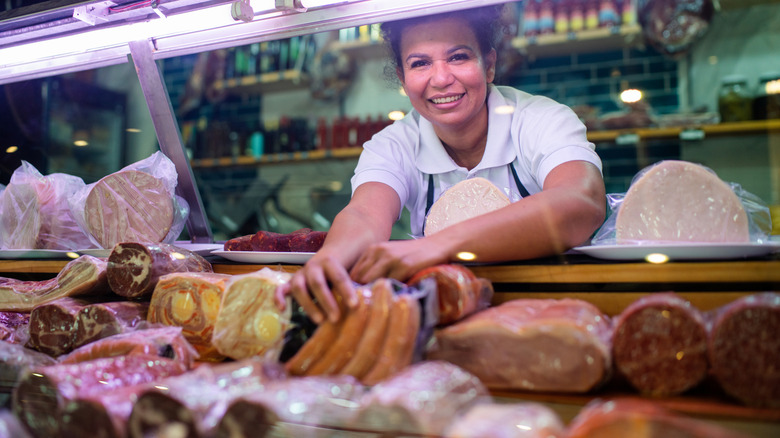
Getting decent quality meat at a good price is a top priority when shopping for groceries, and if you're a keen cook, then chances are you want to know the provenance of what you're buying. Knowing a little more about the ingredients you cook with doesn't just help you make purchases ethically and support independent producers, but it can also help you appreciate the quality of what you're cooking. When it comes to provenance, the butcher can't be beat.
Most independent butchers can tell you something about the meat you're buying, such as the breed, what it was fed on, or where it was raised. They'll also be able to tell you how long it was aged for (if it was), as well as whether it's been pasture-raised or ethically produced. All these are important factors in choosing what cut of meat is right for you — aged beef, for example, will have a much darker, richer, beefier taste, perfect for a luxurious steakhouse quality dinner.
The big box stores, meanwhile, won't give you as much information, and while the labels on your meat will probably tell you something, you'll rarely get total transparency. Butchers also often work with smaller, local producers: That means better animal welfare, a lower carbon footprint, and crucially, better flavor.
Building a relationship with your butcher can help you get the best meat and save money
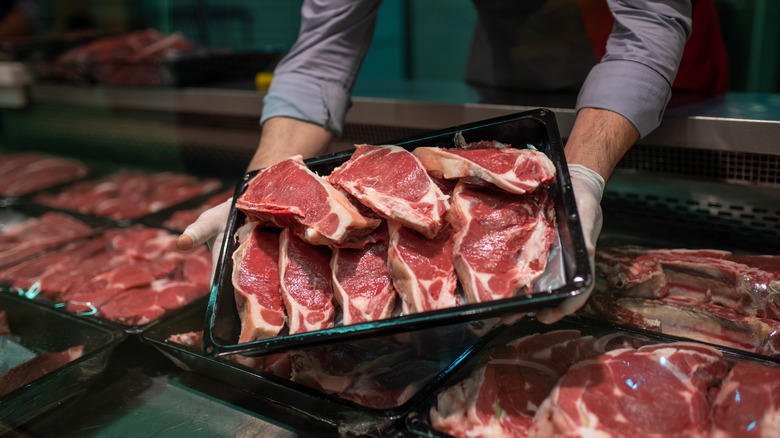
Building a good relationship with your local butcher can be the ticket to not only understanding the meat you're working with but also getting the very best value out of it. Unlike big box stores like Costco, your butcher can give you personalized recommendations about what and how much you actually need (to help ensure you aren't overpaying for excess meat), as well as things like cooking temperatures (to help you get the best results) and how to properly portion and store meat (to make sure nothing goes to waste).
Buying in bulk from Costco, on the other hand, can leave you with way more than you need — and a freezer full of meat that'll never be as nice as the fresh stuff. Worse still, you might find yourself a victim of freezer burn or feel rushed into cooking way more meat than you need.
This means despite the seemingly higher initial cost of shopping at a butcher, you could be saving money in the long run. Knowing how to portion your meat can also improve the quality of your food. Properly butchered meat cooks more consistently and can also help you plan your meals more effectively. Building a relationship with your butcher means you'll likely receive advice and recommendations specific to your order, while taking into account your preferences — making sourcing the right cut of meat a breeze.