

Why North Macedonia Is One Of Europe's Most Underrated Wine Destinations
Every wine enthusiast is always on the hunt for unexplored destinations. Now, if that sounds like you, chances are you already covered Italy, France, and California before you moved on to discovering other places. There are plenty of cities natural wine lovers flock to, like Hungary's capital, Budapest, Portugal's Douro Valley — the birthplace of Port wine and the world's oldest demarcated wine region — or Argentina's Mendoza, which dominates the country's wine scene, holding more than three-quarters of its vineyards. However, if the most underrated wine regions around the world are already checked off your bucket list, it might be the right time to look somewhere new. How does the heart of the Balkans sound?
Known for the viral "Balkan" breakfast, this southeastern European peninsula hides North Macedonia — a small country with over 4,000 years of winemaking history. Surrounded by mountains, which cover 85% of its landscape, North Macedonia is at the crossroads of Europe's Mediterranean and continental climates. And it boasts more than 280 sunny days a year, with long, hot summers, where temperatures exceed 104 degrees Fahrenheit, and cold, snowy winters. Paired with mineral-rich soils such as silt, red clay, and limestone, it's the perfect environment to produce complex, robust reds and light, aromatic whites.
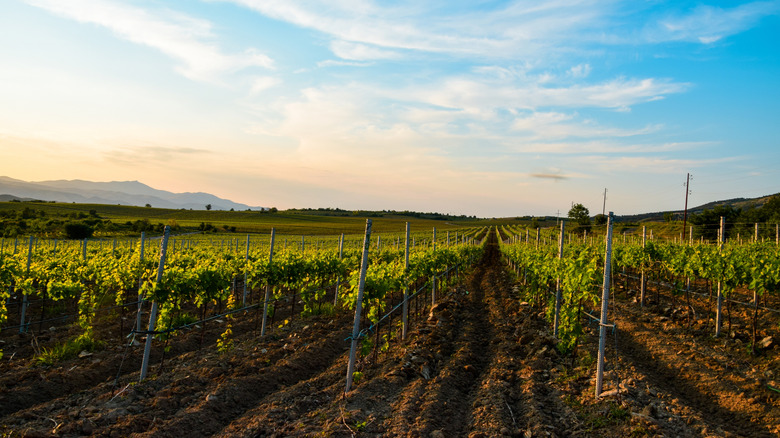
Spread across roughly 55,000 acres of vineyards, the Macedonian wine industry is defined by both international and indigenous grape varieties, cultivated across its three wine regions: Pelagonija-Polog in the West, Vardar River Valley in the Central region, and Pcinja-Osogovo located in the East. But it's the Vardar River Valley which produces over 83% of the nation's wine and grapes. This is where you'll find the popular Tikves wine district, which sits on the same latitude as Napa, Tuscany, and Bordeaux.
The Vranec grape variety represents the soul of Macedonian winemaking

One main reason North Macedonia remains under the radar is that for decades it served as the region's main bulk wine provider. In the past few years, however, it has shifted its focus to quality, which is why it might be time to put this destination on your travel list. Today, the country has more than 255 wineries producing 90 million liters of wine per year.
And they grow plenty of native grapes. Take kratosija — similar to Primitivo or zinfandel — which produces dry, rich, full-bodied red wines. Its ripe fruity notes and subtle sweetness make it a great pairing with game meat. Native to Tikves, Stanusina is a rare autochthonous Macedonian variety. It is prized for producing light, crisp red wines, and works beautifully in blends. It also shines in elegant, salmon-colored rosés that match particularly well with fresh salads and cheeses. Temjanika, on the other hand, is a Muscat variety known for floral, aromatic wines that shine when combined with white meat and seafood.
But no variety captures North Macedonia's wine character better than vranec (or vranac), the country's signature red. In fact, it's so important that it even has its own holiday: Vranec World Day, celebrated on October 5. Meaning "black stallion," the name reflects its intense red color and outstanding complexity. Thanks to its firm tannins and vibrant acidity, vranec is very versatile and adapts easily to different styles, whether young or oak-aged. Blends further highlight its strength, especially when combined with syrah, merlot, and cabernet sauvignon. It pairs best with hearty traditional dishes, stews, and roasts. These varieties show how far North Macedonia's wine scene has come — and why it's worth adding to your wine radar.