

The Pantry Ingredient That Takes Stainless Steel Sinks From Dull To Sparkling

Though all common materials used to make kitchen sinks have pros and cons, stainless steel remains one of the most popular choices for a reason. It's durable, fairly low-maintenance, and won't warp, crack, or dent easily — even when exposed to fluctuating temperatures or the impact of an accidentally dropped pasta pot. However, stainless steel does require regular cleaning and a little bit of TLC to keep it shiny, germ-free, and in good condition. Constant exposure to things like residue from coffee, tomato-based sauces, and vinegar from marinades can cause staining, mineral buildup, or a dull finish.
Fortunately, the remedy to this is probably hiding in the back of your pantry: cream of tartar. Sour in flavor, mildly abrasive, and chemically versatile, cream of tartar is great for everything from stabilizing whipped cream frosting to cleaning burnt-on grime from your pots and pans. When made into a paste with a liquid like water, vinegar, or hydrogen peroxide, the acidic crystals offer a two-fold solution that breaks down gunk and gently scours.
Another bonus is cream of tartar is unlikely to scratch or otherwise damage your sink, unlike bleach, which should never be used on stainless steel, because it can ruin the finish and cause pitting. Paired with something like a soft bristle brush, cream of tartar should restore the desired luster to your sink with no problem at all.
Restoring the shine to your sink with cream of tartar
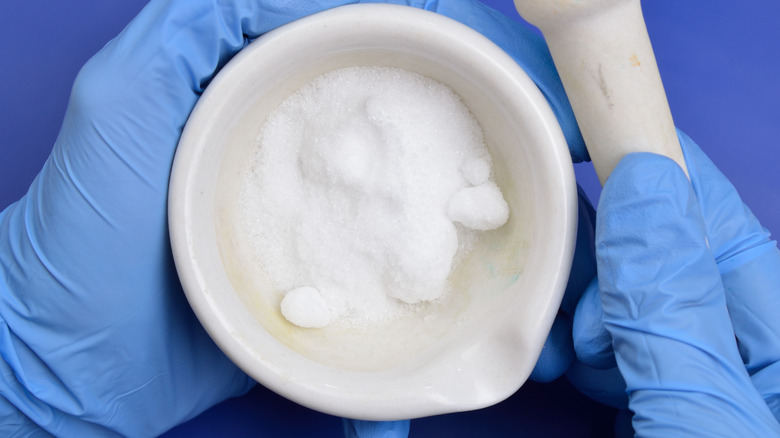
For a lightly stained sink that doesn't need a ton of scrubbing, cream of tartar and water alone should be enough to get things sparkly and clean again. Get the inside of your sink fairly damp and sprinkle a thin layer of cream of tartar over the surface, flicking the shaker from side to side to get it up the sink's walls, as well. Use a pad, scrubber, or microfiber cloth to gently wash the entire inner surface of your sink. You should begin to see restored shine peek through as you scrub. Rinse the sink very well, and dry it with a clean microfiber cloth, if you like.
If your sink is stained or particularly grimy, you may want to add some oomph to your cream of tartar with vinegar. Vinegar is tough enough to cut through stains, but gentle enough that it won't pit your sink, like bleach might. You can either spray down your whole sink with white vinegar or mix a little cream of tartar and vinegar together to create a paste for spot-cleaning especially stubborn stains. Either way, the process of using vinegar is similar to using water — let it sit and penetrate through the grime before scrubbing, rinsing, and drying. Repeat this process whenever your sink is starting to look particularly dirty or filmy to protect the finish for years to come.