

Why Restaurants Can't Always Donate Leftover Food At The End Of The Day
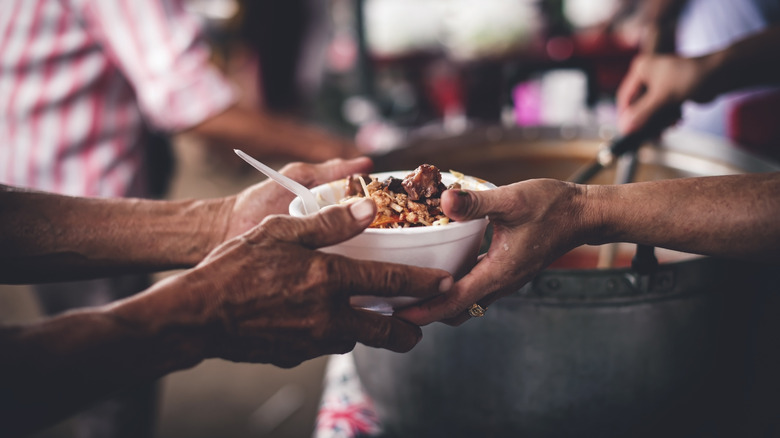
Food waste is a serious problem in the United States, and a majority of the issue has to do with the food industry. Since food security affects around 48 million Americans (via Feeding America), many people wonder why the food that's leftover from restaurants can't simply be donated to those in need. While it seems silly that restaurants would throw away untouched food when there are people who would happily eat it, there are several reasons why simply donating leftover food to people who would benefit isn't as simple as it sounds.
For starters, charitable organizations — like food banks — that work to help hungry people in need often only accept sealed, nonperishable foods. This can be due to factors like limited refrigerated storage, logistical issues with distributing perishables before they expire, or food safety risks.
An organization may use the packaged food to prepare fresh meals itself, but many organizations don't serve food that's been prepared out-of-house. That being said, some soup kitchens and food banks accept certain types of prepared, non-packaged food, including meals that have been individually prepared (meaning, they weren't already served in a setting such as a buffet). Restaurants interested in donating to food banks or soup kitchens can reach out to charities directly to discuss acceptable donations. Some restaurants — including chains like Olive Garden — are already taking part in programs to repurpose food that would otherwise go to waste.
Cost, unfortunately, is another factor that sometimes stops restaurants from donating left over food. It often costs a restaurant more to package and transport leftovers than to simply throw them away. Working with charitable organizations can help restaurants lower or eliminate this cost. Also, restaurants can legally give food directly to people in need in their communities.
How to make a difference in the hunger crisis and reduce food waste

If you want to do your part to reduce food waste in the United States and support the needs of people who are experiencing food insecurity, you're not alone. Thankfully, there are steps that you can take to help serve those in need in your community. Explore organizations that help to connect restaurants and charities, like Refeed on the West Coast and City Harvest on the East Coast. These organizations work to connect restaurants and food distributors with charities that can help them cut down on food waste while meeting the needs of those living with food insecurity. Some grocery stores, including Aldi, also work with hunger relief organizations to help those in need.
Another way to help: volunteer with your local food banks, specifically by offering to transport leftover food from restaurants to food bank distribution locations that are able to accept the type of food the restaurants are offering. This can require some odd hours (as you may need to pick up food after restaurants close), but it can go a long way in connecting people in your community with the help they need. If you're a restaurant employee, this can be a great way to help — you may simply (with the owner or manager's permission) be able to transport food that would otherwise get thrown away to organizations that help people in need. Finally, you can talk with local restaurants and ask if they'd be open to you (or an organization you work with) volunteering to give leftover food directly to people in need.