

Is 2% Milk Just Watered-Down Milk? Not Exactly — Here's What You're Drinking
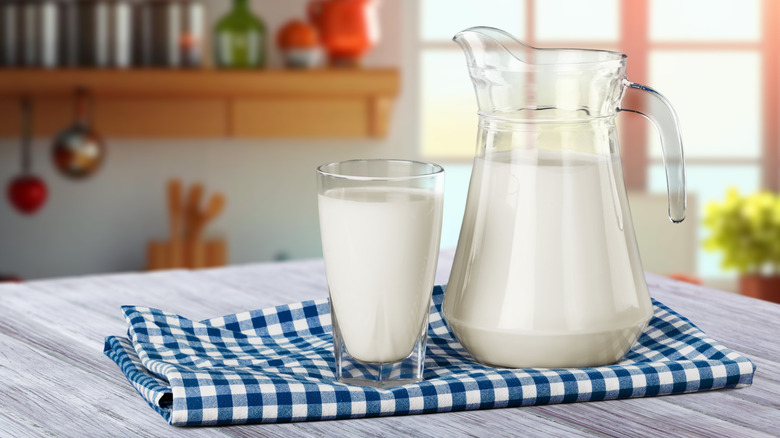
Cow's milk comes in many varieties, including whole milk, 2% milk, and lower-fat versions, as well as specialty options. You may think that lower percentage milks are just watered-down batches. However, there's a more complex story behind the contents of milk, including water and fat.
There's naturally occurring water in whole milk; in fact, all cow's milk is made up of 87% water fresh from the source, with the remaining 13% made up of solids including protein, fat, carbohydrates, minerals, and vitamins. The 2% on the label refers specifically to the fat content: It actually would be illegal for milk companies to dilute the product with water. Whereas whole milk naturally contains about 3.25% fat, the reduced-fat 2%, low-fat 1%, and zero-fat skim milks are produced by a special process called skimming to remove fat from milk to reduce the total amount of fat in the bottled product. Skimming works by spinning the unprocessed milk at high speeds, working like a centrifuge to separate the fatty cream from the skim line. The milk fat from the cream, known as butter fat, is reintroduced to the skim milk in appropriate amounts to make milk with different percentages of fat. The amount of fat can affect the milk's flavor, and the chemical behavior of fat might play a role in how you use different types of milk in recipes.
How milk's fat percentage affects flavor and cooking
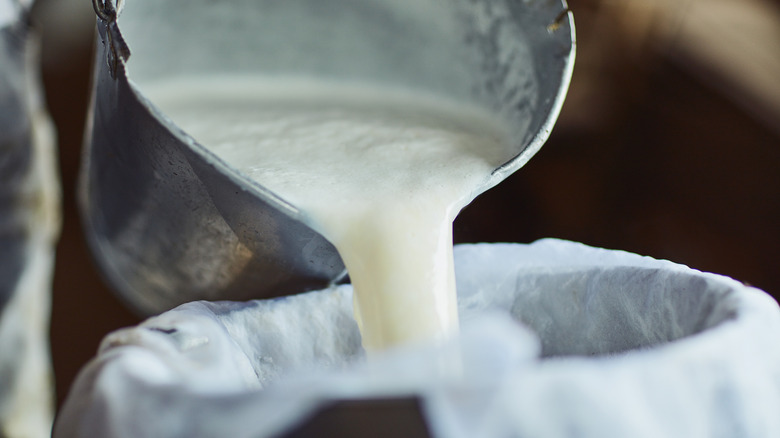
One thing you'll notice about whole milk is that it has a creamy, rich flavor. If you're going to use 2% milk instead of whole milk, consider that the end result might be less rich, though the small difference in fat content won't always affect how the milk behaves when you cook with it. There are so many ways to use milk in recipes, including making milk products, coffee drinks, and even marinades for steak, so it will be handy to know milk with different fat levels can be used.
If you use a recipe to make homemade Greek yogurt, using whole milk and 2% milk are similar and will create the creamiest batch, while yogurt made with lower fat milk is less rich. You might discover a difference if you're a barista choosing which milk to make the best latte art. When you steam milk with lower fat content, it will produce a stable foam, making it easier to make designs. Making steamed whole milk with its higher fat might actually destabilize the foam. When milk is used as a marinade for meat, the proteins break down tougher muscle fibers, making a more tender steak without overpowering the flavor of the meat. The milk fat will then trap moisture, which will make your steak juicier. Using 2% milk will suffice; however, whole milk will add even more moisture. Getting to know your preferences when using 2% milk, and how the fat affects flavor, will help you add skills to your culinary repertoire, allowing you to customize how you cook with it.