

How Exactly Is Deli Meat Made?
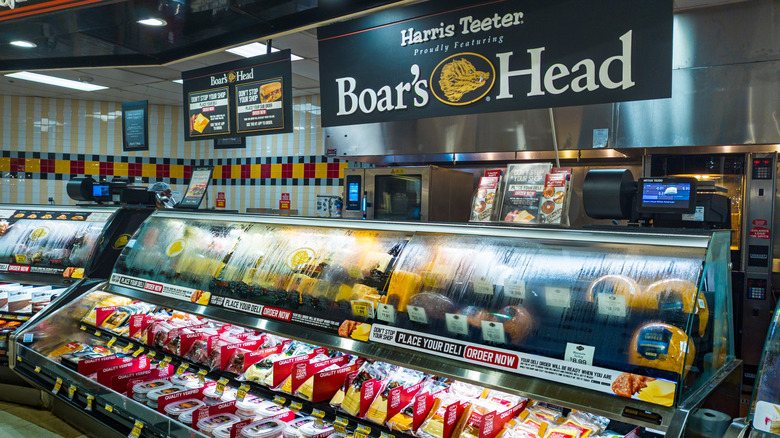
When you slice into an oven-roasted turkey, you get something pretty different from what's inside a package of oven-roasted turkey deli meat. While the process of taking meat from what you'd bake at home to the consistency of deli meat differs a bit from one processor to another, the basics stay the same. Turns out, deli meat is not simply one piece of ham, turkey, chicken, or beef — it's meat from several animals bound together (which seems clear when you look at the size of unsliced meats behind the deli counter).
To start the process, certain portions of uncooked meat, such as chicken breast, are pulled from the rest of the animal, either mechanically or by hand. Then, the meat is treated with preservatives, flavorings, and brine. Sometimes, the meat tumbles to release natural proteins that help the meat stick together in a cohesive loaf. Other processors may use non-natural methods, such as adding "meat glue" (also known as transglutaminase), a commercially sold powder that works to bind meats. Finally, the mixture is poured into a mold or plastic sleeve to cook, smoke, and get shipped to your local deli counter.
What to look for in high-quality deli meat
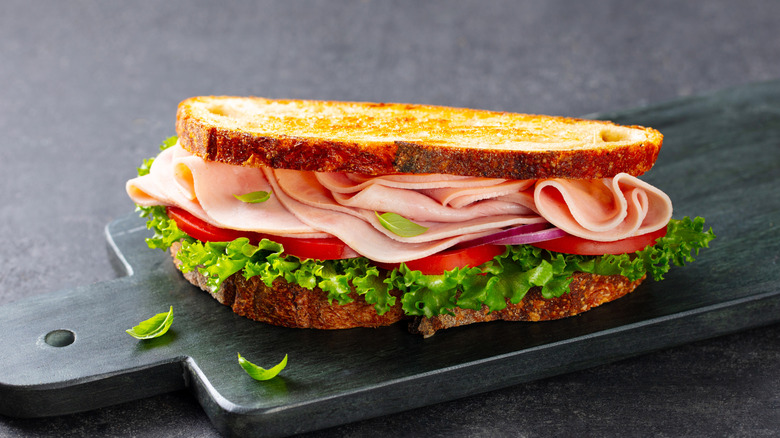
There are a ton of different options when it comes to deli meat. It can be tough to figure out what type is best. Additives and processing both matter; for example, you may want to look for less processed deli meat options if you prefer leaner meat that helps you hit your protein goals. Seasonings can also make a major difference in the taste of your lunch meat. Black pepper, rotisserie seasoning, and garlic can all take deli meat from so-so to super-flavorful. Some types of meat, especially honey-roasted varieties, have sugars added to ramp up the sweetness. Smoke (or smoky flavorings) can also be used to create a roasted taste.
You may have heard of nitrites and nitrates. They're preservatives, and are often added to deli meat to lengthen shelf life. Research shows that eating these compounds can increase the risk of certain types of cancer. While they're naturally occurring in some foods (including certain types of produce), it's smart to keep added versions of the chemicals out of your diet. Often, companies advertise that their products are free of these additives, but you can also take a peek at the ingredient list, where they should be listed clearly. If you'd like further confirmation that your deli meat is free of these preservatives, you can also take a look at the brand's website (some deli meat companies offer lists of their nitrate- and nitrite-free products) or gather some tools and start making your own deli meat.