

These 3 Types Of Meat Are Bobby Flay's Secret To Juicy Meatloaf

If you are a carnivore with any propensity for home cooking, odds are you have at least a few secret meatloaf tricks that'll make anyone jealous. Maybe stale bread keeps your meatloaf marvelously moist. Maybe you're fanatical about your beef blend's ideal fat-to-lean ratio. Or maybe you refer to the wisdom of some combination of grandma's old recipe cards and celebrity chef tips. One particular ingredient mashup is as likely to come from your family matriarch's own pen as the perennial Food Network favorite Bobby Flay's sundry cooking clips: the classic mix of beef, pork, and veal.
In one such video snippet, Flay uses the popular trifecta in a meatloaf that also packs in a ton of diced, roasted vegetables (via Facebook). This combination of beef, pork, and veal keeps the loaf juicy, balancing richness and flavor, and it's as close to traditional as most meatloaves get. Just like Sunday gravy, the tomato sauce that likewise inspires all manner of opinions, meatloaf recipes can differ dramatically from one kitchen to the next. But chances are an awful lot of meatloaf devotees will echo Flay's trio of primary ingredients — and for good reason.
Why beef, pork, and veal are such classic meatloaf combination
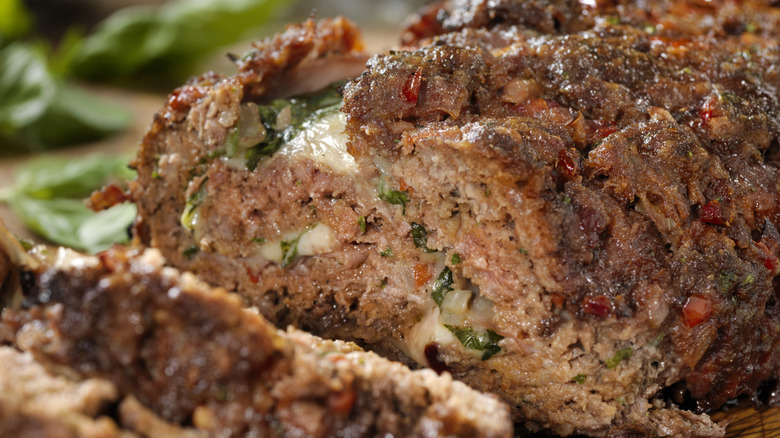
Plenty of home cooks and celebrity chefs alike have meatloaf recipes that use something like ground chuck alone, or pivot entirely to poultry. But the trinity of beef, pork, and veal endures due to some long held understanding of each element's critical role in building the best meatloaf. For one, each meat imparts its own unique flavors to create a more dynamic dish. You aren't only getting the mellow, savory sensation of beef, but also the lighter, gamier notes of veal, and the subtle sweetness of pork.
The specific combination of beef, veal, and pork also contributes to a moister meatloaf and thus a more silken bite. Veal is leaner than your everyday ground beef, but it's also generally more tender, creating a more yielding slice without having to add a ton of extra fat. It's particularly important to mitigate that fat because the pork will bring enough of its own, along with its signature taste sensations. Without accounting for these ratios, a cook might prevent dryness but risk rendering an unwelcome amount of grease. The tried-and-true combination of beef, pork, and veal makes all that arithmetic a little bit easier when you're just trying to get dinner on the table.