

The 1920s Peanut Butter Brand That Hit Shelves Long Before Jif
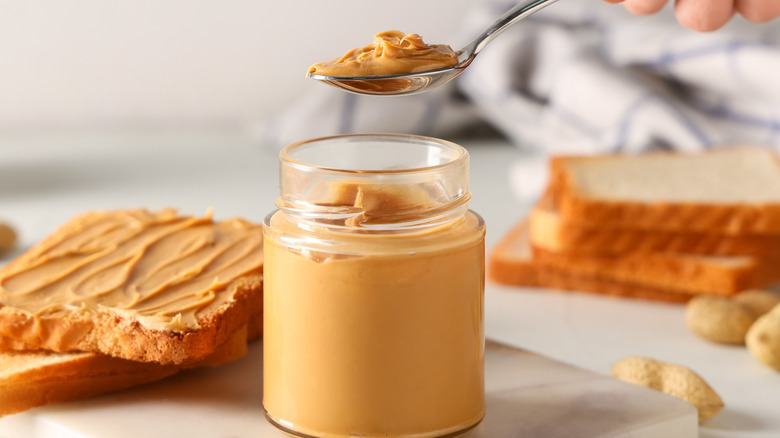
Peanut butter is a condiment that is a mainstay in cuisines around the world — from a classic Thai-style peanut sauce to spicy Haitian spread to good old peanut butter and jelly sandwiches, this humble and versatile ingredient is the key to a number of flavorful meals. It's not news grocery store shelves are lined with numerous peanut butter brands to choose from, whether you're team chunky or smooth. And possibly, one of the most iconic brands in the game is Jif. Though it did not fare well as a peanut butter brand you should buy (being one you should avoid), there is something to be said about its position in mainstream peanut butter history, at least in the United States. However, long before Jif entered the picture, there was another brand that emerged right at the cusp of peanut butter entering the market: Swift & Company, which is now called Peter Pan.
In 1928, Swift & Company implemented the peanut butter-making technique that was popularized by food businessman Joseph L. Rosefield in 1922. You can still find this brand of peanut butter in pretty much any conventional grocery store, and you may even recognize the standout logo that features the silhouette of Peter Pan flying over the text of the brand's namesake. Currently, the brand offers a selection of peanut butter varieties, ranging from the basic creamy spread to honey roasted. In fact, Peter Pan's crunchy peanut butter ranked favorably in our taste test.
How Jif peanut butter came to be
Peanut butter made its grand introduction during the 1904 World Fair in St. Louis, Missouri. Not long after, Krema Products Company, in Columbus, Ohio, which is the oldest known peanut butter company that still operates to this day, started to sell this protein-packed spread. In the early 1920s, pioneering entrepreneur Joseph L. Rosefield began selling churned peanut butter, which had a smoother consistency than the peanut butter available at the time. His work was instrumental in forging the path for manufacturing peanut butter for the masses. He even acquired several patents, including one for curating optimal texture and another for making peanut butter so it retains freshness and stability for longer periods. Following Swift & Company's adoption of Rosefield's methods for its peanut butter in 1928, Rosefield himself began to produce and sell his own brand under the now-familiar label, Skippy.
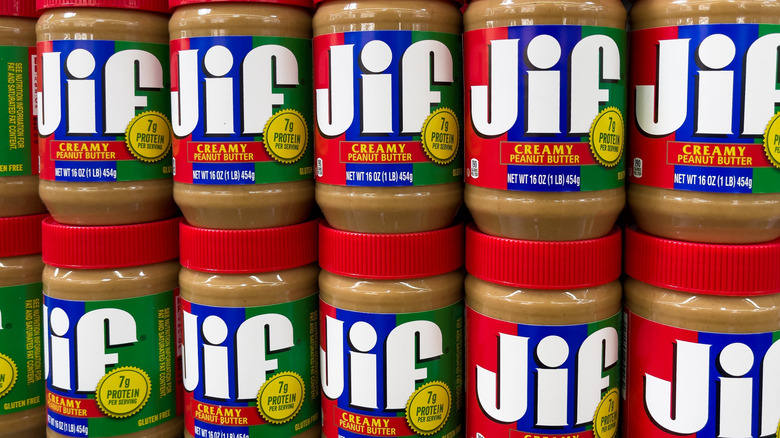
In the late 1950s, the large consumer goods conglomerate, Procter & Gamble, delved into the booming peanut butter business with Jif, a brand that, to an extent, has come to be synonymous with peanut butter. As is the case with almost anything having to do with large brands and companies, mergers and acquisitions are expected. As such, Jif was eventually acquired by J.M. Smucker Company, where it currently remains as the No. 1 peanut butter brand in the U.S. Given how entrenched peanut butter is in the mainstream culinary world, it's fascinating to think about its prolonged journey over the course of time.